

How Sculptra Hip Dip Correction Creates a Smoother Silhouette Non-Surgically
If you notice inward curves along your outer hips that refuse to change no matter your workout routine, you are not alone. Hip dips are a natural result of your bone anatomy, not your fitness level. When you want a smoother hip line without surgical downtime, non-surgical volumizing offers a practical solution.
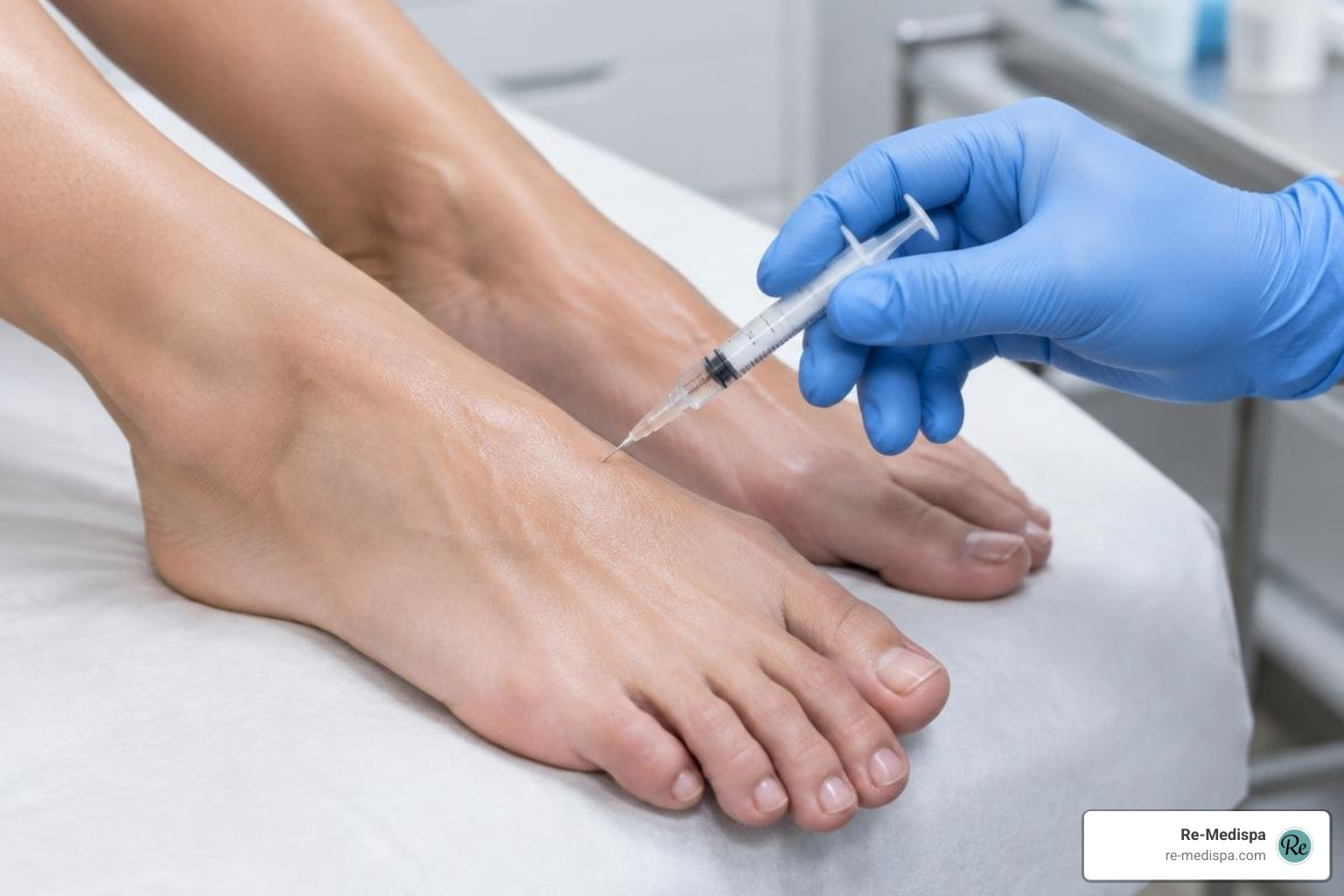
Sculptra hip dip correction is an injectable treatment that uses poly-L-lactic acid (PLLA) to stimulate your skin’s own collagen production, subtly filling in the lateral hip hollows over time.
- Mechanism: Rather than acting as an instant gel filler, it triggers your body to rebuild its own structural volume.
- Onset of Results: Visible improvement develops gradually over three to six months as new collagen fibers form.
- Downtime: Little to none, allowing most clients to resume regular daily activities right away.
- Longevity: Results are long-lasting—often remaining visible for up to two years—with occasional maintenance touch-ups.
Because hip dips stem from the gap between your pelvic bone and thigh bone, exercise cannot physically fill the indent. Sculptra bridges this space by building natural tissue beneath the skin.
A licensed medical professional at Re-Medispa will determine your personalized plan during a thorough consultation. While mild temporary swelling, redness, or tenderness can occur, the procedure lets you enhance your curves while staying focused on your busy daily routine.
Understanding Hip Dips: Anatomy, Genetics, and Skeletal Structure
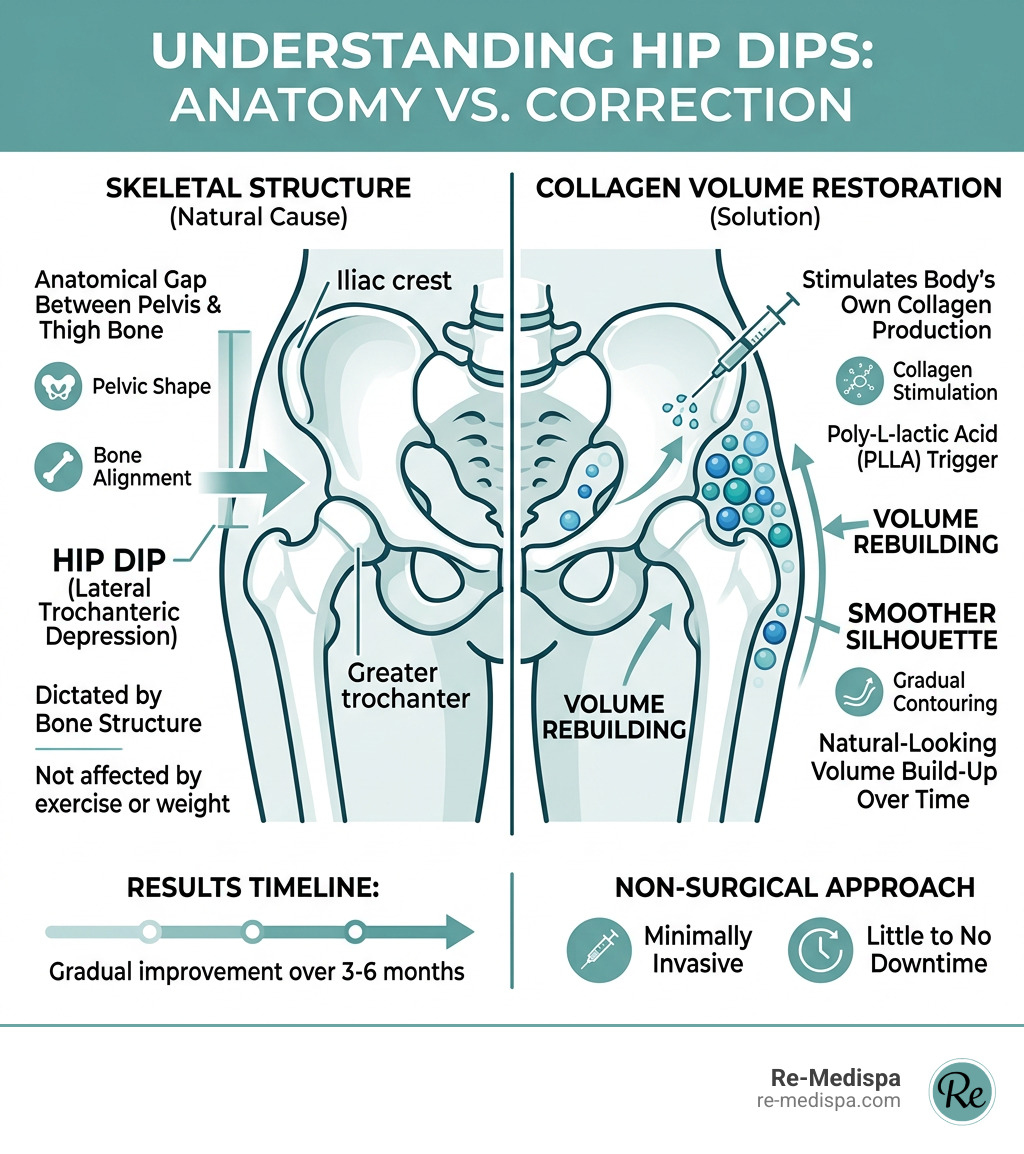
Hip dips, anatomically known as lateral trochanteric depressions or “violin hips,” are inward indentations found along the side of the body just below the hip bone. They occur naturally in people of all body types, fitness levels, and weights.
The primary cause of a hip dip is your underlying skeletal blueprint. Your pelvis features a high ridge called the iliac crest, while your femur features an outward protrusion called the greater trochanter. The vertical and horizontal distance between these two bony landmarks dictates the depth of the inward curve.
| Factor | Skeletal Influence | Muscular & Fat Layer Influence |
|---|---|---|
| Primary Driver | Wide distance between the iliac crest and greater trochanter | Attachment location of gluteus medius and tensor fasciae latae |
| Visual Effect | Creates an inward hollow or indentation on the lateral hip | Determines the baseline softness or definition of surrounding tissue |
| Modifiable by Exercise? | No, bone structure is fixed and cannot be changed through workouts | Minimally, muscle hypertrophy builds upper/lower areas without filling the gap |
Surrounding muscles—such as the gluteus medius, gluteus minimus, and the tensor fasciae latae—attach across these bones. However, muscle fibers do not physically cross over the center of the trochanteric depression to bridge the hollow.
Because fat distribution in this region is largely determined by genetics, doing targeted lateral lunges or squats will strengthen the underlying gluteal muscles without closing the anatomical gap. Non-surgical contouring treatments provide a reliable way to add volume directly over the skeletal depression.
How Sculptra Hip Dip Correction Restores Lateral Volume
When addressing structural volume loss, sculptra takes a distinctly different approach than traditional dermal fillers. Made from poly-L-lactic acid (PLLA), Sculptra is a biocompatible biostimulator that works with your body to regenerate its own tissue.
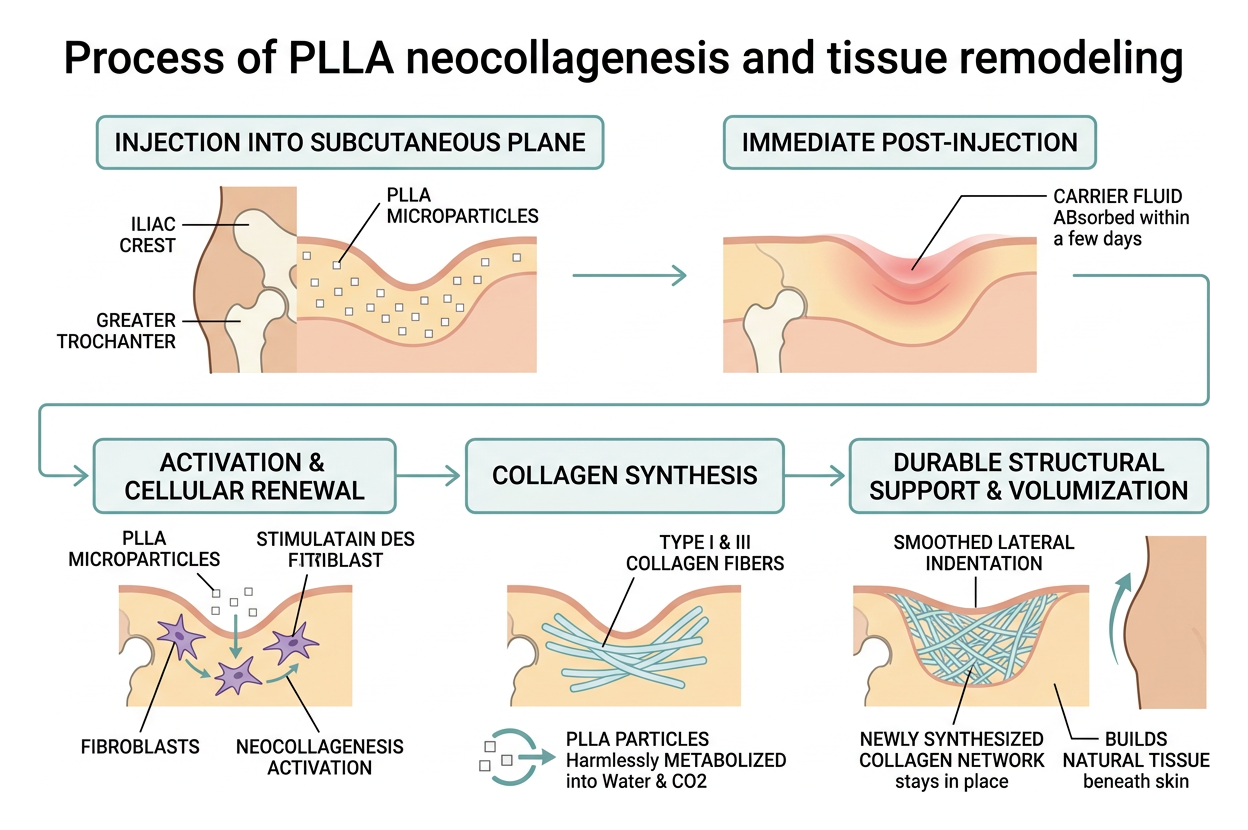
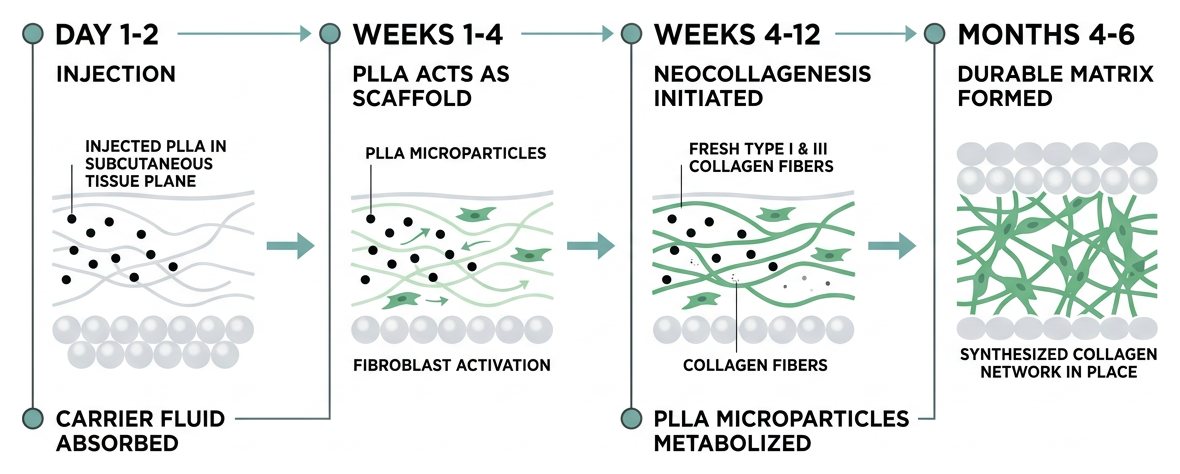
Instead of simply taking up space beneath the skin with a synthetic gel, PLLA microparticles act as a regenerative scaffold. The body absorbs the carrier fluid within a few days, leaving behind tiny crystals that activate your natural cellular renewal systems.
The Science of Collagen Stimulation with Sculptra Hip Dip Correction
Once injected into the subcutaneous tissue plane, PLLA microparticles stimulate specialized repair cells known as fibroblasts. This process, called neocollagenesis, prompts fibroblasts to produce fresh Type I and Type III collagen fibers.
Over the course of several weeks, the PLLA particles are harmlessly metabolized into water and carbon dioxide, while the newly synthesized collagen network stays in place. Similar to how collagen-stimulating dermal fillers provide progressive structural support in facial rejuvenation, Sculptra builds a durable matrix that smooths lateral indentations from within.
How Many Sessions and Vials Are Typical for Sculptra Hip Dip Correction?
Because collagen regeneration is a gradual physiological process, treatments are typically staged across two to three clinical sessions spaced four to six weeks apart.
- Initial Consultation: A licensed aesthetic injector evaluates your pelvic proportions, skin elasticity, and aesthetic goals.
- Staged Delivery: Spreading treatment across multiple appointments allows your provider to assess your individual collagen response and build symmetry progressively.
- Personalized Vial Requirements: Every client requires a tailored amount based on the depth of the trochanteric depression and desired contour, which is determined strictly during your medical consultation.
- Long-Term Maintenance: Because natural aging and tissue remodeling continue, most clients maintain their contours with periodic touch-up sessions every one to two years.
The Treatment Experience: Sessions, Safety, and Results Timeline
Patient safety is paramount in any aesthetic injectable procedure. Understanding the clinical anatomy of the lateral hip area highlights why injectable biostimulators have an exceptional safety profile when performed by trained professionals.
Unlike surgical fat transfers, which involve deep intramuscular grafting near large blood vessels, hip dip injections take place entirely in the superficial subcutaneous fat layer. As highlighted in clinical research on hip dip filler safety planes, the subcutaneous plane over the lateral hip contains only small blood vessels (typically under 0.9 mm), eliminating the severe vascular risks associated with deep gluteal surgery.
Experienced practitioners use smooth, blunt-tipped cannulas rather than sharp needles to place the product evenly throughout the tissue. This technique minimizes bruising, prevents trauma to delicate vessels, and ensures an even distribution of PLLA microparticles.
Candidate Evaluation and Expected Recovery Timeline
A comprehensive medical evaluation ensures that the procedure is both safe and effective for your personal health profile.
Ideal Candidates for Treatment:
- Individuals in good overall health with realistic expectations about gradual collagen building.
- Those seeking a smoother, more continuous hip contour without surgical downtime.
- Clients with sufficient skin elasticity to support new collagen integration.
Who Should Postpone or Avoid Treatment:
- Individuals with active skin infections, rashes, or inflammation in the hip area.
- Patients with a history of keloid formation or severe autoimmune disorders.
- Individuals who are pregnant, breastfeeding, or allergic to PLLA or lidocaine.
Following your appointment at our Harwood Heights location, you can immediately drive yourself home and resume most light activities. You may experience mild swelling, localized tenderness, and light bruising around the injection sites, which typically resolve within three to seven days.
To ensure the microparticles remain evenly dispersed and to prevent small nodules from forming, providers instruct patients to follow the “Rule of 5s”: massage the treated area for five minutes, five times a day, for five consecutive days.
Sculptra vs. Other Body Contouring Alternatives
Navigating the landscape of aesthetic treatments helps you select the right approach for your lifestyle and goals. Combining biostimulators with other non-surgical body contouring technologies allows for comprehensive silhouette refinement.
While large-particle hyaluronic acid fillers provide instantaneous results, they require ongoing retreatments as the gel naturally breaks down within six to eighteen months. Sculptra, by contrast, stimulates your own collagen matrix for longer-lasting structural support that integrates seamlessly with your tissue.
Frequently Asked Questions About Hip Dip Filler
Can exercise completely eliminate hip dips?
No, exercise cannot completely eliminate hip dips because they are caused by the shape of your pelvis and femur rather than a lack of muscle tone. Targeted strength training builds the surrounding gluteal muscles, but it cannot place tissue inside the skeletal gap where the hip dip sits.
Is Sculptra hip dip filler reversible?
Sculptra cannot be dissolved with an enzyme like hyaluronic acid fillers can. Once injected, the PLLA microparticles stimulate your body to build natural collagen, which integrates permanently into your tissue until it undergoes standard metabolic aging over several years.
How long do Sculptra hip dip results typically last?
Most clients enjoy visible improvement for up to two years or longer. Because the volume comes from your own collagen rather than temporary gel, the contour fades gradually as your body naturally ages.
Subtle Silhouette Enhancement at Re-Medispa
Achieving a balanced, flowing hip line does not require invasive surgical procedures or weeks of disrupted routine. Through targeted collagen stimulation, non-surgical body contouring helps you smooth trochanteric hollows with natural-looking, progressive results that complement your natural proportions.
Under the medical direction of Renata Ciszek, our team focuses on personalized, medically sound aesthetic care tailored to your unique anatomy. We take the time to evaluate your structural profile, discuss your cosmetic goals, and build a treatment plan that aligns with your lifestyle.
Whether you visit our clinical team in Arlington Heights or Harwood Heights, IL, we are dedicated to helping you feel confident in your silhouette. We invite you to schedule a consultation at our medical spa to discover what personalized biostimulatory contouring can do for you.