
When Your Hormones Are Off, Everything Feels Off
Hormone pellet therapy in Arlington is a form of bioidentical hormone replacement therapy (BHRT) where a tiny, rice-grain-sized pellet is inserted just under the skin. It releases a steady, low dose of estrogen or testosterone over several months — no daily pills, no messy creams, no peaks and crashes.
Here’s a quick overview of what it involves:
- What it is: A small bioidentical hormone pellet implanted under the skin, typically near the upper hip
- Who it’s for: Men and women experiencing symptoms of hormonal imbalance — including perimenopause, menopause, and low testosterone
- How often: Women typically need treatment every 3–5 months; men every 4–6 months
- When results show: Most people notice improvement within 7–10 days, with full benefits around 4–5 weeks
- Who provides it: A licensed medical provider, after comprehensive lab testing and health evaluation
You wake up exhausted even after a full night’s sleep. You’re snapping at people you love. Your brain feels like it’s running on dial-up. Sound familiar?
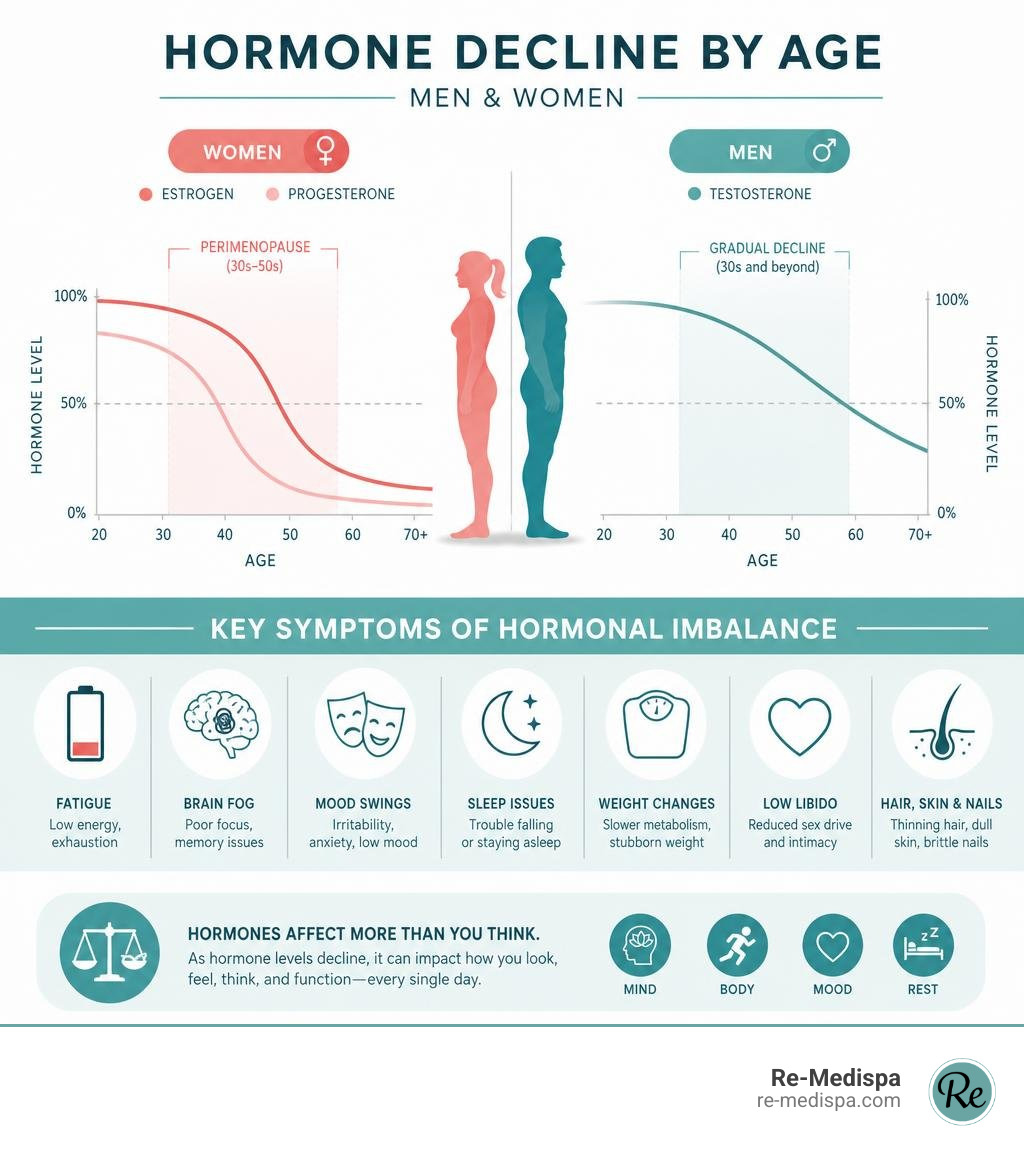
For many women in their 30s and 40s — and men, too — these aren’t just “stress” symptoms. They’re often signs that hormone levels have quietly started to decline. Estrogen, progesterone, and testosterone all drop with age, and the effects ripple through every system in your body: your sleep, your mood, your metabolism, your sex drive, your focus.
The frustrating part? Most people spend years assuming this is just how life goes. It doesn’t have to be.
Hormone pellet therapy has become one of the most talked-about solutions in the wellness space — and for good reason. But there’s also a lot of noise around it: bold claims, vague promises, and plenty of confusion about how it actually works, whether it’s safe, and whether it’s right for you.
This guide cuts through all of that.
What is Hormone Pellet Therapy and How Does It Work?
To understand how hormone pellets work, it helps to look at what they are made of. Pellet therapy uses bioidentical hormones. These are derived from natural plant sources, such as wild yams or soy, and are chemically customized to be structurally identical to the hormones your body naturally produces. Your body cannot tell the difference between these bioidentical hormones and the ones it makes itself.
These bioidentical hormones are compressed under high pressure into tiny, solid cylinders about the size of a single grain of rice. During a quick in-office visit, a licensed medical provider places these subcutaneous pellets just beneath the fat layer under your skin, usually in the upper hip or buttock area.
Once in place, the pellet acts like a tiny, smart reservoir. Instead of dumping a massive dose of hormones into your bloodstream all at once, it dissolves very slowly over time. This process delivers a steady, consistent, and physiologic dose of estrogen or testosterone directly into your blood. Because the release is regulated by your body’s cardiac output and blood flow, the system is self-regulating. When you exercise or engage in physical activity, your blood flow increases, and your body naturally draws slightly more hormone from the pellet—exactly like a healthy pancreas or ovary would.
This steady release avoids the wild hormonal fluctuations that often trigger side effects with other delivery methods. Depending on your metabolism, activity level, and gender, the pellets gradually dissolve completely, leaving nothing behind.
| Aspect | Women | Men |
|---|---|---|
| Primary Hormone Used | Estrogen (Estradiol) and/or Testosterone | Testosterone |
| Typical Pellet Longevity | 3 to 5 months | 4 to 6 months |
| Average Number of Pellets | 1 pellet | Multiple pellets (often 8 to 10) |
| In-Office Visits Per Year | 2 to 4 times | 2 to 3 times |
To explore how this innovative delivery method can fit into your wellness routine, you can Learn more about bioidentical hormone replacement at Re-Medispa.
The Benefits: What Symptoms Can Pellets Help Relieve?
When your endocrine system is out of balance, your body struggles to maintain homeostasis. By restoring your estrogen and testosterone to optimal levels, pellet therapy can help resolve a wide array of disruptive symptoms.
For women experiencing perimenopause or menopause, the drop in estrogen can cause intense physical discomfort. Hormone pellet therapy is highly effective at reducing or completely eliminating hot flashes and night sweats, allowing you to sleep comfortably through the night. It also targets vaginal dryness and discomfort during intercourse, helping to restore intimacy and comfort.
For both men and women, testosterone plays a vital role in physical vitality, mental clarity, and emotional stability. When testosterone levels drop, many people experience a profound, unshakeable fatigue that sleep cannot fix. Pellet therapy helps restore natural, sustainable energy levels throughout the day.
Additionally, optimized testosterone helps clear the mental fog that makes focusing on daily tasks feel like swimming through molasses. It improves cognitive function, memory, and spatial awareness, helping you feel like yourself again.
Beyond immediate symptom relief, optimized hormone levels offer significant long-term health benefits:
- Improved Bone Density: Estrogen and testosterone are critical for bone remodeling. Studies show that women using bioidentical hormone pellet therapy can experience up to 4 times higher bone density improvement compared to traditional oral calcium-replacement therapies.
- Muscle Mass Preservation: Testosterone supports protein synthesis, helping you maintain lean muscle mass and strength as you age.
- Cardiovascular Support: Balanced hormones help maintain healthy lipid profiles and support blood vessel elasticity.
- Mood Stabilization: Chronic irritability, anxiety, and mild depressive symptoms associated with hormonal transitions often improve significantly once systemic balance is restored.
Is Hormone Pellet Therapy Arlington Right for You?
If you live in the Northwest suburbs of Chicago, including communities like Palatine, Schaumburg, and Des Plaines, you might be wondering if you are a candidate for hormone pellet therapy in Arlington.
Typically, the best candidates are adults who are experiencing moderate to severe symptoms of hormonal decline that interfere with their daily quality of life. This includes women going through perimenopause or menopause, as well as men experiencing andropause (often referred to as “male menopause” or low testosterone).
If you find yourself struggling with persistent fatigue, unexplained weight gain, loss of muscle mass, low libido, mood swings, or poor sleep despite maintaining a healthy diet and lifestyle, you may benefit from hormone optimization.
However, hormone pellet therapy is not a one-size-fits-all solution. A thorough medical evaluation and comprehensive blood chemistry panel are required before any treatment can begin. There are several absolute and relative contraindications to therapy that must be carefully evaluated by a licensed medical professional:
- History of Breast or Uterine Cancer: Because some cancers are hormone-sensitive, systemic estrogen therapy is generally not recommended for individuals with a history of these conditions.
- Active Blood Clots or Bleeding Disorders: Estrogen therapy can slightly alter blood clotting factors, making it unsuitable for those with a history of deep vein thrombosis (DVT) or pulmonary embolism.
- Active Prostate Cancer: Men with active or suspected prostate cancer should not undergo testosterone replacement therapy.
- Severe Liver or Kidney Disease: These organs are responsible for metabolizing and excreting hormones, so compromised function requires careful medical management.
During an honest, personalized consultation, a provider will review your medical history, current symptoms, and lab results to determine if pellet therapy is the safest and most effective path forward for your body.
How Hormone Pellet Therapy Arlington Compares to Creams and Patches
When considering hormone replacement, you have several delivery methods to choose from, including oral pills, topical creams, transdermal patches, and subcutaneous pellets.
Oral pills must pass through your digestive system and be metabolized by your liver before entering your bloodstream. This “first-pass metabolism” can put extra strain on the liver and often requires higher doses to achieve therapeutic effects.
Topical creams and gels are applied daily to the skin. While they can be effective, they come with a high risk of accidental transfer to children, spouses, or pets. They also require strict daily compliance, and their absorption rate can fluctuate wildly based on skin temperature, moisture, and application site.
Transdermal patches are applied to the skin and changed once or twice a week. While they bypass the liver, many people find them uncomfortable, unsightly, or prone to falling off during exercise, swimming, or showering. Many patients also experience skin irritation from the adhesive.
The primary drawback of pills, creams, and patches is the “rollercoaster effect.” Immediately after taking a pill or applying a cream, your hormone levels spike, sometimes causing side effects like breast tenderness, mood swings, or headaches. As the day goes on, your levels crash, causing your symptoms to return before your next dose.
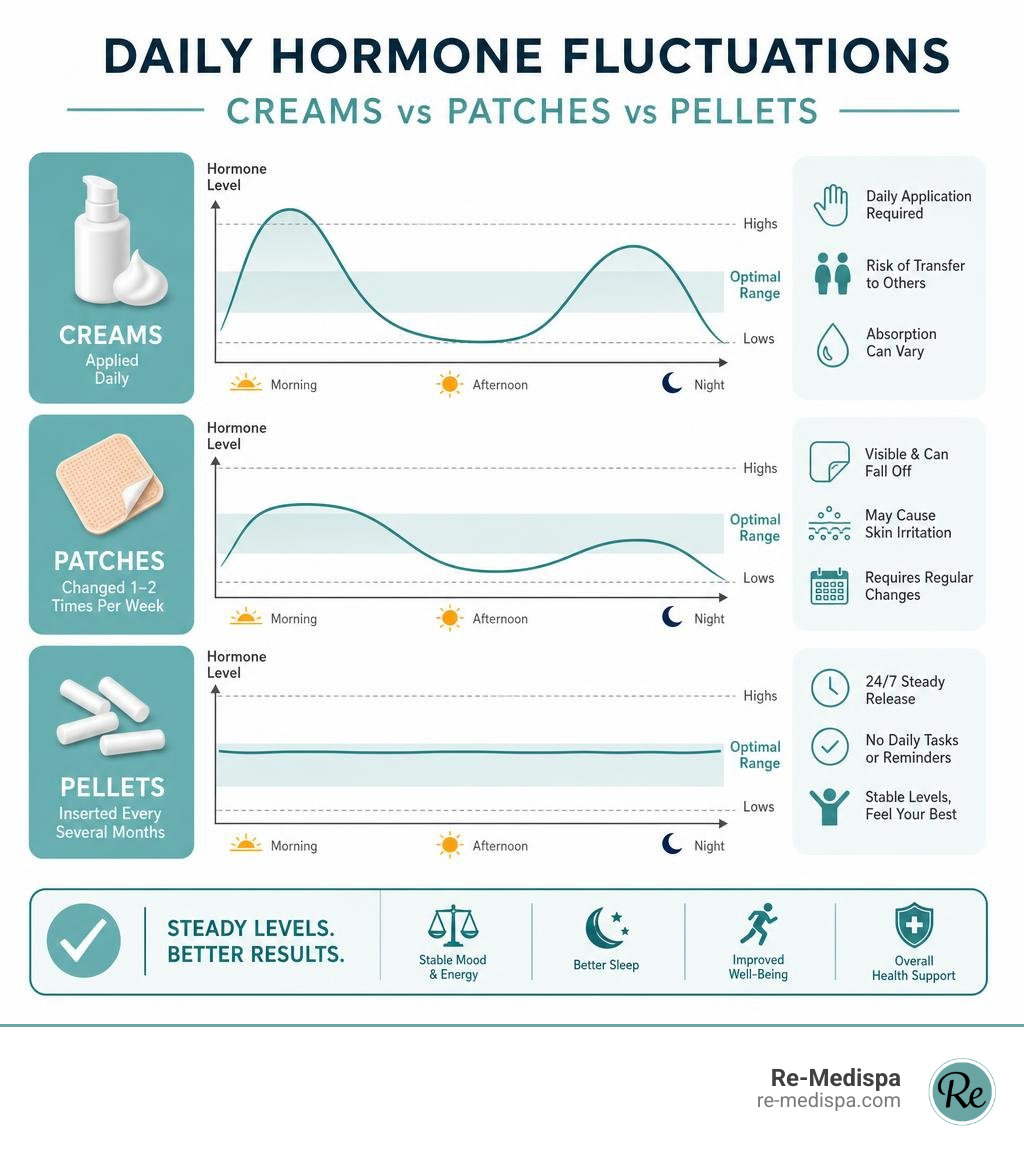
Subcutaneous pellets eliminate this rollercoaster. Because they release a steady, consistent stream of hormones directly into your bloodstream 24/7, your hormone levels remain stable. There are no daily tasks to remember, no sticky residues, and no sudden energy crashes. It is a true “set-it-and-forget-it” convenience that fits seamlessly into a busy lifestyle.
What to Expect: The Insertion Procedure and Recovery
If you decide to move forward with pellet therapy, the insertion procedure itself is quick, simple, and performed right in the comfort of a clinical office. The entire process typically takes less than fifteen minutes.
First, the provider will clean the insertion site, which is usually the upper hip or buttock area. A local anesthetic, such as lidocaine, is injected to completely numb the skin and the underlying fat tissue. You may feel a brief pinch or sting from the numbing injection, but the rest of the procedure is virtually painless.
Once the area is fully numb, the provider makes a tiny, sterile incision—no larger than 1/18 of an inch. A small, sterile instrument called a trocar is used to gently create a pathway into the fat pad beneath the skin. The tiny hormone pellets are then inserted through the trocar into the fat tissue.
Because the incision is so small, no stitches are required. The provider will close the opening with sterile skin closure tape (Steri-Strips) and apply a waterproof pressure bandage over the area.
Post-Procedure Care and Recovery
Recovery is incredibly straightforward, but following a few simple instructions will ensure the site heals beautifully and prevents the pellet from shifting:
- Keep the Area Dry: Keep the pressure bandage dry for the first 24 hours. After that, you can remove the outer bandage and shower, but keep the Steri-Strips in place until they fall off naturally (usually 3 to 5 days).
- Avoid Soaking: Do not submerge the area in bathtubs, hot tubs, swimming pools, or lakes for at least 5 to 7 days to prevent infection.
- Limit Vigorous Exercise: Avoid heavy lifting, squatting, running, or high-impact lower-body exercises for 3 to 4 days for women, and 5 to 7 days for men. Walking is perfectly fine, but giving the tissue time to heal around the pellet prevents it from working its way out of the incision.
- Expect Minor Discomfort: You may experience mild bruising, swelling, or temporary tenderness at the insertion site for a few days. A cold compress and over-the-counter acetaminophen can help manage any minor discomfort. Avoid aspirin or ibuprofen immediately after the procedure, as they can increase bruising.
Risks, Side Effects, and the Myths Surrounding Pellets
As with any medical treatment, it is important to look at the facts regarding safety, side effects, and common misconceptions.
The most common side effects of hormone pellet therapy are mild and localized to the insertion site. These include minor bruising, swelling, redness, or temporary tenderness that typically resolves within a few days.
Some patients may experience temporary symptoms as their bodies adjust to the newly optimized hormone levels. This can include mild fluid retention, breast tenderness, or temporary acne. These symptoms are usually mild and resolve on their own as your hormone levels stabilize.
Debunking Common Myths
One common myth is that hormone pellet therapy causes permanent side effects. Because the pellets gradually dissolve over several months, any side effects are temporary. If your initial dose needs adjustment, your provider can easily modify the dosage for your next insertion cycle based on your feedback and follow-up lab work.
Another myth is that all hormone replacement therapies carry the same high risks associated with older, synthetic hormones. The landmark studies that raised concerns about hormone therapy decades ago used synthetic, non-bioidentical hormones derived from pregnant mares’ urine.
Bioidentical pellets, on the other hand, are structurally identical to your body’s own hormones and are compounded in specialized, FDA-registered outsourcing facilities that adhere to incredibly strict quality control and safety standards.
When administered by a highly trained, licensed professional who uses precise, lab-verified dosing, pellet therapy has an excellent safety profile and is well-tolerated by the vast majority of patients.
Finding a Certified Provider for Hormone Pellet Therapy Arlington
Because hormone optimization is a highly specialized field, your care should always come from an experienced, licensed medical professional rather than a non-medical spa or clinic without dedicated medical oversight.

A qualified provider will always begin your journey with a comprehensive health assessment. This includes a detailed review of your symptoms, medical history, and lifestyle goals, followed by a comprehensive blood panel.
This lab work is critical. It measures your current hormone levels, thyroid function, liver enzymes, lipid panels, and other vital health markers.
Using this precise data, your provider will calculate a personalized hormone dosage tailored specifically to your body’s unique chemistry. There is no guessing involved; every pellet insertion is customized to restore you to your optimal physiological range.
If you are ready to take the first step toward reclaiming your energy and vitality, you can Schedule a consultation with our certified providers.
Frequently Asked Questions About Hormone Pellets
How long do hormone pellets last?
On average, hormone pellets last between 3 to 5 months for women and 4 to 6 months for men. The exact lifespan of a pellet depends on your individual metabolic rate, activity level, and stress levels.
Because your body draws more hormone from the pellet during physical activity, highly active individuals or athletes may absorb their pellets slightly faster than those with a more sedentary lifestyle. Your provider will monitor your symptoms and lab work to establish the perfect treatment schedule for your body.
Is the pellet insertion procedure painful?
The vast majority of patients report that the procedure is highly comfortable and virtually pain-free. We use a local anesthetic (lidocaine) to completely numb the insertion site before making the tiny incision.
You may feel a slight pinch and a warm sensation during the numbing injection, but you should only feel light pressure during the actual pellet placement. The entire process is quick, and most patients are pleasantly surprised by how simple and painless it actually is.
How quickly will I feel the results?
While every individual’s response varies, most patients begin to notice a visible improvement in their energy levels, sleep quality, and mood within 7 to 10 days after insertion.
The full therapeutic benefits, including maximum mental clarity, increased libido, and improved body composition, typically become apparent around 4 to 5 weeks post-insertion. Your body needs a little time to adjust to its newly optimized hormonal balance and begin rebuilding its natural cellular processes.
Personalized Wellness at Re-Medispa
At Re-Medispa, we believe that wellness is not a one-size-fits-all journey. Under the expert guidance of our founder and medical director, Renata Ciszek, we are dedicated to providing personalized, honest, and medically supervised care to help you look and feel your absolute best.
Whether you are visiting us at our beautiful location in Arlington Heights (37 S Evergreen Ave) or our convenient location in Harwood Heights (5128 N Harlem Ave), you will experience a warm, welcoming environment where your health and safety are our highest priorities. We proudly serve clients from nearby suburbs, including Palatine, Schaumburg, Buffalo Grove, Mount Prospect, Park Ridge, and Glenview.
We combine advanced medical aesthetics, weight-loss programs, and wellness services with a commitment to clinical excellence. If you are tired of feeling exhausted, foggy, and out of sync, we are here to help you uncover the root cause of your symptoms and design a customized treatment plan built around your biology, your goals, and your life.
Ready to reclaim your vitality and feel like yourself again? Schedule a consultation at our medical spa today.