

The Heavyweight Champion: Finding a Weight Loss Medication Program That Works
Why So Many People Are Finally Seeing Results With a Weight Loss Medication Program
A weight loss medication program is a medically supervised treatment plan that combines FDA-approved prescription medications — most commonly GLP-1 receptor agonists like semaglutide or tirzepatide — with lifestyle support to help you lose weight safely and sustainably.
Here’s a quick look at how the major program types compare:
| Program Type | Key Medications | Support Included | Delivery |
|---|---|---|---|
| Telehealth platforms | Semaglutide, Tirzepatide, Liraglutide | App coaching, check-ins | Virtual + mail |
| In-person medical spa | Semaglutide, Tirzepatide | 1-on-1 clinical care | On-site |
| Retail clinic (e.g., pharmacy-based) | Multiple GLP-1 options | Limited lifestyle support | In-store or virtual |
| Behavioral + medication hybrid | GLP-1s + non-GLP-1s | Coaching, habit programs | Mixed |
Who qualifies? Most programs require a BMI of 30 or higher — or a BMI of 27 or higher with a weight-related condition like high blood pressure, sleep apnea, or type 2 diabetes.
If you’ve tried dieting, cutting calories, and pushing through workouts — only to watch the scale barely budge — you’re not alone, and you’re not failing. For many people, weight isn’t simply a matter of willpower. It’s biology.
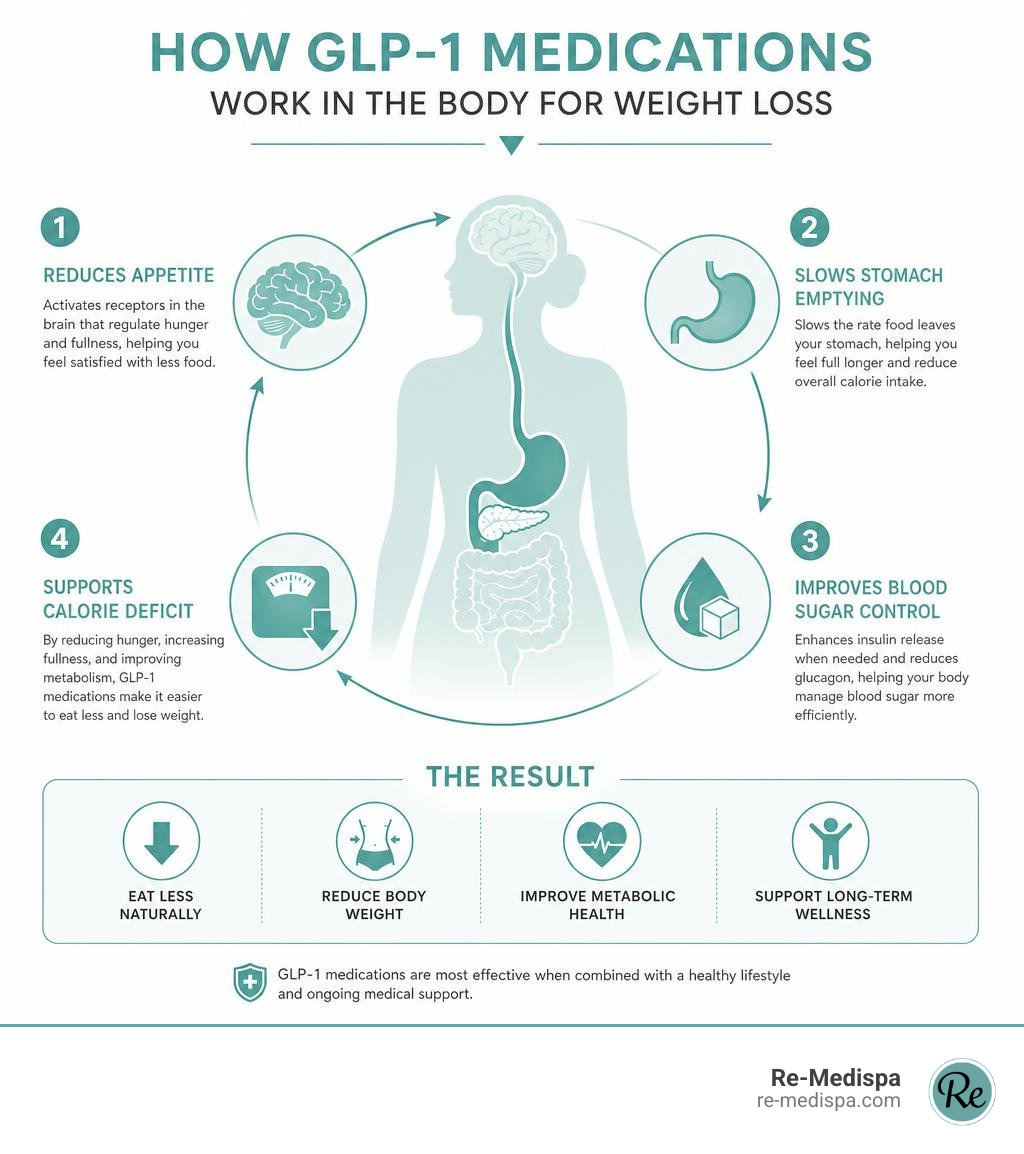
That’s exactly where medical weight loss has changed the game. GLP-1 medications work with your body’s own hunger and blood sugar signals, making it easier to eat less without feeling deprived. The results from clinical trials are striking: participants lost anywhere from 5% to 21% of their body weight depending on the medication and level of program support.
But not all programs are created equal. Some offer a prescription and not much else. Others wrap medication inside behavioral coaching, nutrition tracking, and ongoing clinical oversight — and the data suggests that combination matters. One analysis found that members who regularly engaged with a structured support program lost 29.1% more body weight than those who took medication alone.
The challenge is knowing which approach is right for you — your lifestyle, your health history, and your goals.
Choosing the Right Weight Loss Medication Program
Selecting the right weight loss medication program is a highly personal decision. It is not just about getting a prescription; it is about finding a supportive framework that guides you through every phase of your transformation. The modern landscape of medical weight management offers several pathways, but the most successful programs always prioritize your overall metabolic health.
When you begin evaluating programs, look closely at how they monitor your progress. A quality program does not just hand over a medication and wish you luck. It should involve comprehensive clinical oversight to track your body’s adaptation, manage any side effects, and ensure that your metabolic markers are moving in a healthy direction. To understand how medical support integrates into a broader health strategy, you can Learn more about our weight loss service and how we structure our clinical care.
Eligibility for a Weight Loss Medication Program
How do you know if you are a candidate for a medically supervised weight management program? Clinical guidelines are clear and designed to ensure patient safety. Generally, medical weight loss programs are indicated for:
- Adults with a Body Mass Index (BMI) of 30 or higher.
- Adults with a BMI of 27 or higher who also manage at least one weight-related health condition. These conditions commonly include high blood pressure, high cholesterol, type 2 diabetes, polycystic ovary syndrome (PCOS), or obstructive sleep apnea.
During your initial clinical screening, a licensed practitioner will review your detailed medical history. This is a vital step because certain pre-existing conditions may make some weight-loss medications inappropriate for you. For example, GLP-1 medications carry warnings for individuals with a personal or family history of Medullary Thyroid Carcinoma (MTC) or Multiple Endocrine Neoplasia syndrome type 2 (MEN 2). Your provider will also evaluate your history for conditions like pancreatitis or severe gastrointestinal diseases before determining if a medication-assisted program is your safest path forward.
What to Expect in a Weight Loss Medication Program
Once you are cleared to begin, your journey starts with what is known as a titration schedule. This is a clinical protocol where you begin on the lowest possible dose of the medication. Over several weeks, your dose is gradually adjusted. This slow escalation allows your body to build tolerance and significantly minimizes common gastrointestinal side effects.
Most programs schedule regular follow-up visits — typically every four weeks during the initial titration phase — to evaluate how you are feeling and determine if a dosage adjustment is necessary. Once you reach your target maintenance dose, these check-ins may transition to once every three months.
Alongside the medication, ongoing clinical support will guide you through essential lifestyle modifications. To achieve the best possible results, medications must be paired with healthy dietary adjustments and regular physical activity. This dual approach ensures that you are losing fat while preserving your vital lean muscle mass.
Comparing Clinical Approaches: Telehealth vs. In-Person Care
As the popularity of medical weight loss has grown, so have your options for accessing care. Today, the choice often comes down to virtual telehealth platforms versus in-person medical clinics.
Telehealth programs offer undeniable convenience. You can complete questionnaires, meet with a provider online, and have your medications shipped directly to your door. However, virtual programs can sometimes feel transactional. They may lack the personalized, hands-on clinical monitoring that helps you stay on track when challenges arise.
In contrast, an in-person clinical setting provides a much higher level of personalization and direct clinical oversight. When you walk into a physical clinic, your provider can perform in-person assessments, monitor your vital signs, and adjust your treatment plan dynamically based on your physical response. This face-to-face relationship builds deep trust and accountability. For those seeking a comprehensive, high-touch wellness environment to support their journey, you can Learn more about our wellness center and how we approach total-body health.
Here is a side-by-side comparison to help you weigh your options:
| Feature | Telehealth Programs | In-Person Medical Spas / Clinics |
|---|---|---|
| Convenience | High (work from home) | Moderate (requires local travel) |
| Clinical Oversight | Virtual messaging & video calls | In-person physical evaluations |
| Personalization | Algorithm-driven or standard protocols | Customized dosing & tailored therapies |
| Ancillary Support | Digital coaching apps | Direct access to medical staff & supportive therapies |
| Lab Work Integration | Self-coordinated at local labs | Coordinated directly by the clinical team |
FDA-Approved Medications and How They Work
To make an informed choice, it is helpful to understand the science behind the most common medications prescribed in a weight loss medication program.

The most talked-about treatments today are GLP-1 receptor agonists and dual GIP/GLP-1 receptor agonists.
- Semaglutide: This once-weekly injection mimics the natural GLP-1 hormone. It works by targeting the areas of your brain that regulate appetite and food intake. It also slows down gastric emptying, meaning food stays in your stomach longer, helping you feel satisfied with smaller portions. Clinical trials have shown that patients using semaglutide can lose an average of 15% of their starting body weight.
- Tirzepatide: This is a dual-hormone therapy that targets both GLP-1 and GIP receptors. By mimicking both hormones, it provides a synergistic effect that can offer even stronger appetite suppression and metabolic support. In clinical trials, many patients using tirzepatide experienced a body weight reduction of 16% to 20% or more.
- Liraglutide: A daily injection that also utilizes the GLP-1 pathway, typically leading to an average weight loss of about 5% in clinical trials.
While these medications are highly effective at reducing fat, a major focus in modern obesity medicine is ensuring that you do not lose valuable muscle tissue along with the fat. Preserving muscle mass is critical for maintaining a healthy metabolic rate. To explore how researchers are studying the preservation of muscle mass during medical weight loss, you can read the Scientific research on sequential anti-obesity medication.
In the Chicagoland area, finding local clinical support is essential for safely navigating these advanced therapies. If you are exploring options in the Northwest suburbs, working with a dedicated local clinic ensures you receive the personalized care and monitoring necessary for long-term success.
Safety, Side Effects, and Realistic Expectations
While GLP-1 and dual-hormone medications are incredibly powerful tools, they are not magic, and they do have side effects that you should understand before starting.
The most common side effects are gastrointestinal. Because these medications slow down your digestion, you may experience mild to moderate nausea, bloating, constipation, diarrhea, or temporary fatigue. These symptoms are usually temporary and tend to improve as your body adjusts to the medication over several weeks.
To manage these side effects and set yourself up for long-term success, we recommend several clinical best practices:
- Prioritize Hydration: Staying well-hydrated is crucial. Drinking plenty of water helps support kidney function and can significantly reduce feelings of nausea and constipation.
- Track Your Nutrition: Focus on consuming high-quality protein and fiber. This helps protect your muscles and keeps your digestive system moving smoothly.
- Consider Supportive Therapies: Many patients find that combining their weight loss program with specific wellness injections can help combat fatigue and support energy levels. To learn more about how we support your vitality, you can Explore our vitamin B12 injections.
It is also worth checking if your professional or state benefits can assist with the financial side of your care. If you are a state employee in Illinois, you can learn more about potential coverage options through the Illinois state employee weight-loss benefits portal.
For residents across Illinois, finding a trusted local provider who understands your unique health profile is the most important step in your wellness journey.
Frequently Asked Questions About Medical Weight Loss
Navigating medical weight management can raise a lot of questions. Here are some of the most common questions patients ask during their clinical consultations.
How long do you need to stay on these medications?
Obesity and chronic weight management are increasingly understood by the medical community as long-term metabolic conditions. For many people, these medications are intended for chronic management. Once you reach your goal weight, you will enter a maintenance phase. Your provider may work with you to find a lower maintenance dose that keeps your appetite stable and your metabolic markers healthy over the long term.
Do oral weight loss pills work as well as injections?
Historically, injectable GLP-1 therapies have shown the highest rates of weight loss. However, newer oral formulations of semaglutide are available. While oral pills offer excellent convenience, they require strict adherence — such as taking them on an empty stomach with a precise amount of water — to ensure proper absorption rates. Your clinical provider will help you weigh the convenience of a pill against the consistent absorption of a weekly injection.
Will I regain the weight if I stop the program?
Because these medications work by altering your body’s metabolic set point and hunger hormones, stopping them means those natural signals will eventually return. If you stop the medication without having built strong, sustainable lifestyle habits, weight regain is highly likely. This is why the most successful programs focus heavily on behavioral habit-building, nutrition education, and muscle preservation during your treatment.
The Re-Medispa Approach to Sustainable Wellness
At Re-Medispa, we believe that your weight loss journey should be as unique as your own DNA. We do not believe in one-size-fits-all, transactional prescriptions. Our mission is to provide personalized, honest, and medically sound care that helps you achieve lasting, vibrant health.
Under the expert guidance of our founder and medical director, Renata Ciszek, we combine cutting-edge medical weight loss therapies with a holistic approach to wellness. We understand that losing weight is about more than just a number on a scale — it is about feeling confident, energetic, and healthy in your own skin.
To help you visualize your potential results and feel completely confident in your treatment plan, we use advanced tools like our AI preview technology. This allows you to see a realistic preview of your aesthetic and wellness outcomes before you even begin your program.
Whether you are visiting us from nearby suburbs like Palatine, Schaumburg, Des Plaines, Mount Prospect, Buffalo Grove, Park Ridge, Northbrook, or Glenview, we welcome you to experience our warm, supportive, and professional environment. We operate two convenient clinical locations to serve our Chicagoland community:
- Arlington Heights: 37 S Evergreen Ave, Arlington Heights, IL
- Harwood Heights: 5128 N Harlem Ave, Harwood Heights, IL
If you are ready to take the first step toward a healthier, more confident you, we invite you to schedule a personalized clinical consultation with our team. To see how we can design a customized plan for your body and your goals, Explore our medical spa services today.