
Laser Stretch Mark Reduction: What to Expect
Stretch marks bothering you, but a long recovery does not fit your schedule? Laser stretch mark reduction may improve their color and texture, but it will not erase them. Results and recovery vary. A consultation with a licensed professional at Re-Medispa can help you decide whether a laser treatment is right for your skin and goals.
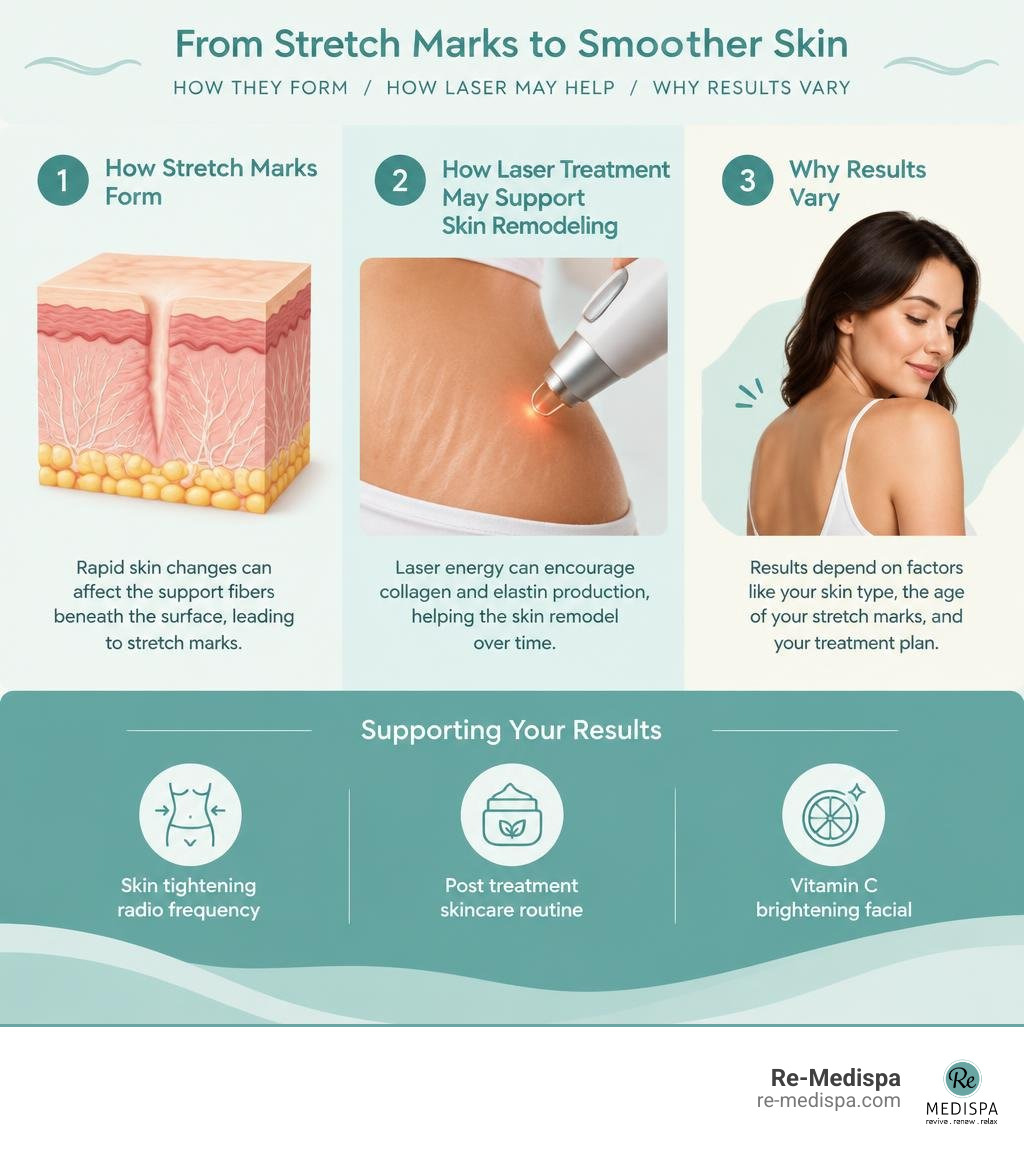
Stretch marks form when rapid skin changes affect the support fibers beneath the surface. Laser treatment may encourage that skin to remodel over time.
Laser stretch mark reduction vocabulary:
Understanding Striae Distensae and How Lasers Target Stretch Marks
Striae distensae, commonly known as stretch marks, develop when the middle layer of your skin (the dermis) stretches faster than its structural fibers can adapt. This rapid expansion causes the dermal framework of collagen and elastin to rupture.
Both mechanical tension and internal hormonal fluctuations play primary roles in this process. Surges in glucocorticoid hormones can reduce dermal fibroblasts, weakening structural support before growth spurts, pregnancy, or weight changes cause the skin to stretch.
Modern aesthetic medicine addresses these textural irregularities through advanced energy platforms. Advanced laser skin resurfacing delivers targeted thermal energy into the compromised tissue without surgically removing skin.
When targeted light penetrates the dermis, it creates controlled microscopic thermal zones. This energy triggers your body’s natural wound-healing cascade to stimulate fresh collagen synthesis and promote tissue restructuring. Complementary approaches like non-invasive skin tightening can further help firm the surrounding skin laxity.
The Science of Striae Rubrae and Striae Albae
Stretch marks generally progress through two distinct clinical phases: early striae rubrae and mature striae albae.

Striae rubrae represent the acute inflammatory stage. These early marks appear red, pink, or violaceous due to increased microvascular blood flow and localized inflammation within the disrupted dermis.
Over time, this vascular activity subsides, and the tissue enters the chronic striae albae stage. Mature marks appear pale, silver-white, and slightly depressed or crinkly, reflecting epidermal thinning and dense, altered dermal scar tissue.
Treating early-stage marks often yields faster visual improvements because the tissue remains actively vascularized. However, established striae albae can still achieve significant structural remodeling and blending with appropriate laser protocols.
How Laser Treatments May Support Skin Remodeling
Laser energy targets specific chromophores—such as water, hemoglobin, or dermal collagen fibers—depending on the selected wavelength.
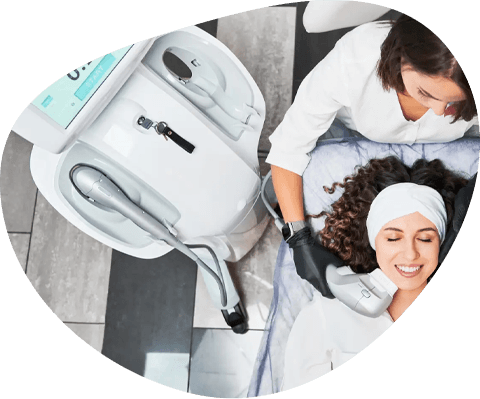
By heating precise depths of the dermal tissue, the laser breaks down disorganized scar fibers. This controlled thermal stimulation activates fibroblasts, prompting the production of organized, healthy Type I and Type III collagen.
Because skin biological turnover occurs over several weeks, visible improvements develop progressively. It is important to remember that response rates vary based on individual healing capacity, skin maturity, and mark depth.
Clinical Evidence and Potential Benefits of Laser Stretch Mark Reduction
Clinical studies in aesthetic dermatology demonstrate that laser technologies can significantly improve the clinical characteristics of striae distensae.
Research evaluating non-ablative wavelengths (such as 675 nm and 1470 nm diode systems) and fractional modalities shows quantifiable improvements in scar color, surface texture, and depth. For instance, selective collagen-targeting lasers produce noticeable scar remodeling with minimal epidermal disruption (Verdelli et al., 2023).
| Assessment Parameter | Baseline Presentation | Potential Post-Laser Outcome |
|---|---|---|
| Color Contrast | Pronounced redness (rubrae) or hypopigmentation (albae) | Blended tone closer to surrounding normal skin |
| Surface Finish & Texture | Atrophic, thin, crinkled surface | Smoother, denser, more resilient epidermal texture |
| Contour & Depth | Step-off depression or visible dermal furrow | Elevated baseline and softer transition borders |
| Distortion | Distinct, wide linear scar bands | Narrowed width and reduced overall visual presence |
Assessing Changes in Stretch Mark Appearance
Before treatment, a licensed provider evaluates each mark using standardized parameters, such as the Manchester Scar Scale.
Key evaluation factors include:
- Color: Measuring how noticeably the mark contrasts with your surrounding natural pigmentation.
- Contour: Checking whether the lesion is flush, elevated, or visibly depressed below the skin surface.
- Texture: Feeling the skin for loss of elasticity, thinning, or roughness.
- Distortion: Assessing how the scar deforms the surrounding skin architecture during movement.
Target Treatment Areas: Abdomen, Thighs, Buttocks, and Breasts
Stretch marks can appear anywhere the dermis undergoes significant tension, but certain body areas are more commonly treated:
- Abdomen: Frequently affected following pregnancy or rapid weight fluctuations.
- Thighs and Buttocks: Often develop during adolescent growth spurts or athletic training.
- Breasts: Commonly experience expansion during puberty, nursing, or hormonal shifts.
Because skin thickness and elasticity differ significantly between the delicate breast tissue and the denser abdominal wall, treatment parameters must be customized for each anatomical zone. Clients working on comprehensive body refinement often explore non-invasive body contouring technologies alongside stretch mark care.
Treatment, Recovery, and What to Expect During Your Session
Your journey begins with an in-depth consultation in a clinical environment. A licensed professional will review your medical history, examine your skin type, and discuss your aesthetic goals.
We also utilize advanced AI preview imaging to help visualize realistic potential outcomes before your first session begins.
What to Expect During a Laser Stretch Mark Treatment
During your appointment:
- Preparation: The skin is thoroughly cleansed, and a topical numbing agent is applied to ensure maximum comfort.
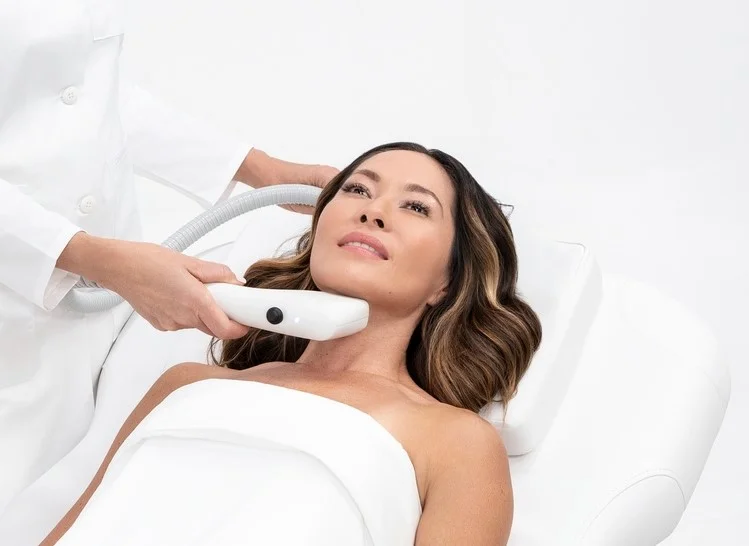
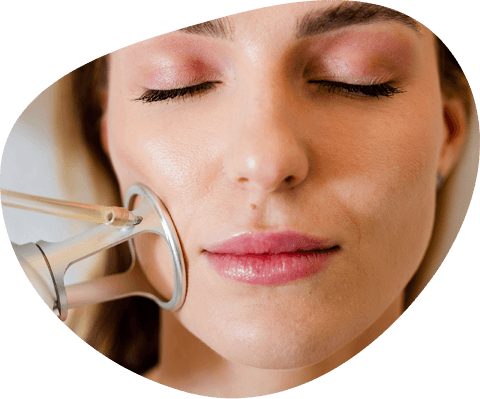
- Device Application: Your provider glides the specialized laser handpiece over the target areas, delivering precise pulses of light. Modern systems incorporate integrated contact cooling to protect the skin surface.
- Sensation: Most clients describe the feeling as a mild prickling or warm snapping sensation.
- Post-Treatment Care: A soothing topical agent or cold compress is applied immediately after the pass is complete.
Candidate Selection and Safety
Laser stretch mark reduction is suitable for many healthy adults, but proper candidate selection is critical for safety:
- Ideal Candidates: Individuals with realistic expectations who want visible reduction in the texture and color of striae rubrae or striae albae.
- Contraindications: Treatments cannot be performed on active skin infections, open wounds, individuals with a history of abnormal keloid scarring, or during pregnancy. Recent sun exposure or active tanning also requires delaying laser procedures.
- Common Side Effects: You may experience mild transient redness (erythema) and slight swelling that typically resolve within 24 to 48 hours. Post-inflammatory pigment shifts can occur, which is why matching laser parameters to your specific Fitzpatrick skin phototype is essential.
Following a gentle, nourishing skin care routine post-treatment helps protect your skin barrier and promotes healthy collagen remodeling.
Frequently Asked Questions About Laser Stretch Mark Reduction
How many laser sessions are needed to see visible improvement in stretch marks?
Because collagen remodeling occurs gradually, most clients benefit from a personalized series of treatments spaced several weeks apart. The exact number of sessions depends on mark maturity, depth, and your skin’s healing response. Visible improvements continue to evolve over three to six months following treatment.
Is laser treatment for stretch marks painful, and what is the recovery downtime?
Treatments are generally well tolerated. We apply topical numbing cream before the procedure, and advanced handpieces utilize active surface cooling to keep the skin comfortable. Downtime is minimal; most clients return to their regular daily activities immediately, with only mild redness similar to a light sunburn for the first day.
How does laser therapy compare to microneedling or chemical peels for stretch marks?
Different modalities target different layers of the skin:
- Lasers: Offer precise optical energy targeting deep dermal remodeling with minimal surface injury.
- RF microneedling: Combines physical micro-punctures with radiofrequency heat to firm both deep and superficial dermal layers.
- Traditional microneedling: Relies on mechanical collagen induction therapy to improve surface texture.
- Medical-grade chemical peels: Exfoliate the outermost epidermal layers to refresh skin tone and texture.
Your practitioner will determine which approach—or combination of therapies—is best suited for your specific skin type and aesthetic goals.
Compassionate Skin Care at Re-Medispa
Laser stretch mark reduction can provide visible, long-lasting improvements in the texture, depth, and color of stubborn marks, helping you feel more confident in your skin. Because everyone’s skin responds differently, individualized planning is essential for safe, natural-looking outcomes.
Under the medical leadership of Renata Ciszek, Founder & Medical Director, Re-Medispa delivers honest, personalized aesthetic care tailored to your unique anatomy. Our experienced team combines clinical expertise with advanced diagnostic tools, including AI treatment previews, across our two convenient clinic locations:
- Arlington Heights: 37 S Evergreen Ave
- Harwood Heights: 5128 N Harlem Ave
Whether you live in the Northwest suburbs or nearby communities like Mount Prospect and Park Ridge, we are here to support your skin revitalization journey. Schedule a personalized consultation at our medical spa today to explore your customized treatment options.