
Understanding the Lip Filler Swelling Days Timeline
When you receive dermal filler injections, your lips undergo physiological shifts. Minor tissue trauma from tiny needles or cannulas triggers a localized inflammatory response. Dermal fillers formulated with hyaluronic acid naturally attract and retain water, which causes tissue expansion. Understanding your lip filler swelling days helps you track your recovery with confidence.
Immediate Reaction to Day 1: Initial Post-Treatment Response
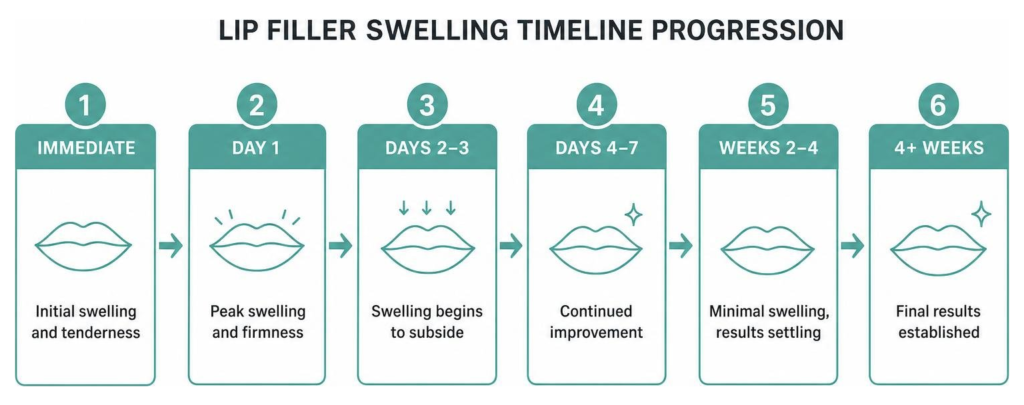
During the first 24 hours following your appointment, localized trauma from the procedure stimulates micro-trauma in delicate dermal tissues. Your body responds by increasing vascular permeability, bringing immune cells and fluid to the site.
This initial reaction leads to immediate baseline edema (fluid swelling), tenderness, and slight redness. Your lips will feel firmer than usual, and minor pinpoint bruising near injection sites is common. Reviewing a Step-by-Step Guide to Safe Injectable Options can help set accurate expectations before your session.
Navigating Peak Lip Filler Swelling Days 2 and 3
The second and third lip filler swelling days often catch patients off guard. Swelling typically reaches its peak between 48 and 72 hours post-treatment. Hyaluronic acid molecules actively bind to moisture in your tissues, leading to maximum volume expansion during this window.
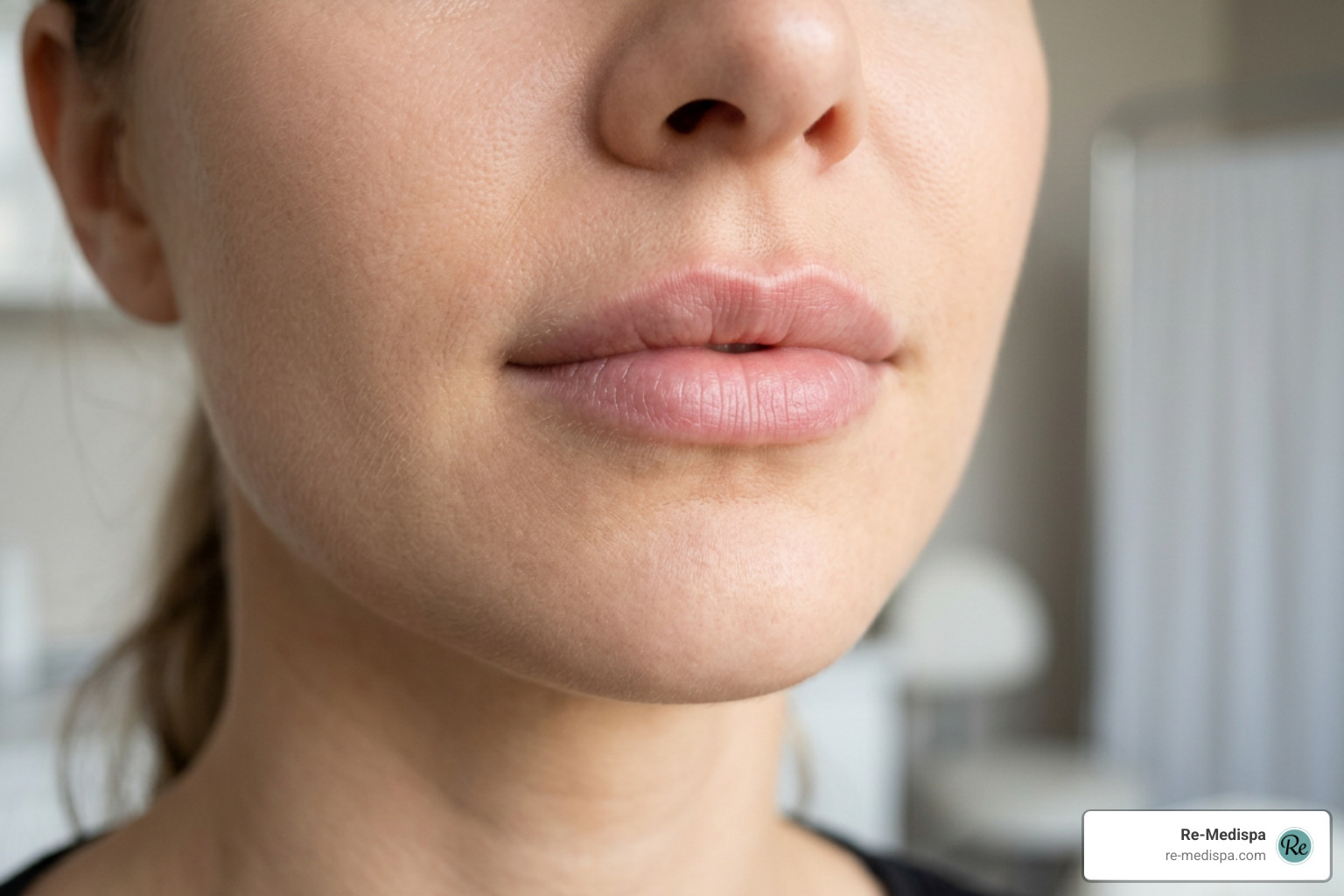
It is normal for your lips to look exaggerated, extra puffy, or slightly uneven during these peak days. Tissue tightness and firm spots are expected. Resisting the urge to massage firm spots protects your initial filler placement while inflammatory tissue expansion calms down naturally.
Day 4 to Day 7: Resolution Phase
By day 4, the acute inflammatory response slows down. Most lip filler swelling resolves within the first week. Fluid begins draining through your facial lymphatic channels, allowing underlying tissue structure to soften.
During days 5 through 7, temporary asymmetry usually resolves, and bruised areas transition from purple to light yellow. Learning How to Get Plump Lips Without Looking Like a Duck offers peace of mind as your true lip contours begin to emerge.
Weeks 2 to 4: Final Settled Results
complete resolution of subtle tissue fluid occurs over 2 to 4 weeks. By week 2, most residual puffiness has subsided, though tiny microscopic adjustments continue beneath the mucosal surface.
By week 4, the hyaluronic acid matrix fully integrates into your natural lip tissue. This settled phase allows your licensed injector to evaluate symmetry, balance, and volume during a routine follow-up appointment.
Normal Swelling vs Complications: Identifying Red Flags
While swelling is expected, distinguishing normal post-procedure responses from clinical complications ensures your safety. Vascular occlusion, allergic reactions, and localized infections require prompt clinical intervention.
| Clinical Feature | Normal Healing Response | Localized Infection | Allergic Reaction | Vascular Occlusion |
|---|---|---|---|---|
| Onset Timing | Immediate to 72 hours | 48 hours to 7 days | Minutes to 24 hours | Immediate or within hours |
| Pain Level | Mild to moderate tender soreness | Throbbing, worsening pain | Mild itching or burning discomfort | Severe, deep, ischemic pain |
| Tissue Redness | Minor, localized to lip mucosal tissue | Spreading, hot, dark red border | Generalized rash, hives, or lip swelling | Mottled, patchy, or blanched pale skin |
| Systemic Features | None | Possible fever (> 100.4°F / 38°C) | Hives, systemic itching, wheezing | None directly (localized tissue distress) |
Reviewing comprehensive resources like Lip Fillers After Care: Swelling Reduction Tips helps keep your recovery trackable and safe.
Signs of Normal Healing vs Infection
Normal post-treatment healing involves mild soreness that gradually improves after day 3. The lips feel tender to light touch, but the pain remains manageable with cold compresses or basic pain relievers.
In contrast, a localized infection usually develops 48 hours or more post-injection. Key signs include worsening throbbing pain, localized tissue warmth, spreading redness beyond the lip line, purulent drainage, and a body fever exceeding 100.4°F (38°C). Infections require immediate evaluation by a qualified medical professional.
Identifying Allergic Reaction vs Vascular Compromise
An allergic reaction typically manifests quickly with rapid itching, localized hives, or diffuse swelling extending to surrounding facial tissues. If you experience difficulty breathing, throat tightness, or generalized facial hives, seek emergency medical care immediately.
Vascular compromise or occlusion occurs if dermal filler accidentally enters or compresses a blood vessel, restricting localized blood flow. Unlike expected lip filler swelling days discomfort, vascular occlusion presents with severe, blanching (whitening) of the skin, localized coolness, mottled purple discoloration, and intense ischemic pain. Immediate clinical intervention with hyaluronidase is required to restore capillary blood flow.
Effective Recovery Strategies for Lip Filler Swelling Days
Targeted care protocols accelerate recovery while protecting your cosmetic results. Incorporating evidence-based habits minimizes fluid retention and protects tender tissues during the peak inflammatory window.
Essential At-Home Steps for Lip Filler Swelling Days 1 to 3
Consistent care during the first 48 hours helps control edema. Following a structured aftercare strategy can decrease initial tissue fluid accumulation significantly:
- Cold Therapy Application: Apply a clean cold pack wrapped in a soft cloth for 10 to 15 minutes every hour during waking hours. Consistent cold therapy in the first 24 hours helps significantly minimize initial swelling.
- Elevated Sleep Posture: Sleep on your back with your head elevated 30 to 45 degrees using a wedge pillow. Strategic elevation helps minimize fluid pooling and morning puffiness.
- Sodium Restriction: Limit high-sodium and heavily processed foods for 72 hours to minimize localized systemic fluid retention.
- Hydration Protocols: Drink plenty of water. Adequate hydration encourages fluid balance and aids lymphatic clearance.
- Dietary Adjustments: Following an anti-inflammatory diet rich in high-potassium foods like avocados and bananas supports faster resolution of swelling.
Factors That Increase Post-Procedure Swelling
Certain activities and products aggravate blood vessel dilation, prolonging your recovery process. Avoiding known inflammatory triggers keeps your lip filler swelling days within a normal baseline.
Strenuous exercise elevates blood pressure and heart rate, which pushes extra blood into delicate facial capillaries and exacerbates swelling. Avoid intense workouts, heavy lifting, and hot yoga for at least 48 to 72 hours.
Heat exposure from saunas, hot tubs, steam showers, or direct sunlight causes micro-vascular dilation. Blood-thinning supplements, including omega-3 fish oils, vitamin E, ginkgo biloba, high-dose aspirin, and NSAIDs like ibuprofen, increase bruising risk. Proper pre-procedure medication management under clinical guidance helps noticeably reduce post-procedure swelling.
If you live in the local area, exploring tailored clinical services like dermal filler services provides direct access to expert advice before and after treatment.
Impact of Filler Density and Injection Technique
The choice of hyaluronic acid product and injection tool significantly affects post-treatment edema. Thicker filler formulations designed for deep structural volume hold more water than softer, highly flexible gels formulated for subtle smoothing. Exploring option comparisons like Juvederm or Restylane for Your Next Plump? provides insight into how various formulations behave in facial tissue.

The delivery technique also directly shapes recovery. Traditional needle injections require multiple puncture points through delicate lip tissue, causing distinct micro-trauma. Blunt-tipped micro-cannulas glide through tissue layers via a single entry point, minimizing capillary disruption. Clinical experience demonstrates that using a micro-cannula helps reduce tissue trauma and swelling compared to needle techniques.
Debunking Common Myths About Lip Filler Recovery
Misconceptions surrounding aesthetic recovery often cause unnecessary worry for patients navigating their lip filler swelling days. Clearing up these myths helps set realistic expectations for your healing journey.
- Myth 1: Swelling on Day 2 Means Your Fillers Were Done Poorly. Fact: Day 2 swelling is a normal physiological immune response to tissue trauma and hyaluronic acid hydration. Even perfectly executed treatments reach peak volume expansion at 48 hours.
- Myth 2: Vigorous Massage Flattens Swelling Faster. Fact: Massaging swollen, tender lip tissue increases inflammation, causes additional micro-trauma, and risks displacing the product before it integrates.
- Myth 3: You Can Judge Your Final Lip Shape Within 48 Hours. Fact: Temporary fluid edema distorts your lip contours during the first week. Final visual assessment should always wait until tissue fluid fully clears at 2 to 4 weeks.
Navigating Side Effects, Downtime, and Candidacy
While hyaluronic acid lip injections are widely performed, understanding expected downtime and potential side effects ensures a comfortable, safe experience. Cosmetic injectable treatments are clinical medical procedures and are not appropriate for everyone.
Common side effects include temporary swelling, mild soreness, localized tenderness, firm spots, and superficial bruising. Most downtime is socially minimal, meaning you can return to routine desk work immediately, though visible puffiness or bruising may require 3 to 7 days to subside completely before major social events.
Certain individuals should defer or avoid lip filler treatments, including:
- Individuals with active cold sores, herpes simplex outbreaks, or facial skin infections near the mouth.
- Patients with diagnosed autoimmune conditions or severe bleeding disorders.
- Pregnant or breastfeeding individuals, as safety data for cosmetic injectables has not been established for these groups.
- Individuals with known severe allergies to hyaluronic acid products or local anesthetics like lidocaine.
Always consult a licensed clinical professional who will assess your full health history, current medications, and individual aesthetic goals before scheduling treatment.
Frequently Asked Questions About Lip Filler Swelling
Why is my lip filler swelling worse on one side than the other?
Asymmetric swelling is extremely common during initial lip filler swelling days. Your underlying vascular layout, localized lymphatic drainage paths, and the exact number of needle passes on each side vary. One side may simply experience slightly more tissue trauma or fluid retention than the other. Mild temporary asymmetry usually balances out as swelling clears over 7 to 10 days.
How can I reduce lip filler morning swelling?
Facial fluid naturally pools in head tissues when you lie flat for hours during sleep. To minimize morning puffiness, elevate your head 30 to 45 degrees using a wedge pillow or two extra pillows for the first 3 to 5 nights. Avoid sleeping directly on your stomach or side to prevent tissue compression and uneven fluid buildup.
When should I contact my injector regarding severe swelling?
While mild to moderate swelling is expected, a small percentage of aesthetic patients experience complications requiring medical guidance. You should contact your licensed injector promptly if you notice:
- Severe, escalating pain that does not respond to recommended measures.
- Pale, white, or dark purple mottled discoloration (signs of potential vascular compromise).
- Asymmetry that worsens significantly after day 4 along with severe localized firmness.
- Spreading redness, skin warmth, or body fever over 100.4°F (38°C).
Re-Medispa’s Approach to Safe, Natural Lip Enhancement
At Re-Medispa, we prioritize patient safety, clear clinical communication, and natural aesthetic results. Under the expert guidance of Medical Director Renata Ciszek, our team provides honest, personalized consultations tailored to your unique facial anatomy.
Whether you visit us at our Arlington Heights, IL location (37 S Evergreen Ave) or our Harwood Heights, IL clinic (5128 N Harlem Ave), we take the time to map out every phase of your treatment and recovery journey. Using advanced visualization tools like our AI preview technology, we help you set realistic expectations before your session even begins.
Beyond lip enhancement, our clinical expertise encompasses a comprehensive suite of aesthetic solutions, including Injectables, dermal fillers, facial rejuvenation, laser treatments, and wellness services. If you are considering cosmetic treatments, we also invite you to explore our Complete Guide to Botox What to Expect Before During and After to learn how complementary procedures can enhance your natural features.
If you are curious about enhancing your lip contour or have questions about managing your lip filler swelling days, we invite you to schedule an individualized consultation with our experienced clinical team at Re-Medispa today.