
The Complete Guide to Injectables: What They Are and How They Work
Injectables are cosmetic treatments delivered by needle into specific areas of the face or body to smooth wrinkles, restore lost volume, and enhance facial contours — all without surgery or significant downtime.
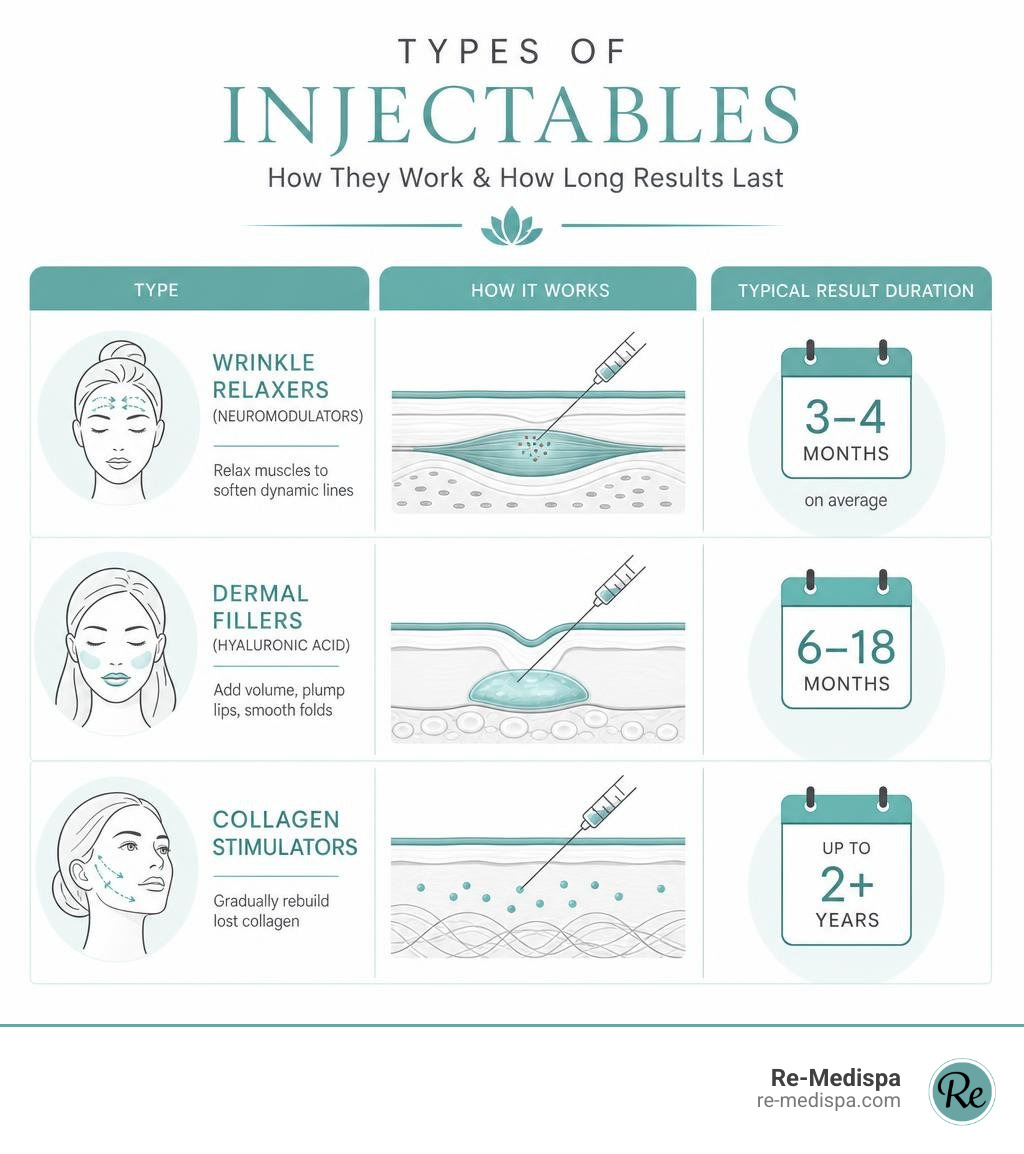
Here’s a quick overview of the main types:
| Type | What It Does | How Long Results Last |
|---|---|---|
| Wrinkle relaxers (neuromodulators) | Relax muscles to soften dynamic lines | 3–4 months on average |
| Dermal fillers (hyaluronic acid) | Add volume, plump lips, smooth folds | 6–18 months |
| Collagen stimulators | Gradually rebuild lost collagen | Up to 2+ years |
Maybe you’ve noticed your forehead lines are sticking around even when your face is relaxed. Or your cheeks look a little flatter than they used to. These are some of the most common signs of facial aging — and they’re exactly what modern injectables are designed to address.
According to the American Society for Dermatologic Surgery, ASDS members alone performed 4 million wrinkle-relaxing and soft-tissue filler injections in 2019. That number has only grown since. Wrinkle relaxers increased 60% and fillers increased 78% over the preceding years — and it’s easy to understand why.
The appeal is real: quick appointments, minimal recovery, and natural-looking results that fit into a busy schedule. For many people in their 30s, 40s, and 50s, injectables have become a trusted part of how they take care of themselves.
But with so many products, brand names, and providers out there, knowing where to start — and how to stay safe — can feel overwhelming. This guide walks you through everything you need to know.
Understanding Cosmetic Injectables and How They Work
To understand how injectables work, it helps to look at what happens beneath the surface of your skin over time. As we age, our facial structures undergo a natural shift. We lose bone density, our facial fat pads begin to shrink and migrate downward, and our bodies produce less collagen and elastin.
This structural shift shows up on the outside as hollow temples, flatter cheeks, sagging jawlines, and deeper folds around the mouth. At the same time, decades of making everyday facial expressions—like smiling, squinting, or frowning—etch permanent creases into the skin.
These creases are known as dynamic wrinkles because they are caused by muscle movement. When your skin is young and full of collagen, it easily snaps back into place. As those support structures weaken, those dynamic lines eventually turn into static wrinkles, which remain visible even when your face is completely at rest.
This is where cosmetic injectables come in to offer a non-surgical solution. Instead of pulling the skin tight through invasive surgery, these targeted treatments address the root causes of aging at specific layers of the facial anatomy.
By strategically relaxing the overactive muscles that cause creasing or physically replenishing the volume that time has taken away, we can refresh your appearance while keeping your unique expressions intact. The goal is never to change how you look, but rather to restore the youthful scaffolding that supports your natural features.
Understanding these differences is key to getting the results you want. To dive deeper into how these two approaches compare, you can read our guide on Botox vs Dermal Fillers.
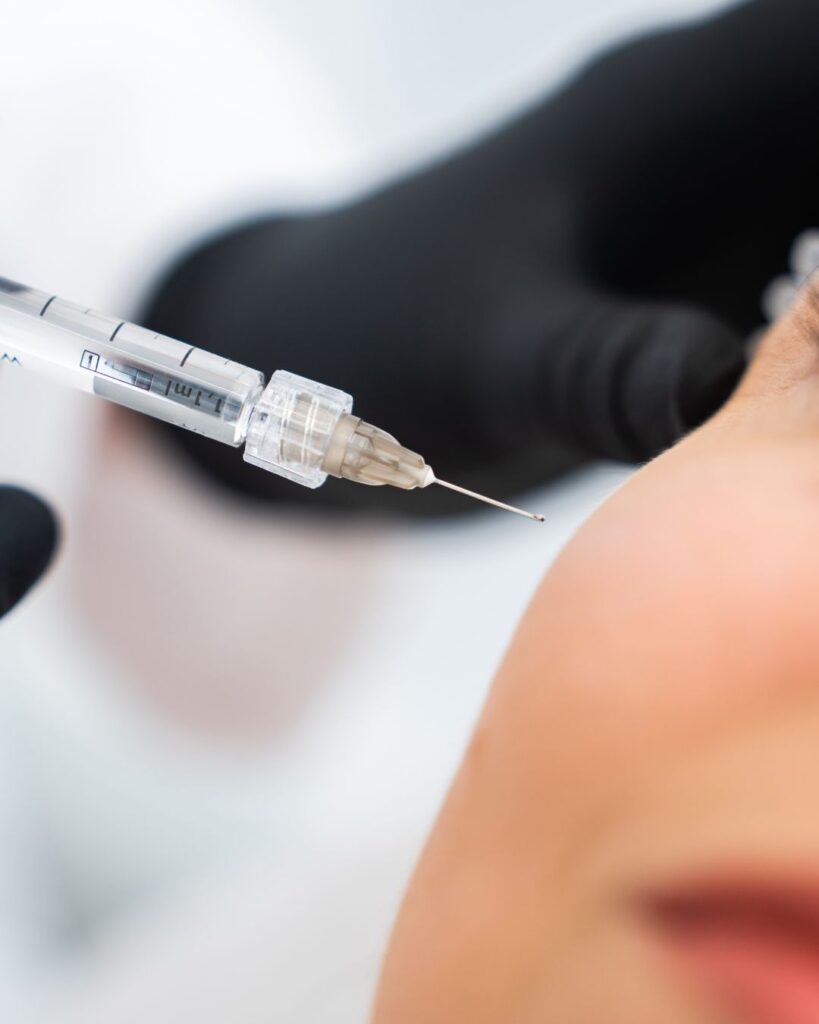
The Main Types of Aesthetic Injectables
No two faces age in the exact same way, which is why there is no single “magic” injectable. Modern aesthetic medicine relies on a customized approach that matches the right product to your specific anatomical needs.
During a professional consultation, your provider will evaluate your facial movement, skin elasticity, and volume distribution to design a personalized plan. Often, the most balanced and natural-looking rejuvenation comes from combining different types of treatments.
For instance, treating active forehead lines while simultaneously restoring volume to the temples or cheeks can create a beautifully harmonious result. This comprehensive approach is why many clients find that combining treatments works better together rather than relying on a single product alone.
Wrinkle Relaxers: Neuromodulator Injectables
Neuromodulators—commonly known by brand names like Botox, Dysport, Xeomin, Jeuveau, and Daxxify—are the go-to treatments for softening dynamic wrinkles. These products are made from a purified, safe protein derived from botulinum toxin.
When precisely injected into a targeted muscle, the neuromodulator temporarily blocks the nerve signals that tell that muscle to contract. Because the muscle can no longer squeeze quite as hard, the overlying skin relaxes, allowing stubborn lines to smooth out.
This treatment is highly effective for treating horizontal forehead lines, crow’s feet around the eyes, and the vertical frown lines between the eyebrows (often called the “11s”). The treatment takes only about 10 to 15 minutes, has no real downtime, and the temporary effects typically last between three and four months.
Dermal Fillers: Volumizing Injectables
While wrinkle relaxers address active muscle movement, dermal fillers are all about restoring physical volume and structure. These gel-like substances are injected beneath the skin to lift flat cheeks, plump thin lips, smooth deep nasolabial folds, and contour the jawline.
The most common dermal fillers are made of hyaluronic acid, a sugar molecule that occurs naturally in your skin and holds up to a thousand times its weight in water. This makes hyaluronic acid fillers incredibly hydrating and soft, yielding highly natural results.
Other fillers use synthetic materials like calcium hydroxylapatite to provide firmer structural support for deeper folds or bony areas like the chin and jawline. If you are interested in exploring how these options can help you achieve your goals, you can learn more about our dermal filler options.
| Filler Material | Typical Uses | Average Duration |
|---|---|---|
| Hyaluronic Acid (HA) | Lips, cheeks, tear troughs, nasolabial folds | 6 to 18 months |
| Calcium Hydroxylapatite (CaHA) | Deep wrinkles, jawline contouring, hand rejuvenation | 12 to 18 months |
| Poly-L-lactic Acid (PLLA) | Gradual volume loss, temple hollows, cheek prep | 2+ years |
Collagen Stimulators: Long-Term Rejuvenation
Unlike traditional fillers that provide instant volume, collagen stimulators work by triggering your body’s natural healing response. The most well-known biostimulator is Sculptra, which is formulated with poly-L-lactic acid (PLLA).
When injected, these microparticles act as a structural scaffold beneath your skin. Over the following weeks and months, your body gradually absorbs the product and replaces it with fresh, strong collagen fibers.
This process, known as neocollagenesis, leads to gradual, incredibly natural-looking volume restoration, improved skin texture, and overall skin firming. To understand how these long-term treatments work to rebuild your skin’s foundation, read more about how Sculptra works or explore Radiesse as a collagen-stimulating filler.
What to Expect: Your Step-by-Step Treatment Journey
Starting your journey with injectables should always begin with a thorough, professional consultation. This is your opportunity to share your aesthetic goals, voice any hesitations, and discuss your medical history.
Your provider will carefully examine your facial anatomy, evaluate your skin quality, and explain which treatments will best address your concerns. At Re-Medispa, we use an advanced AI preview tool during this step to help you visualize your potential treatment results before we even begin.
Once you and your provider have agreed on a personalized plan, your session can proceed. To prepare for your appointment, we recommend avoiding blood-thinning supplements, NSAIDs like ibuprofen, and alcohol for about a week beforehand to minimize the risk of bruising.
On the day of your treatment, the target area will be thoroughly cleansed. A topical numbing cream or ice may be applied to ensure you remain comfortable throughout the process.
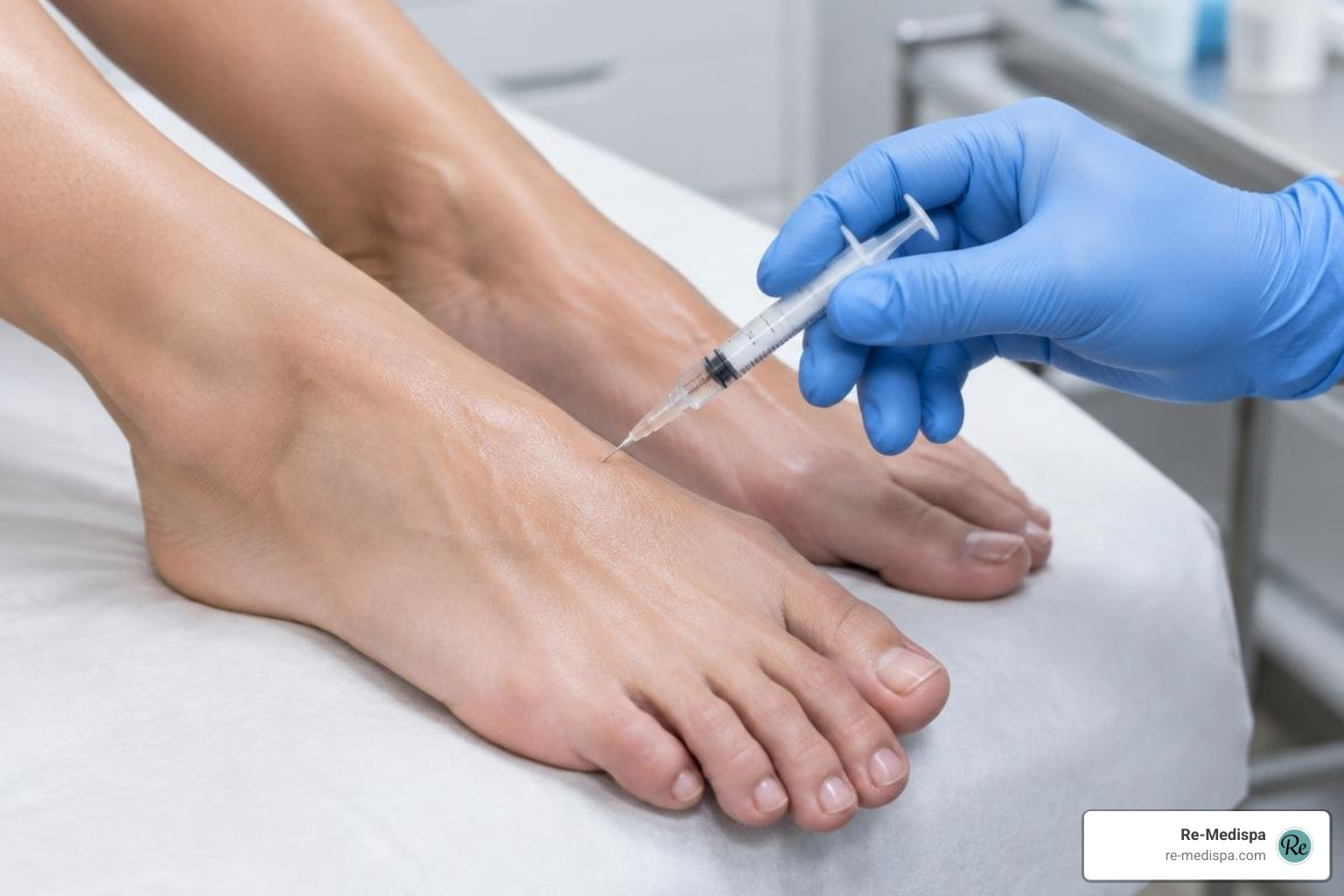
Using an ultra-fine needle or a blunt-tipped cannula, your provider will precisely place the product into the designated areas. The injections themselves take only a few minutes, and most clients describe the sensation as a quick pinch.
After your session, you can immediately return to your normal daily routine, making it a perfect “lunch break” treatment. However, you should avoid rubbing your face, lying down flat for four hours, and engaging in strenuous exercise or exposing yourself to intense heat for 24 hours.
To help you feel completely confident before your first appointment in the Northwest suburbs, you can read our complete guide on what to expect during treatment.
Patient Safety, Side Effects, and Contraindications
Your health and safety should always be the top priority when considering any cosmetic treatment. All the injectables we use are thoroughly studied, FDA-approved, and have established safety profiles when administered by qualified medical professionals.
However, like any medical procedure, injectables do carry some potential risks and common side effects. It is completely normal to experience mild swelling, redness, tenderness, or bruising at the injection sites.
These temporary side effects are usually very mild and typically resolve on their own within a few days. More significant complications, such as allergic reactions or vascular occlusion (where filler accidentally enters a blood vessel), are exceedingly rare when treatments are performed by highly trained, licensed experts who understand facial anatomy intimately.
There are also certain situations where injectables should be avoided. These treatments are contraindicated for individuals who are pregnant, breastfeeding, or have active skin infections in the target treatment area.
Additionally, patients with certain neurological conditions should consult their primary physician before receiving neuromodulators. For broader clinical guidelines on medical injections and patient safety, you can review the CDC guidelines on medical injectables.
Furthermore, you can read the official FDA prescribing information on therapeutic injectable suspensions to understand how prescription suspensions are regulated for safety. Always ensure you are receiving care from a licensed, experienced professional in a clean clinical environment.
Frequently Asked Questions About Injectables
How long do the results of these treatments typically last?
The longevity of your results depends on the specific product used, the area treated, and your individual metabolism. On average, wrinkle relaxers last about three to four months before muscle activity fully returns.
Hyaluronic acid fillers typically last anywhere from six to 18 months, while collagen-stimulating treatments like Sculptra can deliver results that are visible for up to two years or more. Over time, your body naturally and safely absorbs these products, which is why regular maintenance sessions are recommended to preserve your refreshed look.
What is the difference between wrinkle relaxers and dermal fillers?
In simple terms, wrinkle relaxers “freeze” or relax the overactive muscles that cause dynamic expression lines, while dermal fillers “fill” in flat areas, deep folds, and hollows to restore youthful volume.
Wrinkle relaxers are best for the upper face, like forehead lines and crow’s feet. Dermal fillers are ideal for the lower and mid-face, such as the cheeks, lips, and jawline, where physical volume has been lost over time.
Are there any safety alerts regarding needle-free injection devices?
Yes, health authorities have issued strong safety alerts warning consumers against using needle-free devices, such as hyaluron pens, for cosmetic injections. These devices use high-pressure air to force hyaluronic acid through the skin without a needle.
Because they are unregulated and often used by untrained individuals at home, they carry an incredibly high risk of serious complications. These include severe skin damage, permanent scarring, bacterial infections, and vascular occlusion, which can lead to tissue death.
For your safety, cosmetic injectables should only ever be administered using sterile, medical-grade needles or cannulas by a licensed professional in a clinical setting.
Re-Medispa’s Approach to Personalized Rejuvenation
At Re-Medispa, we believe that the best cosmetic treatments are those that whisper rather than shout. Led by our founder and medical director, Renata Ciszek, our team is dedicated to providing honest, personalized care that enhances your natural beauty while preserving your unique expressions.
We take the time to listen to your goals, answer your questions, and design a customized treatment plan that fits your lifestyle. To make your journey even more comfortable, we utilize an advanced AI preview tool during your consultation so you can preview your refreshed look with confidence.
Whether you are visiting us at our beautiful location in Arlington Heights (37 S Evergreen Ave) or our convenient office in Harwood Heights (5128 N Harlem Ave), you will experience a warm, professional environment designed with your safety and comfort in mind.
We proudly serve clients from throughout the surrounding Northwest suburbs, including Palatine, Schaumburg, Des Plaines, Mount Prospect, Buffalo Grove, Park Ridge, Northbrook, and Glenview.
If you are ready to take the next step toward feeling like the best version of yourself, we invite you to explore our safe injectable options and schedule your personalized consultation with us today.