
The No-Nonsense Guide to Smoothing Out Forehead Lines
What You Should Know Before Getting Botox for Forehead Wrinkles
Botox for forehead wrinkles is one of the most popular non-surgical treatments in the world — and for good reason. It’s fast, requires no downtime, and can make a real visible difference in how rested and relaxed your face looks.
But there’s a lot of confusion out there. Does it work on deep lines? Is it safe long-term? Will your face look frozen? These are fair questions, and you deserve straight answers before you commit to anything.
Here’s a quick snapshot of what most people want to know:
| Question | Quick Answer |
|---|---|
| How does it work? | Botox relaxes the forehead muscle that creates horizontal lines when you raise your brows |
| Does it erase deep wrinkles? | It softens them significantly — very deep static lines may need a combination approach |
| How long do results last? | Typically 3–4 months, sometimes up to 6 months |
| Is it safe long-term? | Yes — cosmetic doses are small, and long-term safety data spans over 15 years |
| What if I stop? | Your wrinkles simply return to where they were before treatment — nothing worsens |
| Who gets the most benefit? | Adults 65 and younger tend to see the strongest results |
The rest of this guide goes deeper — covering the science, the dosing, the side effects, and how to know if you’re a good candidate. Whether you’re curious about your first treatment or trying to get better results from an existing routine, you’ll find clear, honest answers here.
Botox for forehead wrinkles terms explained:
How Botox for Forehead Wrinkles Works at the Neuromuscular Level
To understand how botox for forehead wrinkles works, we have to look beneath the surface of the skin. Every time you raise your eyebrows in surprise, worry, or concentration, your brain sends a rapid electrical signal to your frontalis muscle—the large, flat muscle that spans your entire forehead.
This signal travels down a nerve pathway until it reaches the neuromuscular junction, which is the meeting point between the nerve ending and the muscle fiber. Under normal circumstances, the nerve releases a chemical messenger called acetylcholine. This neurotransmitter binds to receptors on the muscle, causing it to contract. This contraction pulls the overlying skin together, creating horizontal lines.
Botox (onabotulinumtoxinA) acts as a highly targeted shield at this junction. Once injected, the active molecules enter the nerve terminal and selectively cleave a specific protein called SNAP-25. This protein is part of the SNARE complex, which is the cellular machinery required to release acetylcholine.
Without SNAP-25, the nerve cannot release the chemical signal, preventing the frontalis muscle from contracting. The muscle relaxes, and the skin above it remains smooth. For a deeper look at the biology behind this process, you can explore our detailed guide on Neuromodulator Science. You can also review the official FDA Prescribing Information for complete safety and clinical profiles.

Understanding the Difference Between Dynamic and Static Lines
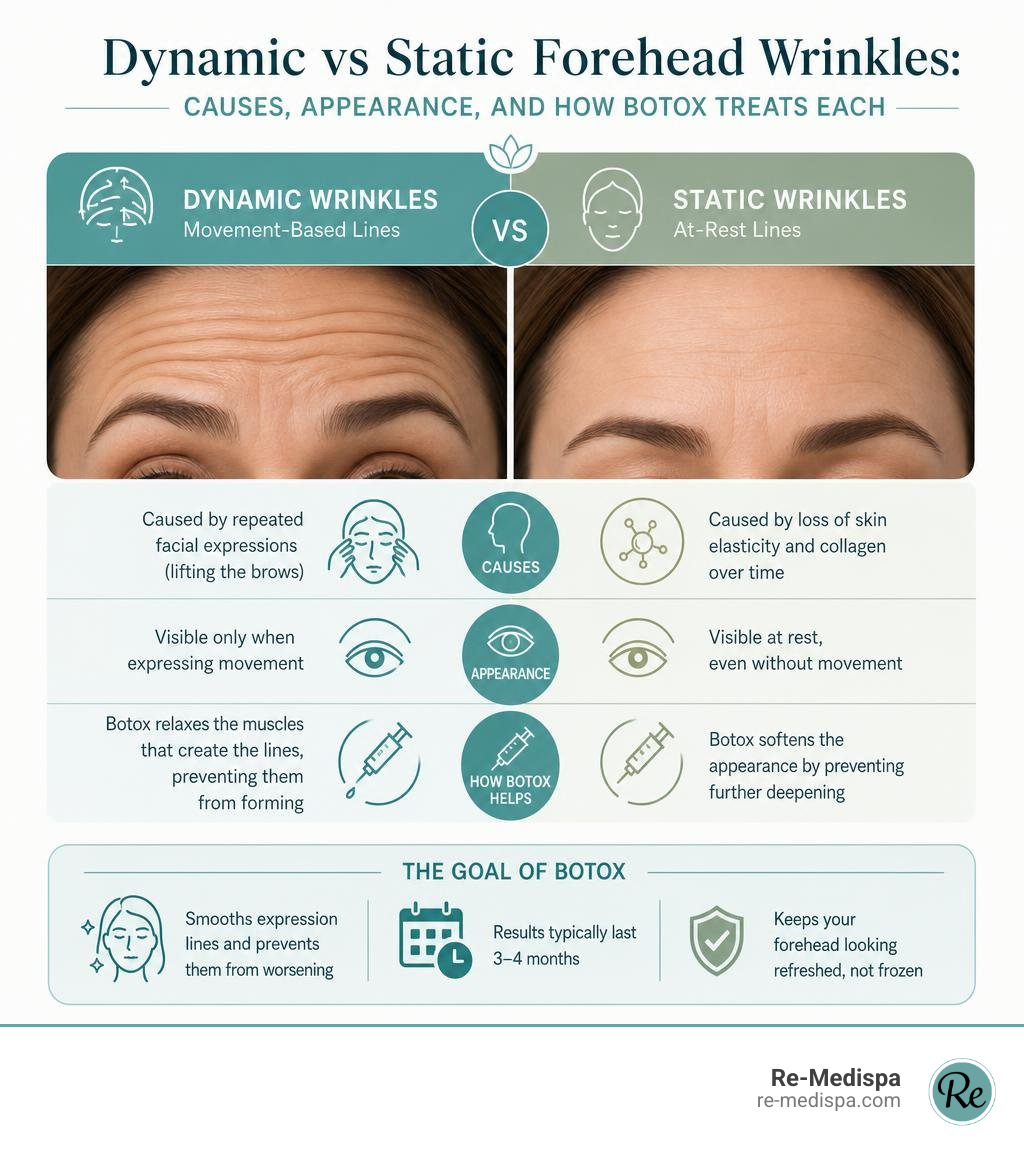
When addressing facial aging, it is helpful to categorize wrinkles into two distinct types: dynamic lines and static lines.
Dynamic lines are only visible when your face is active. When you raise your eyebrows, lines appear across your forehead; when you relax your face, they vanish. Botox is exceptionally effective at treating these lines because it temporarily limits the muscle movements that cause them.
Static lines, on the other hand, are visible even when your face is completely relaxed. They develop over years of repetitive dynamic expressions combined with the natural loss of collagen, elastin, and hyaluronic acid in the skin. The skin loses its bounce and structural integrity, causing the temporary folds to become permanent creases.
While Botox can soften static lines by preventing the constant folding of the skin, it may not completely erase them on its own. Rebuilding the structural support beneath these etched-in creases often requires a different approach. To learn how we differentiate these structural concerns, read our comparison on Botox vs Dermal Fillers.
Clinical Administration: Dosage, Technique, and Natural Results
Administering botox for forehead wrinkles is a precise art that requires an intimate understanding of facial anatomy. The frontalis is the only muscle that elevates the eyebrows. If it is injected incorrectly or over-treated, the eyebrows can droop, creating a heavy, tired look.
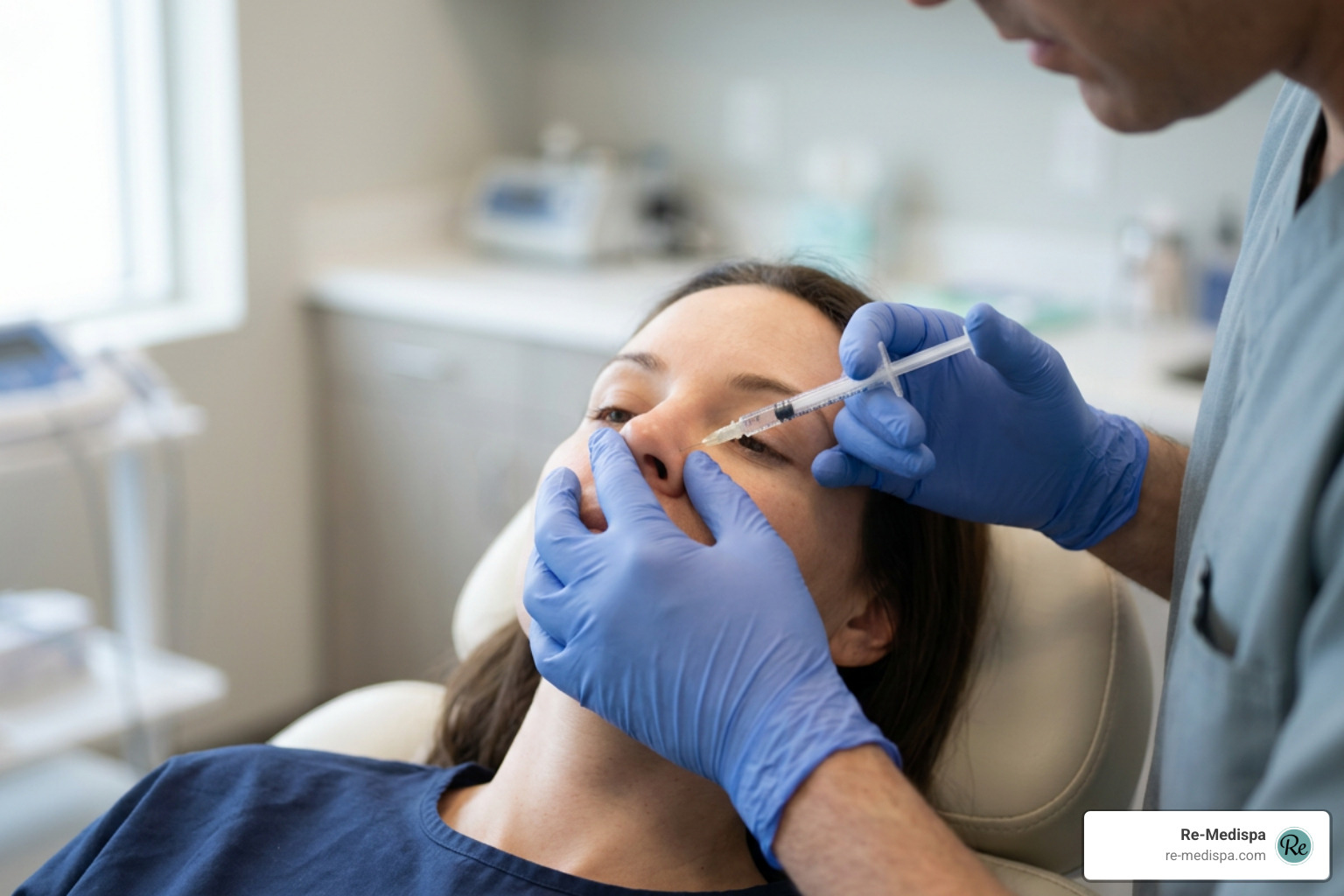
During a professional treatment session, we perform careful frontalis mapping. We ask you to raise your eyebrows, squint, and frown to observe how your unique muscles move. We then mark precise injection sites across your forehead, typically placed in one or two horizontal rows at least 2 centimeters above your eyebrows to preserve natural movement.
Your customized dose is determined by your age, gender, muscle mass, and aesthetic goals. For a comprehensive overview of what to expect during your first visit, refer to our Complete Guide to Botox.
Why Forehead Injections Must Be Paired with Glabellar Treatments
One of the most common mistakes in facial aesthetics is treating the horizontal forehead lines in isolation. The frontalis muscle pulls the eyebrows upward, while the glabellar muscles—the corrugators and procerus between your eyebrows—pull them downward.
If we relax the frontalis muscle without treating the glabellar complex, the downward-pulling muscles will dominate. This imbalance can lead to a heavy brow or a drooping appearance, clinically known as brow ptosis.
To prevent this, clinical guidelines established by the FDA recommend treating forehead lines in conjunction with glabellar lines, using a balanced dosing strategy across both areas. This clinical standard is detailed further in the DailyMed FDA Label, which highlights the importance of maintaining proper muscular equilibrium.
Achieving Natural-Looking Results with Botox for Forehead Wrinkles
The fear of looking “frozen” or expressionless is a common hesitation for many first-time patients. Modern aesthetic medicine has shifted away from high-dose, blanket treatments toward a philosophy of conservative micro-dosing.
By injecting smaller, precise amounts of Botox, we can soften horizontal lines while preserving subtle eyebrow movement. This ensures you can still express joy, surprise, and concern naturally.
For some patients, alternative neuromodulators may offer a slightly softer, more natural spread. If you are curious about how different options compare, you can read about Why Dysport May Work Better for certain forehead structures.
How to Choose a Qualified Injector for Your Treatment
Because the forehead is an anatomically sensitive area, choosing a highly qualified, licensed medical professional is the most important step in your treatment journey. An experienced injector understands how to assess your facial symmetry, identify subtle differences in muscle strength, and manage any unexpected side effects.
When selecting an injector in the Chicagoland area, look for providers with strong medical credentials, specialized training in facial aesthetics, and a portfolio that showcases natural-looking results.
At Re-Medispa, our clinical team is dedicated to providing safe, honest, and highly personalized care. To learn more about our standards and our local practice, visit our page on Botox Arlington Heights IL Harwood Heights IL.
Safety, Side Effects, and Long-Term Use of Botox for Forehead Wrinkles
With over two decades of cosmetic use and millions of treatments performed worldwide, Botox has an exceptional safety profile. It is well-tolerated for both short- and long-term use, and cosmetic doses are significantly smaller than those used to treat medical conditions like muscle spasticity or chronic migraines.
When administered regularly, Botox temporarily reduces muscle activity, allowing the skin to rest and recover. To understand how to maintain these benefits safely over time, read our guide on How to Make Your Botox Results Last Longer.
Common Side Effects and How to Manage Them
Like any injectable treatment, botox for forehead wrinkles can cause mild, temporary side effects. These are generally localized to the injection site and resolve within a few days.
The most common side effects include:
- Mild Headache: Occurring in about 9% of patients, this is typically mild and resolves within 24 to 48 hours.
- Temporary Bruising or Redness: Small pinprick bruises can occur at the injection site. Applying a cold compress immediately after treatment can help minimize swelling.
- Brow Heaviness: If the frontalis muscle is slightly over-treated, you may feel a temporary heaviness in your brow, which typically resolves as the product settles.
For a complete list of clinical safety data and adverse reactions, you can consult the official FDA Drug Label.
What Happens If You Stop Botox for Forehead Wrinkles After Years of Treatment?
A common myth is that if you stop getting Botox, your wrinkles will return worse than before. This is entirely untrue.
If you choose to discontinue your treatments after several years, your frontalis muscle will gradually regain its full strength. Your forehead lines will slowly return to their baseline, pre-treatment state.
In fact, because the muscle was relaxed for an extended period, you will have prevented new lines from forming during those years. This long-term benefit is why many younger adults choose to begin treatments early. For more on this approach, explore our article on Preventative Botox.
Maximizing Results: Longevity, Maintenance, and Complementary Treatments
The smoothing effects of Botox typically begin to appear within 3 to 5 days, with full results visible at the 2-week mark. On average, these results last between 3 to 4 months.
However, individual longevity depends on several factors, including your metabolism, the strength of your facial muscles, and how expressive you are. Active individuals or those with a high metabolic rate may find that the product wears off slightly faster.

Why Botox Only Softens Deep Creases and How to Combine Treatments
If you have deep, static creases that remain visible when your face is at rest, Botox alone may not fully erase them. In these cases, we often recommend a multi-modality approach to restore skin smooth texture and volume.
We can combine neuromodulators with other clinical treatments to address both the muscle movement and the skin’s structure. Here is how these treatments compare:
| Treatment | Primary Purpose | How It Works | Best For |
|---|---|---|---|
| Botox | Relaxes underlying muscles | Blocks nerve signals to the frontalis | Dynamic lines and preventing crease deepening |
| Dermal Fillers | Restores lost volume | Plumps the crease directly with hyaluronic acid | Deep, static folds present at rest |
| Laser Resurfacing | Rebuilds skin texture | Stimulates collagen via controlled light energy | Fine lines, sun damage, and overall skin quality |
| Microneedling | Boosts collagen production | Creates micro-injuries to trigger natural healing | Mild static lines and structural skin tightening |
Preventative Skincare and Non-Injection Alternatives
To support your clinical results at home, a dedicated skincare routine is essential. While topical products cannot relax muscles as effectively as an injectable, they play a vital role in maintaining skin health and delaying the signs of aging.
We recommend incorporating these key ingredients into your daily routine:
- Retinoids: Promote cellular turnover and stimulate collagen production to soften fine lines.
- Broad-Spectrum Sunscreen (SPF 30+): Protects the skin from UV radiation, which is responsible for up to 90% of premature skin aging.
- Peptides: Support the skin’s natural proteins to improve firmness and elasticity.
- Hyaluronic Acid: Deeply hydrates the skin, temporarily plumping fine lines for a smoother appearance.
What Factors Influence the Cost of Forehead Botox?
The cost of your treatment is determined by several clinical factors, including the number of units required to achieve your desired results, the size of the treatment area, and the expertise of your injector.
Because every face is unique, a one-size-fits-all approach does not work. During your consultation, we assess your anatomy to design a customized plan. If you are comparing different neuromodulators to see which fits your goals, read our comparison of Botox vs Dysport.
The Re-Medispa Approach to Smooth, Natural-Looking Skin
At Re-Medispa, we believe that the best aesthetic treatments are the ones that no one else can detect. Led by Renata Ciszek (Founder & Medical Director), our practice is built on a foundation of honest, personalized, and patient-first care.
We understand that taking the first step toward aesthetic treatments can feel overwhelming. That is why we utilize an advanced AI preview tool during our consultations. This technology allows you to visualize your potential treatment results before we ever begin, helping you make informed, confident decisions about your care.
We are proud to serve our local communities from our two convenient Chicagoland locations:
- Arlington Heights: 37 S Evergreen Ave (perfect for clients in Palatine, Schaumburg, and Mount Prospect)
- Harwood Heights: 5128 N Harlem Ave (conveniently located for residents of Park Ridge, Des Plaines, and Norridge)
Ready to explore how we can help you achieve a refreshed, natural look? Schedule a personalized consultation with our licensed professionals today.