
Can Botox Help With Excessive Foot Sweating?
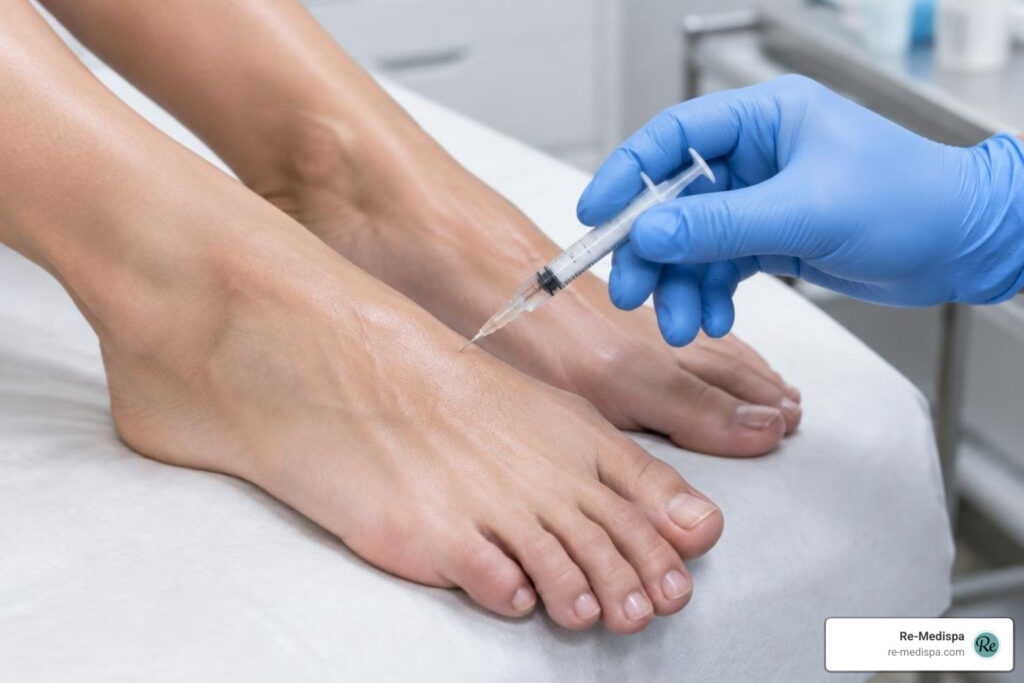
Do damp socks, slippery shoes, or foot odor make a busy day even harder? Botox for hyperhidrosis feet can temporarily reduce excessive sole sweating by blocking the nerve signals that activate sweat glands.
If clinical-strength antiperspirants or other conservative measures have not helped enough, the next step is a consultation with a licensed medical professional. Botox is FDA-approved for severe underarm sweating, but treatment for sweaty feet is an off-label medical use, meaning a qualified clinician may use an approved medication for a purpose not specifically listed on its FDA label.
Foot injections are performed in a clinical setting and can provide a significant reduction in sweating for many people, often for several months. At Re-Medispa in Arlington Heights, your provider can review your symptoms, health history, comfort options, and whether this approach fits your needs. In addition to aesthetic treatments like smoothing forehead lines, specialized injectables offer targeted relief for functional concerns throughout the body, complemented by comprehensive wellness options including peptides.
Understanding Plantar Hyperhidrosis and Excessive Sweating
Plantar hyperhidrosis is a clinical condition characterized by chronic, excessive perspiration on the soles of the feet. Unlike normal sweating, which is your body’s natural cooling mechanism during exercise or hot weather, hyperhidrosis causes overactive sweating regardless of ambient temperature.
The human foot contains roughly 250,000 eccrine sweat glands—one of the highest concentrations found anywhere on the body. In individuals with primary hyperhidrosis, the sympathetic nervous system sends excessive signals via acetylcholine to these glands. This constant moisture can lead to skin breakdown, chronic fungal infections, and damaged footwear.
Aesthetic medicine has expanded significantly in recent years. Today, there are many established medical uses for Botox beyond wrinkle reduction, including the targeted management of overstimulated neuromuscular and glandular pathways.
Clinical Criteria and Ideal Candidates
Determining whether you are a good candidate begins with a thorough evaluation by a qualified medical professional. Licensed practitioners assess whether your symptoms stem from primary focal hyperhidrosis or secondary underlying health conditions.
Ideal candidates are generally adults who:
- Experience persistent, visible sweat pooling on their soles despite good hygiene.
- Have not achieved adequate relief from clinical-strength topical antiperspirants or other conservative therapies.
- Face daily lifestyle disruptions, such as having to change socks multiple times per day or sliding inside footwear.
- Do not have active skin infections, open wounds on the soles, or underlying neuromuscular disorders.
Comprehensive clinical research on palmoplantar botulinum toxin demonstrates that targeted neuromodulator therapy can substantially improve quality of life for individuals dealing with chronic focal sweating (Eilertsen et al., 2024).
Who Is Not a Good Candidate for Foot Botox?
Botox for plantar hyperhidrosis is not appropriate for everyone. You may not be a suitable candidate if you are pregnant, nursing, or have a diagnosed neuromuscular condition such as myasthenia gravis. Active skin infections, open wounds, or certain nerve disorders on the feet also require clearance from a licensed provider before treatment can be considered.
A thorough medical review helps your provider determine whether this approach is safe for you. Never attempt to self-diagnose excessive sweating, and always discuss any underlying health concerns during your consultation.
How Botox for Hyperhidrosis Feet Controls Severe Sweating
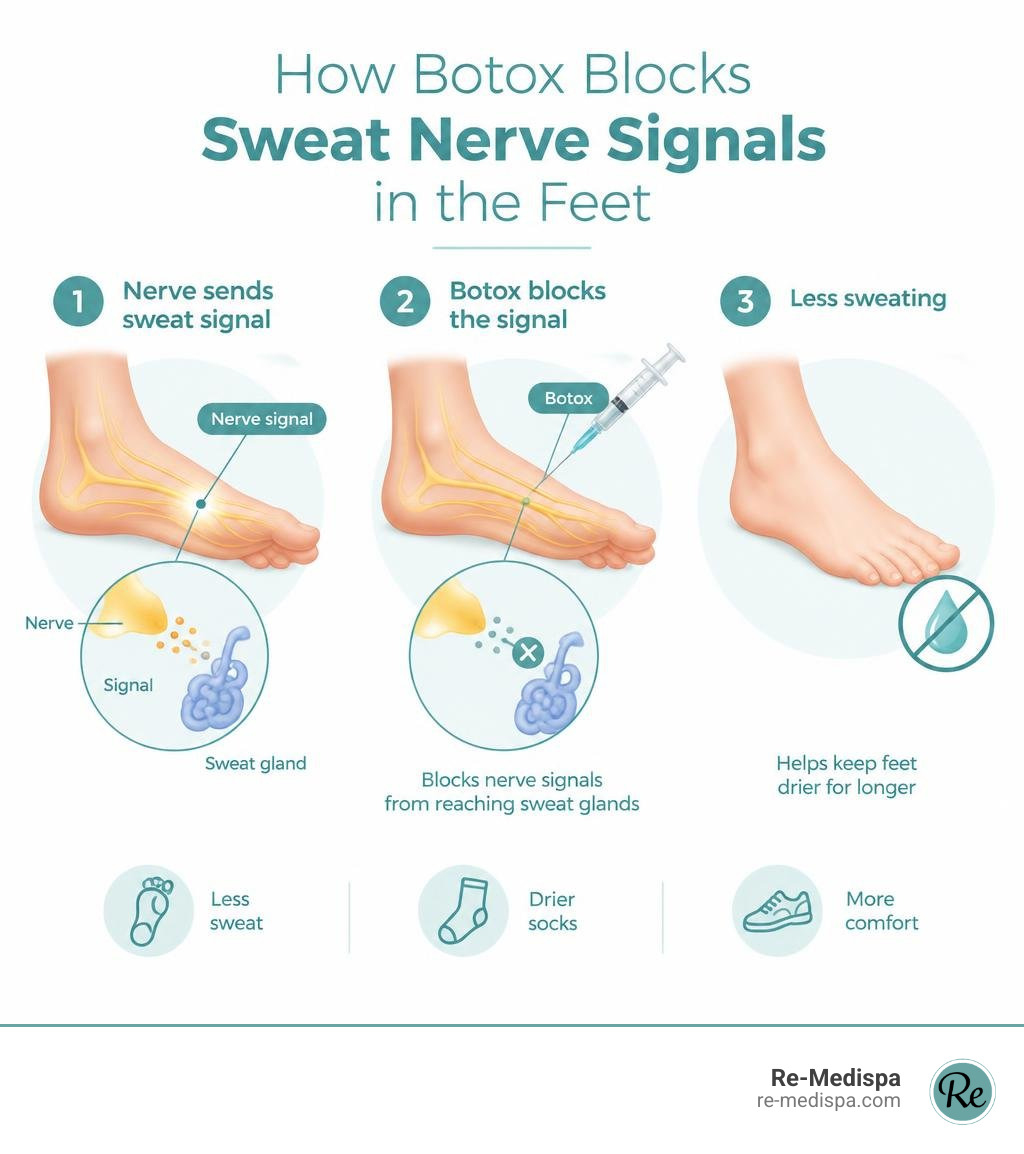
Botox (onabotulinumtoxinA) functions as a targeted neurotoxin that temporarily halts localized glandular activity. When injected intradermally into the sole, it binds to nerve endings and prevents the exocytosis of acetylcholine by cleaving SNAP-25, a key docking protein.
Without acetylcholine signaling, the overactive eccrine glands simply do not receive the message to produce sweat. Clinical evaluations show that neurotoxin injections in the soles typically result in a significant reduction in local sweat output for many clients. Because the medication stays localized to the injected dermal layer, normal body-wide thermoregulation remains completely unaffected.
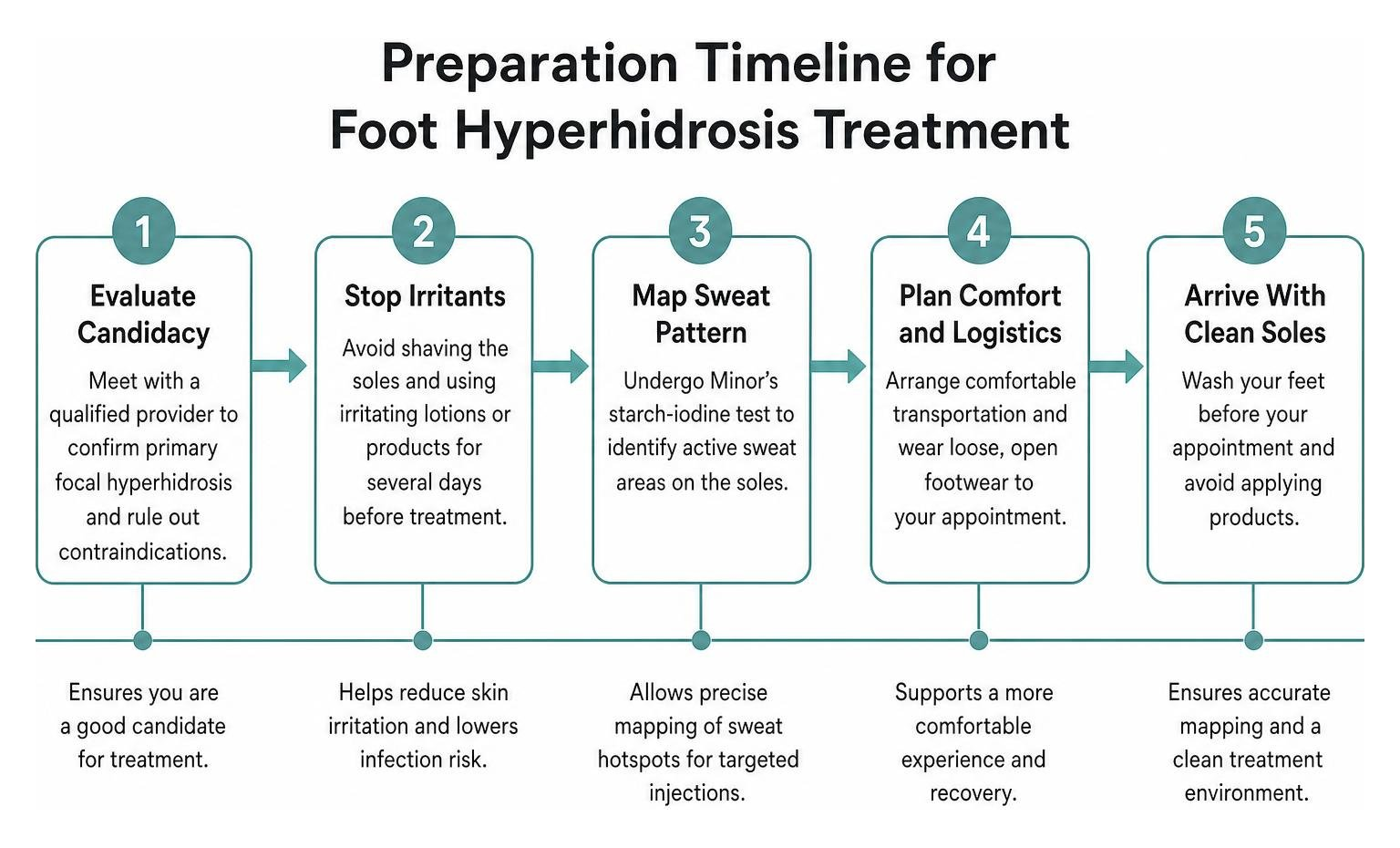
Preparing for Botox for Hyperhidrosis Feet
Proper preparation ensures both maximum safety and optimal results during your session. Prior to treatment, your clinician may perform a Minor’s starch-iodine test to map your unique sweat pattern.
In this test, iodine is applied to the dried sole followed by a light dusting of starch powder. Areas with active perspiration turn a deep dark blue or purple, allowing the injector to pinpoint exact hotspots. Understanding what to expect before, during, and after Botox helps you prepare comfortable transportation and post-care footwear.
The Step-by-Step Injection Procedure
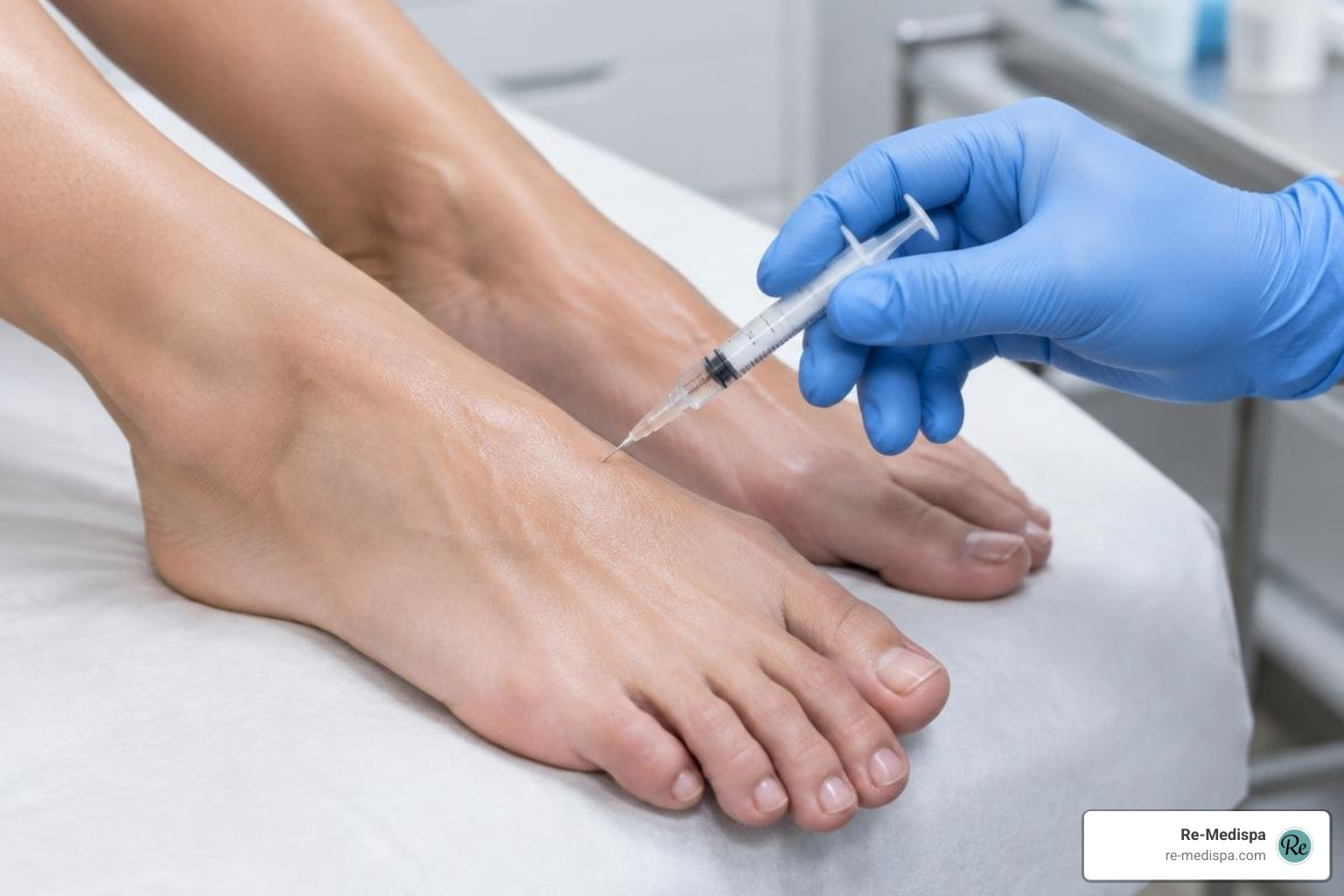
The skin on the sole of the foot is dense and richly innervated with sensory receptors. To maintain patient comfort, licensed providers use proven numbing protocols such as topical anesthetic creams, vibration distraction, ice packs, or regional nerve blocks.
- Mapping: The provider marks an even grid across the sole, typically spacing points 1 to 1.5 centimeters apart.
- Cleansing: The area is thoroughly disinfected with an antiseptic solution.
- Micro-Injections: Using an ultra-fine 30- to 32-gauge needle, the provider delivers tiny intradermal droplets just beneath the top layer of skin.
- Post-Care Application: The area is cleaned and cooled to soothe the skin immediately after the micro-injections are complete.
Precise dosing depends on individual foot size and sweat severity. Practitioners reference established unit dosing guidelines to ensure an effective, balanced outcome, and treatment plans are always determined by a licensed professional during a private consultation.
Treatment Timeline, Longevity, and Expected Results
Botox does not stop sweating instantaneously because the protein requires time to bind to the nerve terminals. Most patients begin noticing a visible reduction in moisture within 7 to 14 days, with full therapeutic effects reached at roughly 3 to 4 weeks.
How Long Does Botox for Hyperhidrosis Feet Last?
For most individuals, the sweat-reducing effects of foot Botox last between 3 and 6 months, occasionally stretching up to 9 months depending on individual factors, though results may vary. Over time, nerve terminals naturally sprout new connections, and eccrine gland stimulation gradually returns.
To maintain dry feet year-round, patients typically schedule repeat maintenance sessions. Learning how to extend Botox treatment results—such as managing local skin health and coordinating routine maintenance appointments—ensures smooth, sustained comfort. Studies on plantar sweating show high rates of patient satisfaction when treatments are properly scheduled (Bernhard et al., 2018).
Potential Side Effects and Safety Considerations
Like any medical aesthetic procedure, Botox injections on the soles carry potential side effects that should be understood prior to treatment:
- Mild injection discomfort and tenderness: Common for 24 to 72 hours following the appointment.
- Localized bruising or redness: Resolves naturally within a few days.
- Transient intrinsic muscle weakness: If product diffuses slightly deeper into intrinsic foot muscles, mild temporary weakness when gripping with the toes can occur, resolving on its own over several weeks.
Botox should not be administered to individuals who are pregnant, nursing, or diagnosed with systemic neuromuscular conditions like myasthenia gravis. A professional consultation is essential to evaluate your medical background and ensure total safety.
A Common Concern: Will My Feet Feel Completely Numb?
A frequent worry is that reducing foot sweat will leave the soles feeling numb or disconnected. Botox for hyperhidrosis targets sweat glands, not the sensory nerves responsible for touch, pressure, or balance. Most patients retain normal sensation in their feet while simply noticing less moisture throughout the day.
Some individuals do experience mild temporary tenderness at the injection sites for a day or two, but this is not the same as numbness. If you have concerns about how your feet will feel after treatment, your provider can walk you through what to expect during your consultation.
Frequently Asked Questions About Foot Botox
Is Botox FDA-approved for sweaty feet?
Botox is FDA-approved for severe primary axillary (underarm) hyperhidrosis. Its application for plantar (foot) and palmar (hand) hyperhidrosis is considered an established off-label use. In medical practice, off-label use allows qualified providers to utilize proven medications for indications supported by clinical literature and professional consensus.
Does getting Botox injections in the feet hurt?
Because the soles have a high density of nerve endings, injections in the feet can be more uncomfortable than underarm or facial injections. However, medical providers utilize multiple comfort measures—including compounded topical anesthetics, ice packs, and ankle nerve blocks—to ensure the procedure remains manageable and well-tolerated.
Will stopping foot sweat cause compensatory sweating elsewhere?
Compensatory sweating is sometimes reported after invasive surgical procedures, but it is exceptionally rare with localized botulinum toxin injections. Botox simply quiets the sweat glands in the specific zone treated without forcing the body to redirect fluid production to other body regions.
How many units of Botox are typically used for sweaty feet?
The total number of units varies based on foot size, sweat severity, and your provider’s clinical judgment. Treatment plans are always determined by a licensed professional during a consultation, and no standard dose applies to every patient. Your injector will assess your unique sweat pattern and recommend an appropriate approach for your needs.
Finding Professional Care for Sweaty Feet in Illinois
Managing severe plantar sweating requires experienced medical injectors who understand dermal anatomy and precision placement. At Re-Medispa, founder and Medical Director Renata Ciszek leads a clinical team dedicated to personalized, compassionate care across our two welcoming locations in Arlington Heights (37 S Evergreen Ave) and Harwood Heights (5128 N Harlem Ave).
Whether you reside in Arlington Heights, Harwood Heights, or surrounding Northwest Chicago suburbs like Palatine, Mount Prospect, or Park Ridge, our practice offers comprehensive injectables tailored to your personal wellness goals. Schedule your private consultation today to explore how our clinical treatments can help you step forward with comfort and confidence.
Scientific References
Eilertsen T, Kvammen BØ, Grimstad Ø. “Botulinum Toxin A and B for Palmoplantar Hyperhidrosis..” Dermatology and therapy, 2024. PMCID PMC10965841. Bernhard MK, Krause M, Syrbe S. “Sweaty feet in adolescents-Early use of botulinum type A toxin in juvenile plantar hyperhidrosis..” Pediatric dermatology, 2018. PMID 30178509.