
Botox for Crow’s Feet: What to Expect
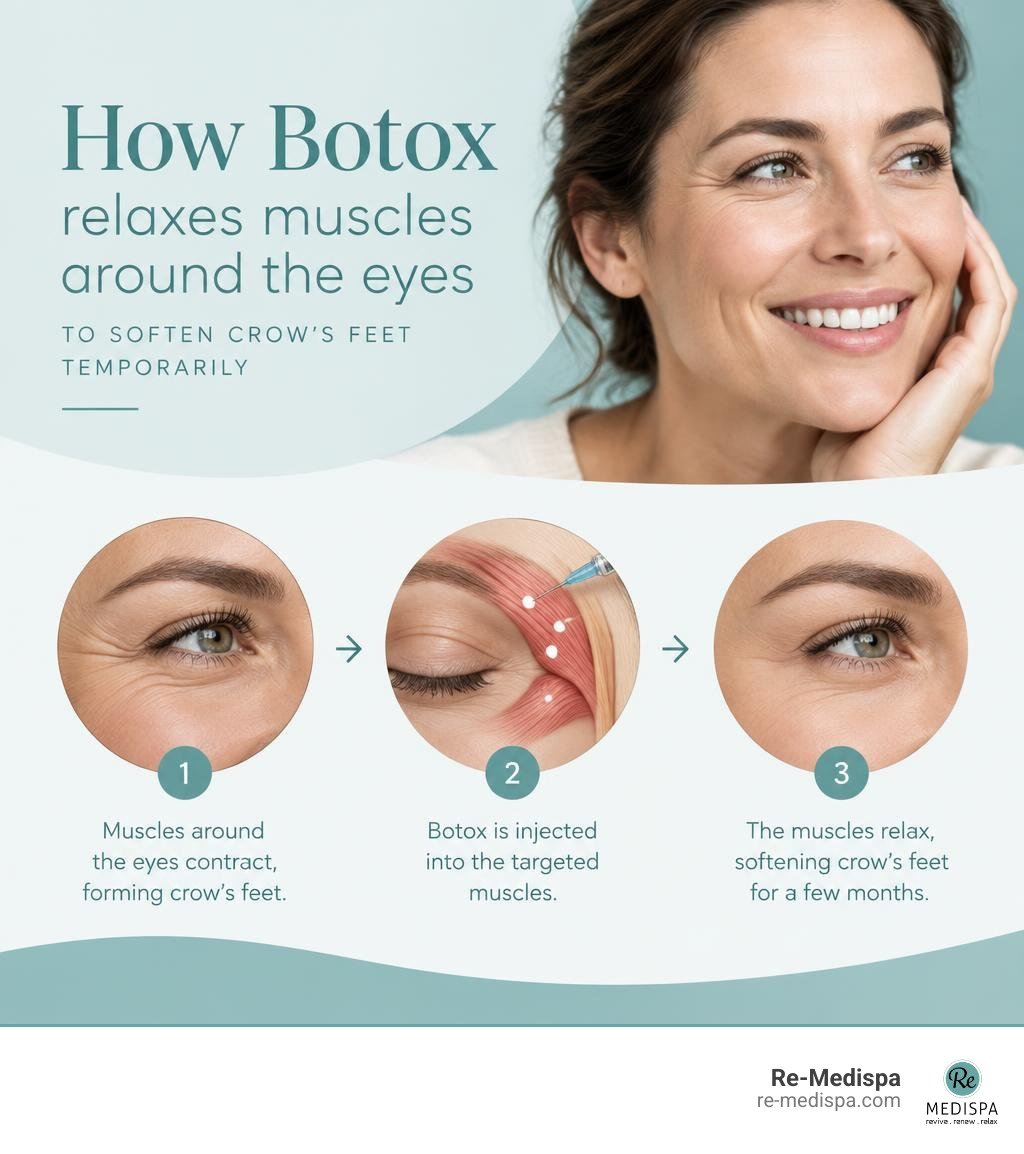
Noticing fine lines beside your eyes whenever you smile or laugh? Botox for crow’s feet temporarily relaxes the targeted muscles that form these creases, softening their appearance for three to four months while preserving your natural expressions. At Re-Medispa in Arlington Heights, our experienced team provides tailored injectables to help you achieve a refreshed, youthful look.
Understanding Crow’s Feet and the Mechanism of OnabotulinumtoxinA
Crow’s feet—known clinically as lateral canthal lines—develop primarily from the repetitive contraction of the lateral portion of the orbicularis oculi muscle. This circular muscle frames the eye and constricts every time you squint, laugh, or smile. Over years of natural facial animation, combined with gradual collagen depletion, these dynamic skin folds transition into deeper, etched wrinkles.
OnabotulinumtoxinA works by temporarily blocking the release of acetylcholine at the neuromuscular junction. By interrupting this chemical signaling pathway, the targeted muscle fibers enter a state of localized, reversible chemical denervation (Carruthers et al., 2023). For a detailed scientific breakdown of this biological pathway, our guide on neuromodulator science and how it works explains how these proteins interact with nerve receptors.
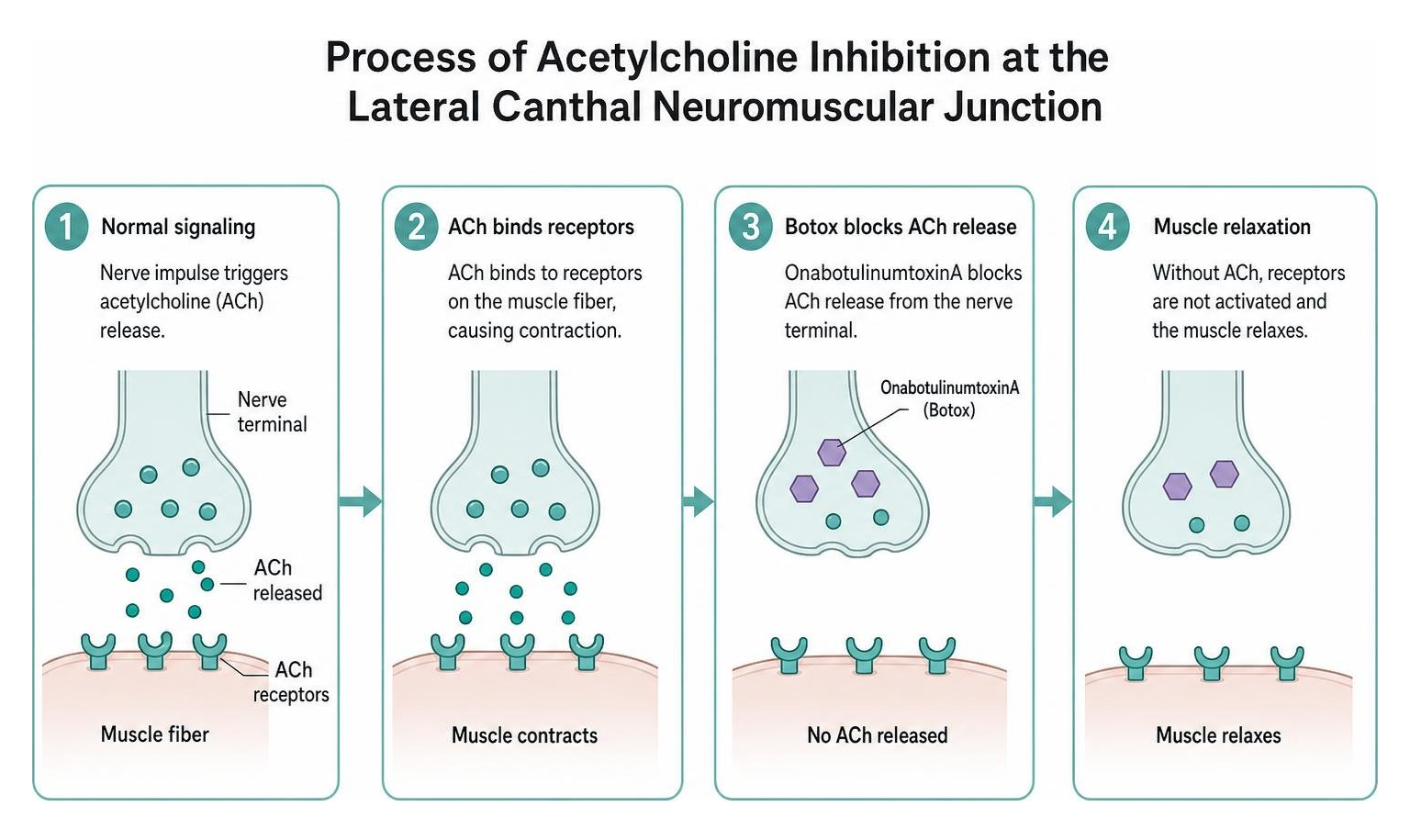
When the underlying lateral orbicularis oculi relaxes, tension on the overlying skin drops substantially. This smoothing effect allows the delicate periocular tissue to rest, softening existing line depth without altering your underlying bone structure. The result is a more refreshed appearance while your natural facial expressions remain intact.
Anatomical Patterns of Lateral Canthal Lines
No two smiles are identical, and lateral canthal lines present in distinct anatomical variations. Clinical practitioners classify these wrinkles into four dominant contraction patterns:
- Full Fan Pattern: Radiates outward across the entire lateral periocular area, spanning from the upper temple downward toward the upper cheek.
- Lower Fan Pattern: Concentrates primarily below the lateral canthus, often accentuating skin creasing across the zygomatic cheek region.
- Upper Fan Pattern: Extends upward toward the lateral brow and temple area during squinting.
- Central Fan Pattern: Forms a tightly focused cluster directly lateral to the outer eye corner.
Identifying your unique muscular pattern ensures precision placement during clinical treatment. A thorough consultation also helps distinguish dynamic wrinkles from static lines that remain visible even when your face is at rest. Addressing dynamic folds early can also prevent them from etching permanently into the dermis, a core principle explored in our overview of preventative approaches to aging.
Clinical Effectiveness of Botox for Crow’s Feet

Botox Cosmetic earned official approval from the FDA for the temporary reduction of moderate to severe lateral canthal lines in 2013, supported by extensive phase 3 clinical trials (Carruthers et al., 2023). Regulatory authorities evaluated both investigator assessments and validated patient-reported outcome measures to verify aesthetic efficacy and safety profiles.
In pivotal multicenter trials, 26.1% of participants treated with the standard 24-Unit dose achieved a composite improvement of two grades or greater on the Facial Wrinkle Scale at Day 30, compared to just 1.3% in the placebo cohort. Furthermore, when evaluated by investigators for achieving an overall rating of “none” or “mild” dynamic lines at Day 30, responder rates reached 67% in the treated group versus 7% for placebo (Carruthers et al., 2023). These results reflect the consistent, measurable improvement many clients experience with professional treatment.
Official clinical guidelines and safety disclosures are documented in the FDA prescribing information.
| Parameter | Clinical Trial Finding | Real-World Clinical Practice |
|---|---|---|
| Primary Clinical Milestone | Day 30 composite responder endpoint | Peak line relaxation observed between Days 14–30 |
| Initial Noticeable Onset | Observed within 5 to 7 days | Initial softening often visible within 3 to 5 days |
| Investigator Mild/None Rate | 67% at Day 30 (vs. 7% placebo) | High rate of visible wrinkle softening |
| Patient Satisfaction Rate | 60% satisfied at Day 30 (vs. 8% placebo) | Significant improvement in perceived eye fatigue |
| Average Clinical Longevity | 3 to 4 months before baseline return | Follow-up sessions typically planned every 3–4 months |
Understanding Botox for Crow’s Feet Dosages and Injection Sites
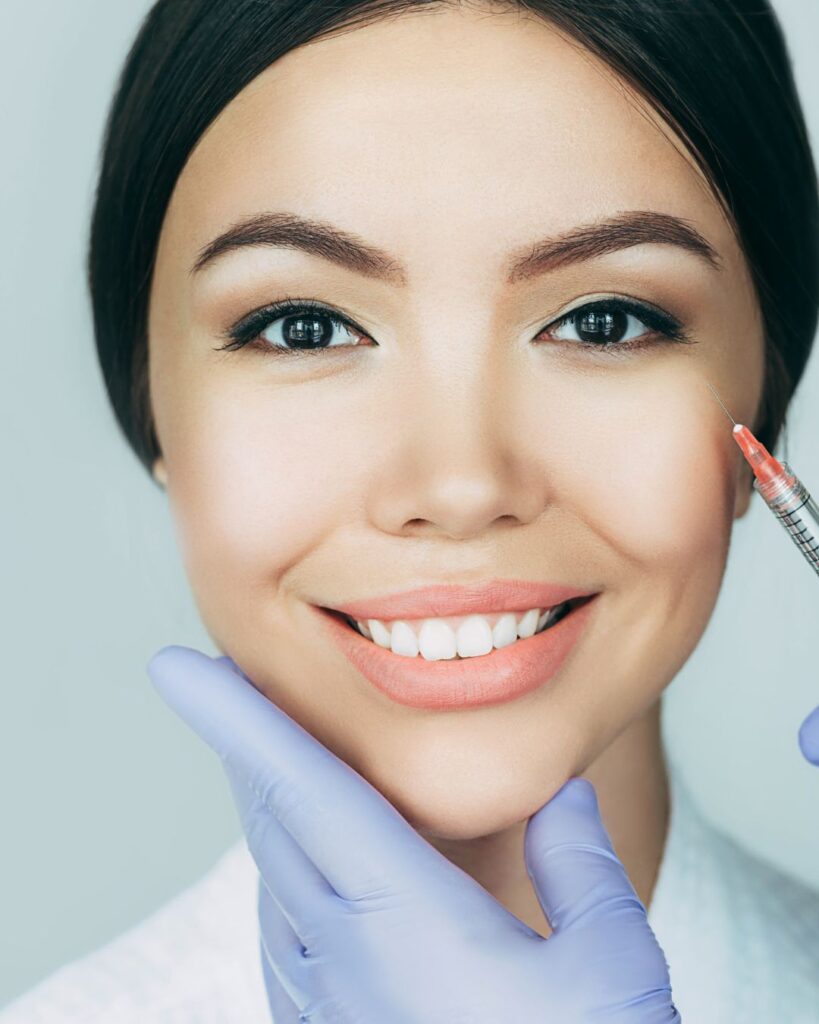
The established clinical protocol for lateral canthal lines involves a standard total dose of 24 Units. This dosage is divided evenly as 12 Units per eye, distributed across three targeted injection sites (4 Units per 0.1 mL injection).
Injections are placed roughly 1.5 to 2.0 cm temporal to the lateral canthus, carefully staying outside the bony orbital rim. Practitioners utilize ultra-fine 30- to 33-gauge needles with the bevel oriented upward and directed away from the eye to optimize patient comfort and minimize tissue trauma.
Every individual presents unique muscle mass and contraction dynamics, meaning total units are tailored during a clinical consultation. Your injector will determine the appropriate dosage and precise injection pattern based on your facial anatomy and aesthetic goals; readers can learn more in our botox unit dosage guidelines.
Safety Profile, Side Effects, and Precautions

Like all neuromodulator procedures, treating lateral canthal lines involves mild, temporary side effects that resolve quickly. The most common localized adverse reaction reported in clinical trials is eyelid edema (swelling of the eyelid tissue), which occurred in approximately 1% of treated subjects compared to 0% in placebo groups. Other potential local effects include localized injection site bruising, pinpoint bleeding, mild tenderness, and transient tension headaches.
The FDA label includes a boxed warning regarding the rare possibility of distant toxin spread beyond the injection site, which can cause muscle weakness, dysphagia, or respiratory complications. In aesthetic practice at recommended cosmetic dosages, confirmed cases of systemic spread remain exceedingly rare. Complete pharmacological safety data is available in the FDA label details on DailyMed.
Contraindications include known hypersensitivity to onabotulinumtoxinA, active skin infection or inflammation at the intended injection sites, and pre-existing neuromuscular disorders such as myasthenia gravis or ALS. You can prepare thoroughly for your visit by reviewing our guide to preparing for injectable appointments.
Who Is an Ideal Candidate for Botox for Crow’s Feet?
An ideal candidate is an adult in good general health experiencing moderate to severe dynamic lines around the lateral eyes when smiling or squinting. Candidates should have realistic expectations: neuromodulators soften dynamic muscle folding rather than surgically lifting loose, redundant skin.
You may not be a suitable candidate if you are pregnant, breastfeeding, have an active skin infection near the treatment area, or have certain neuromuscular conditions. A licensed provider will review your full health history before recommending treatment.
Maintaining natural animation is a priority for modern aesthetic treatments. A conservative, well-placed injection technique softens wrinkles while keeping genuine expression intact, a philosophy we outline in our article on achieving natural injectable results.
Multimodal Eye Rejuvenation: Botox vs. Other Treatments
While onabotulinumtoxinA addresses dynamic wrinkles caused by muscle contraction, periocular aging often involves skin thinning, structural volume loss, and photo-damage. Combining complementary aesthetic modalities delivers comprehensive periorbital rejuvenation.
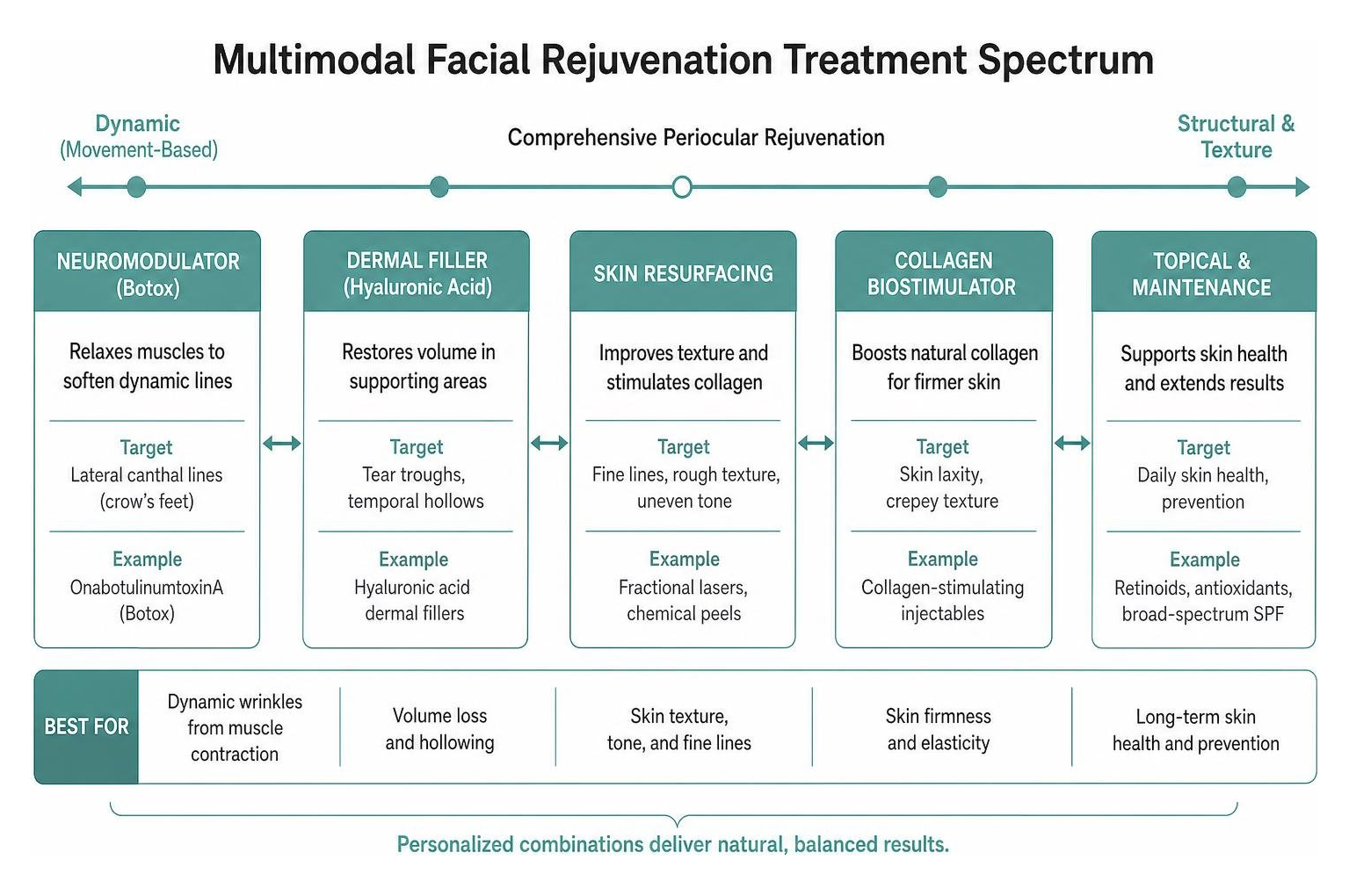
Dermal fillers, such as hyaluronic acid gels, restore lost volume in the tear troughs and temporal hollows, though they are not injected directly into dynamic lateral canthal wrinkles. Clinical laser treatments and advanced facials improve superficial skin texture and stimulate collagen synthesis. Your provider can help you determine which combination of treatments aligns with your goals and skin condition. For a deeper look at balancing structural volume with muscle relaxation, explore combining neuromodulators and dermal fillers or review our guide comparing neurotoxins and dermal fillers.
Frequently Asked Questions About Periocular Smoothing
How long does it take to see results and how long do they last?
Initial muscle relaxation typically begins within 3 to 5 days, with full clinical smoothing evident by Day 14 to 30. Results generally last 3 to 4 months, after which muscle movement gradually returns. You can read helpful tips on maintaining neuromodulator longevity to get the most out of your treatment intervals.
Will my smile look frozen or unnatural after treatment?
No. When performed by a qualified medical professional, injections target only the specific fibers of the lateral orbicularis oculi responsible for excessive skin creasing. Your ability to smile, convey warmth, and express natural emotion remains fully preserved.
Can crow’s feet be treated simultaneously with forehead or frown lines?
Yes, treating the lateral canthal lines alongside the glabellar (frown) lines and frontalis (forehead) muscles provides balanced upper-face rejuvenation. Treating these complementary muscle groups together helps avoid overcompensation by neighboring muscles and supports balanced brow positioning; learn more in our guide to smoothing forehead lines.
Expert Facial Aesthetics at Re-Medispa
Softening periocular lines requires an approach grounded in facial anatomy and precision dosing. At Re-Medispa, led by Founder & Medical Director Renata Ciszek, our clinical team delivers personalized aesthetic care tailored to your unique facial expressions. We utilize cutting-edge AI preview technology during consultations, allowing you to visualize your expected aesthetic outcomes before treatment begins.
We invite you to visit our state-of-the-art clinics in Arlington Heights (37 S Evergreen Ave) or Harwood Heights (5128 N Harlem Ave), proudly serving clients across Chicago’s Northwest suburbs, including Palatine, Mount Prospect, Schaumburg, and Park Ridge. Contact us today to schedule your comprehensive consultation and explore professional injectable treatments designed to leave you refreshed and confident.
References
Carruthers A, Carruthers J, De Boulle K, Lowe N, Lee E, Brin MF. “Treatment of crow’s feet lines and forehead lines with Botox (onabotulinumtoxinA): Development, insights, and impact..” Medicine, 2023. PMCID PMC10374187.