
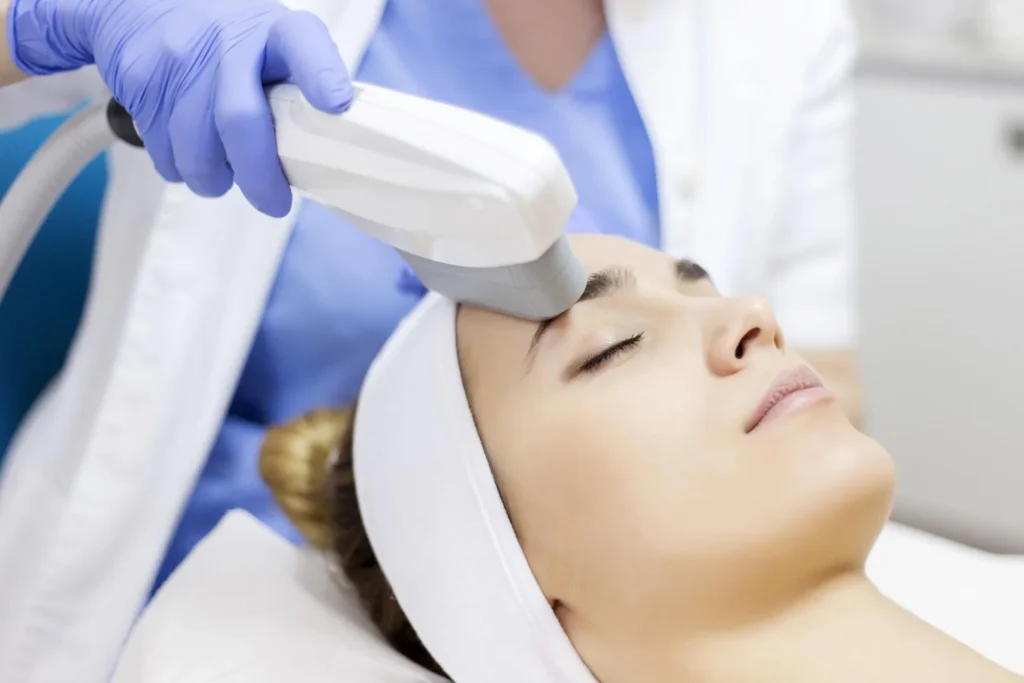
What to Expect From Microneedling Collagen Induction Therapy
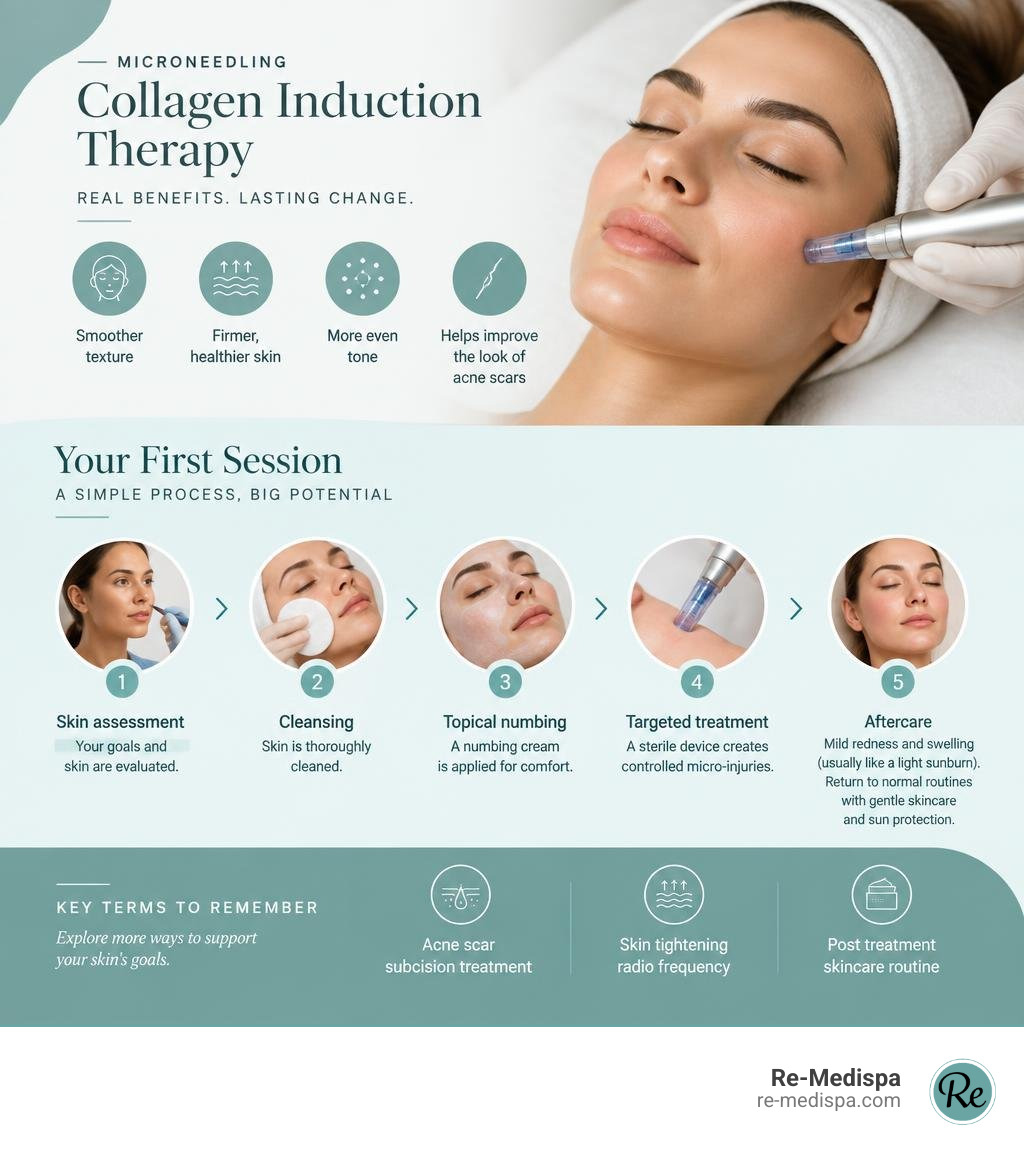
Wondering whether microneedling can help with early fine lines, uneven texture, or the look of old acne scars without a long recovery? Microneedling collagen induction therapy is a professional treatment that uses sterile, ultra-fine needles to create controlled micro-injuries in the skin. This starts your skin’s natural repair process, which supports new collagen and elastin – proteins that help skin look smoother, firmer, and more even over time.
For a first session, expect a skin assessment, cleansing, topical numbing cream, and a carefully controlled treatment using a sterile device. Most people have redness and mild swelling afterward, similar to a light sunburn, and can usually return to normal routines quickly with gentle skincare and sun protection.
At Re-Medispa in Arlington Heights, treatment plans are tailored to your skin concerns, schedule, and comfort level. Results develop gradually as collagen remodeling takes place, so realistic expectations and consistent aftercare matter just as much as the treatment itself.
Microneedling collagen induction therapy terms to remember:
The Science Behind Microneedling Collagen Induction Therapy
Microneedling works by taking advantage of your skin’s built-in ability to heal itself. When an automated, medical-grade pen glides across your skin, it creates thousands of microscopic, vertical channels in the epidermis and upper dermis (Jaiswal & Jawade, 2024). These tiny punctures do not remove layers of tissue, which keeps the protective skin barrier largely intact.
Instead, these micro-channels stimulate specialized repair cells called fibroblasts. As your skin detects this precise physical stimulation, it releases essential growth factors like transforming growth factor-beta (TGF-β) and platelet-derived growth factor (PDGF). This chemical signal kicks off neocollagenesis (new collagen production) and elastin synthesis (NBK459344).
Clinical research into the physiological mechanisms of skin needling shows that this cellular cascade thickens the dermal layer. By encouraging structural protein production from within, microneedling restores firmness, smooths rough texture, and refines dermal architecture.
Biological Stages of Microneedling Collagen Induction Therapy
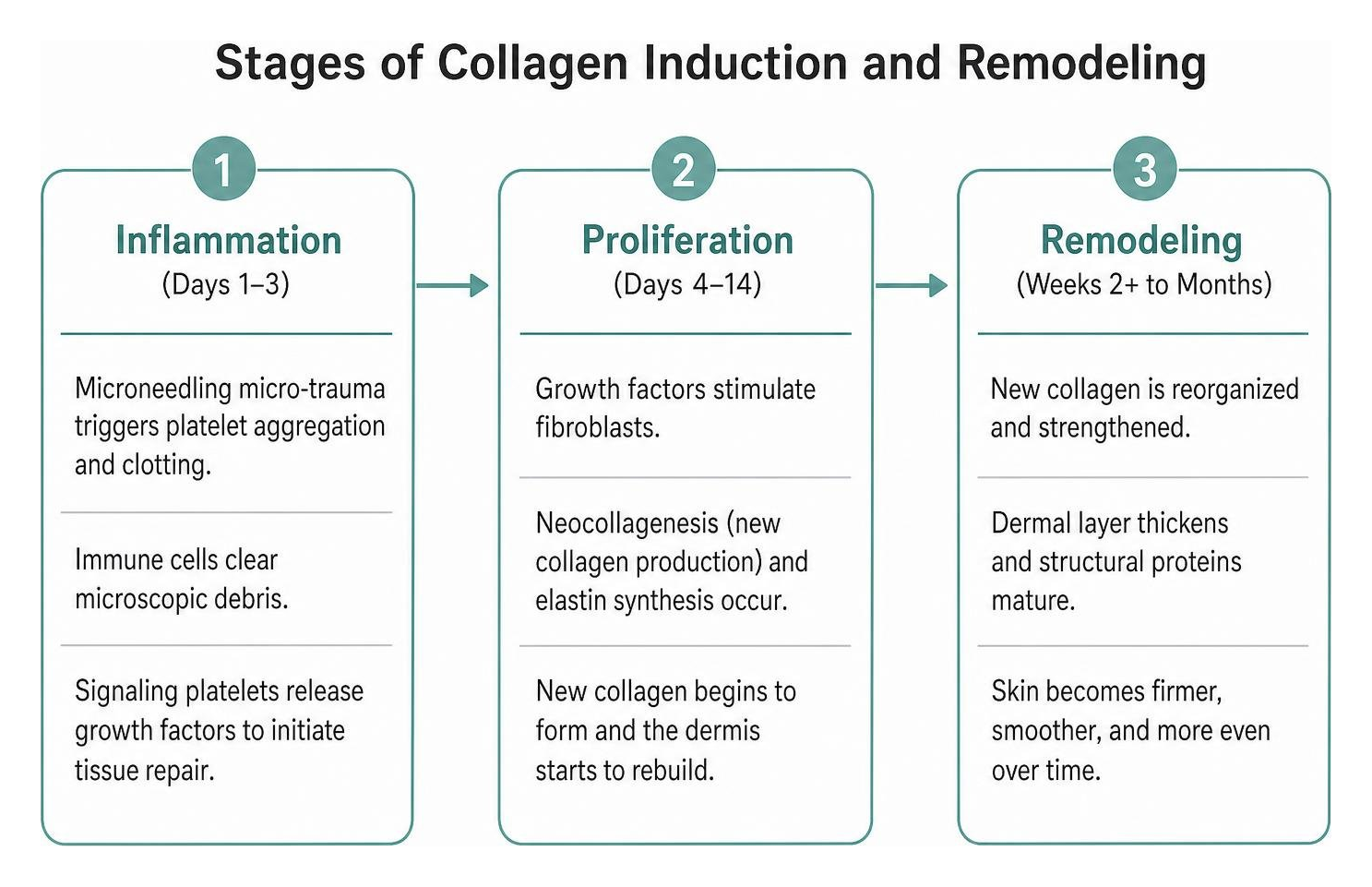
The skin regeneration process triggered by microneedling unfolds across three distinct biological phases:
- Inflammation (Days 1–3): The immediate micro-trauma triggers platelet aggregation and clotting. Immune cells clear microscopic debris while signaling platelets release growth factors to initiate tissue repair.
- Proliferation (Days 3–14): Fibroblasts multiply rapidly within the treated area. A temporary fibronectin matrix forms to provide a structural scaffold for new cellular growth, angiogenesis (new blood vessel formation), and initial Collagen Type III deposition.
- Remodeling (Weeks 3 to Months 6): Collagen Type III is gradually replaced by stronger, highly organized Collagen Type I. This maturation matrix contracts, resulting in noticeable skin tightening and structural smoothing that can endure for years.
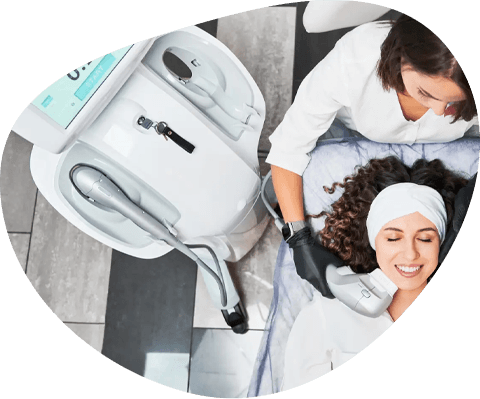
Histological studies demonstrate that completing a clinical series can lead to substantial increases in collagen and elastin fiber density months after care.
Key Clinical Indications and Skin Concerns
Because it works through mechanical regeneration rather than heat, professional microneedling addresses a wide spectrum of aesthetic concerns. Published reviews on the clinical applications of microneedling highlight its versatility across various dermatological presentations:
- Atrophic Acne Scars: Rolling and boxcar scars show visible softening as newly synthesized collagen elevates depressed tissue from beneath the surface.
- Fine Lines and Wrinkles: Natural depletion of dermal support over time leads to creasing; collagen remodeling helps plump and soften these shallow lines.
- Enlarged Pores: Boosting dermal thickness around pore walls provides structural reinforcement, helping them appear tighter and less noticeable.
- Uneven Texture and Tone: Rapid epidermal turnover combined with dermal renewal helps smooth coarse skin patches and disperse superficial dyspigmentation.
- Stretch Marks (Striae): Controlled micro-injury encourages cellular remodeling across thinned, stretched bands of skin.
What Happens During Your First Session Step-by-Step
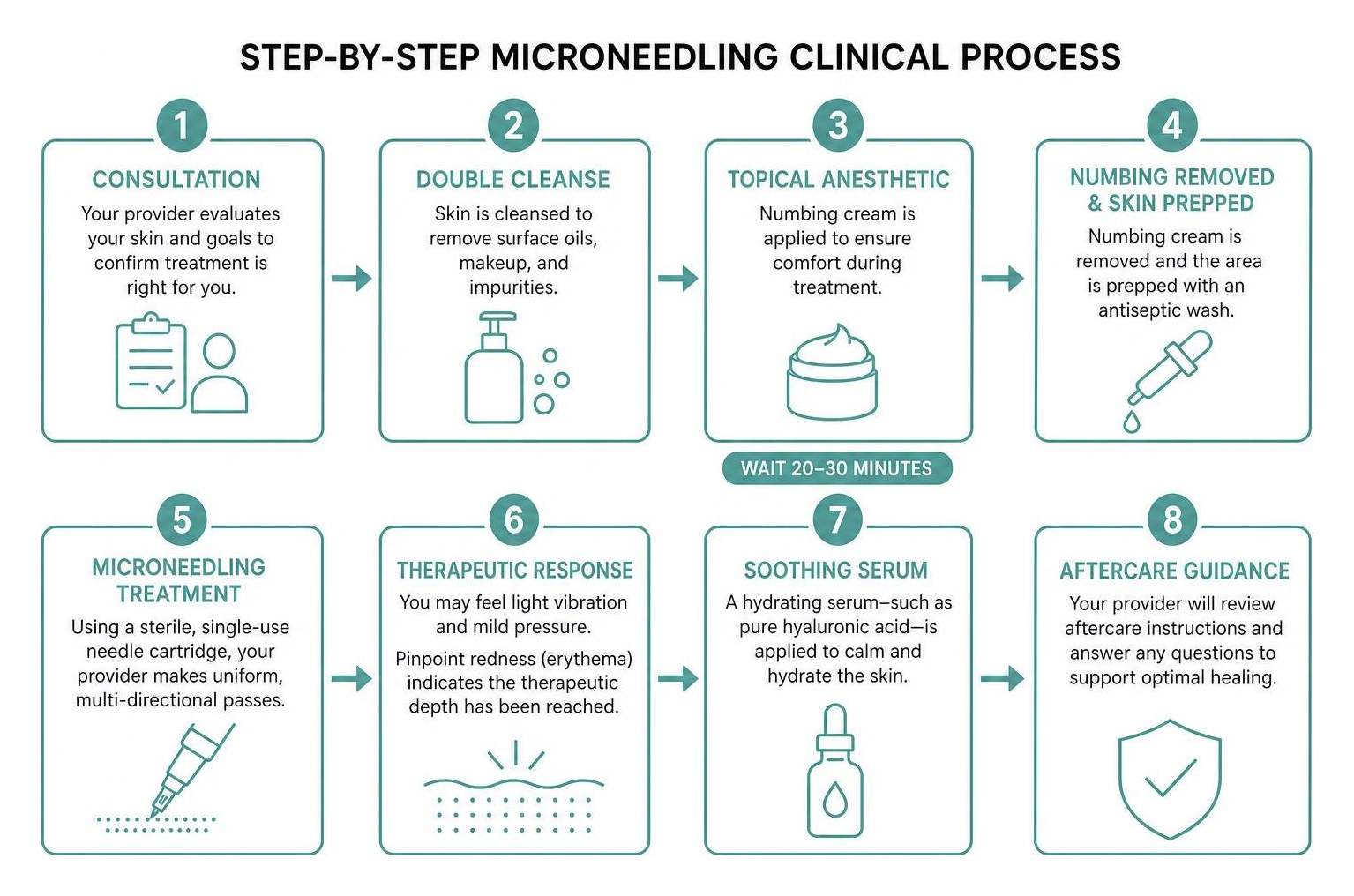
Knowing what to expect during your first appointment helps eliminate any nervousness. When you arrive at our clinic, your licensed provider begins with a thorough evaluation to confirm that treatment aligns with your specific goals.
Your skin is first treated to a double cleanse to remove surface oils, makeup, and impurities. Next, a topical anesthetic cream is applied to ensure you remain comfortable throughout the appointment. After 20 to 30 minutes, the numbing cream is completely removed, and the treatment area is prepped with an antiseptic wash.
Using a sterile, single-use needle cartridge, your practitioner makes uniform, multi-directional passes across the target areas. You will feel light vibration and mild pressure rather than sharp pain. The procedure typically produces pinpoint redness (erythema), signaling that the therapeutic depth has been reached.
We finish the treatment by applying a soothing, hydrating serum—such as pure hyaluronic acid—to calm the skin immediately. While some clients ask about combining treatments like a dermaplaning facial, distinct exfoliating modalities are planned across dedicated sessions to ensure skin safety.
Preparing for Your First Session
Proper preparation ensures a smooth appointment and optimal cellular healing. We recommend pausing active topical skincare—including prescription retinoids, retinol, alpha hydroxy acids (AHAs), and salicylic acid—for 3 to 5 days before your visit.
Avoid direct, unprotected sun exposure and tanning beds for at least a week prior to treatment. If you have a history of cold sores, let your clinician know beforehand so prophylactic care can be considered. Staying well-hydrated in the days leading up to your visit also supports healthy tissue recovery.
We adhere strictly to FDA safety standards for microneedling devices. Medical-grade, cleared devices utilize precision-engineered motors and single-use cartridges that maintain consistent needle entry angles, avoiding unwanted scratching or surface micro-tears.
Recovery Timeline and Post-Treatment Skincare
Downtime following microneedling is generally brief and straightforward. Here is what you can anticipate as your skin recovers:
- Hours 1–24: Your skin will look and feel like it has a mild-to-moderate sunburn. Expect redness, warmth, and slight tightness. Stick solely to cool water and the gentle hydrating serum provided by your clinician.
- Days 2–3: Redness transitions to a light pink flush, and mild swelling diminishes. Mineral makeup can typically be worn starting on day two if needed.
- Days 4–7: Light flaking or superficial dryness may occur as cellular turnover accelerates. Avoid picking at dry skin, and apply generous moisture alongside daily broad-spectrum mineral sunscreen.
Nurturing your skin barrier during this window is essential. Following a dedicated post-treatment skincare routine ensures your skin retains adequate moisture while protecting newly forming collagen fibers from environmental stress.
Comparing Microneedling to Other Skin Rejuvenation Modalities
When exploring clinical skin resurfacing, it helps to understand how microneedling compares to light-based or chemical alternatives. Thermal devices (such as fractional lasers) rely on heat energy to ablate tissue or coagulate dermal columns. While effective, thermal heat carries an elevated risk of post-inflammatory hyperpigmentation (PIH), particularly in medium-to-dark complexions (Fitzpatrick Types IV–VI).
Microneedling is entirely non-thermal and non-ablative. Because it uses physical micro-channels rather than heat, it preserves the epidermal layer and carries a significantly lower risk of pigmentary changes. This makes it an exceptionally safe collagen-stimulating option across all skin tones.
| Feature | Clinical Microneedling | Fractional Non-Ablative Laser | Medium Chemical Peel |
|---|---|---|---|
| Primary Mechanism | Mechanical micro-channel injury | Fractional thermal coagulation | Chemical exfoliation / acid breakdown |
| Thermal Heat Involved | No | Yes | No |
| Fitzpatrick Skin Safety | Safe for Types I–VI | Caution needed for Types IV–VI | Caution needed for Types IV–VI |
| Typical Downtime | 24–48 hours of mild redness | 3–7 days of swelling/bronzing | 5–10 days of visible peeling |
| Target Depth | 0.5 mm to 2.5 mm (adjustable) | Variable dermal depths | Epidermal to upper reticular dermis |
For individuals researching how to tighten sagging skin without surgery, microneedling provides structural remodeling with minimal disruption to your daily schedule.
Enhancing Results with Combination Therapies
Microneedling creates thousands of temporary micro-channels that dramatically improve the delivery of topical hydrators. Applying high-molecular and low-molecular weight hyaluronic acid during or immediately after treatment allows intense hydration to reach deep into the epidermal layers.
For individuals seeking more pronounced structural lifting, your provider may recommend combining mechanical needling with complementary modalities like radiofrequency energy. Exploring advanced skin tightening options during your consultation can help address deep tissue laxity alongside surface texture refinement.
Potential Side Effects, Risks, and Contraindications
While microneedling maintains an excellent clinical safety profile, being informed about side effects ensures a comfortable experience. Normal, expected reactions include:
- Transient erythema (redness) that resolves within 24 to 48 hours
- Mild localized edema (swelling)
- Skin tightness and temporary dryness
- Pinpoint bleeding during treatment that stops immediately
Severe complications—such as secondary bacterial infection or scarring—are exceptionally rare when care is performed in a clean medical setting using single-use, sterile cartridges.
Who Should Avoid Microneedling?
To protect your safety, microneedling is not performed if you have:
- Active cystic acne breakouts, open wounds, or active skin infections in the target area
- Active herpes simplex (cold sores) outbreaks
- History of keloid scarring or impaired wound healing
- Active treatment with oral isotretinoin (must be cleared by your doctor after discontinuing)
- Bleeding disorders or active anticoagulant therapy
- Pregnancy or active skin malignancies
A thorough health evaluation by a licensed provider is required before moving forward with any procedural plan.
Frequently Asked Questions about Microneedling
How Does Professional Microneedling Differ from Home Rollers?
Home rollers (often called dermarollers) feature fixed, angled needles that enter and exit the tissue at a diagonal slant. This arched entry can slice or tear the epidermal surface, resulting in micro-scarring and enlarged pores over time. Furthermore, sanitizing these reusable rollers at home is difficult, significantly raising the risk of stubborn bacterial infections.
Professional devices utilize motorized pens that oscillate vertically at high speeds. The needles enter and exit the skin cleanly at an exact 90-degree angle without tugging. Medical devices also allow your clinician to adjust depth with millimeter precision across different facial zones (e.g., thinner skin on the forehead versus thicker tissue on the cheeks) while using single-use, sealed cartridges.
How Many Sessions Are Typically Needed to See Visible Results?
Because collagen induction depends on natural cellular remodeling, results develop progressively. Many clients notice an improvement in skin smoothness and radiance within two to three weeks following their first session.
However, clinical correction for deeper concerns—such as atrophic acne scars or pronounced fine lines—typically involves a series of 3 to 6 sessions spaced 4 to 6 weeks apart. Spacing gives fibroblasts adequate time to construct and mature the new Collagen Type I matrix.
Following a customized annual facial treatment plan helps maintain your results over time with occasional seasonal refreshers.
Who Is an Ideal Candidate for Collagen Induction Therapy?
Microneedling is suitable for adults of all skin complexions looking to improve skin texture, early laxity, fine lines, or superficial scarring. Because it avoids thermal energy, it is an exceptional option for clients with deeper skin tones who may not be candidates for certain laser treatments.
Ideal candidates have realistic expectations, understand that collagen renewal is a gradual process, and are committed to consistent sun protection and gentle post-care.
Personalized Skin Rejuvenation at Re-Medispa
Achieving healthy, radiant skin begins with an individualized strategy grounded in medical science. At Re-Medispa, Founder & Medical Director Renata Ciszek and our experienced clinical team provide honest, personalized care tailored to your unique aesthetic goals.
We take the time to evaluate your skin health and discuss your expectations openly. Using our AI preview tool, we help you visualize potential outcomes so you can make confident, informed decisions about your care.
Whether you visit our clinic in Arlington Heights (37 S Evergreen Ave) or our Harwood Heights location (5128 N Harlem Ave), we welcome clients from surrounding communities including Palatine, Schaumburg, Park Ridge, and Des Plaines.
If you are ready to refresh your skin texture and support natural collagen production, we invite you to explore our premier medical spa services and book a consultation with our team today.
References
Jaiswal S, Jawade S. “Microneedling in Dermatology: A Comprehensive Review of Applications, Techniques, and Outcomes..” Cureus, 2024. PMCID PMC11499218. NBK459344.