
What Is a Collagen Filler — And Which One Is Right for You?
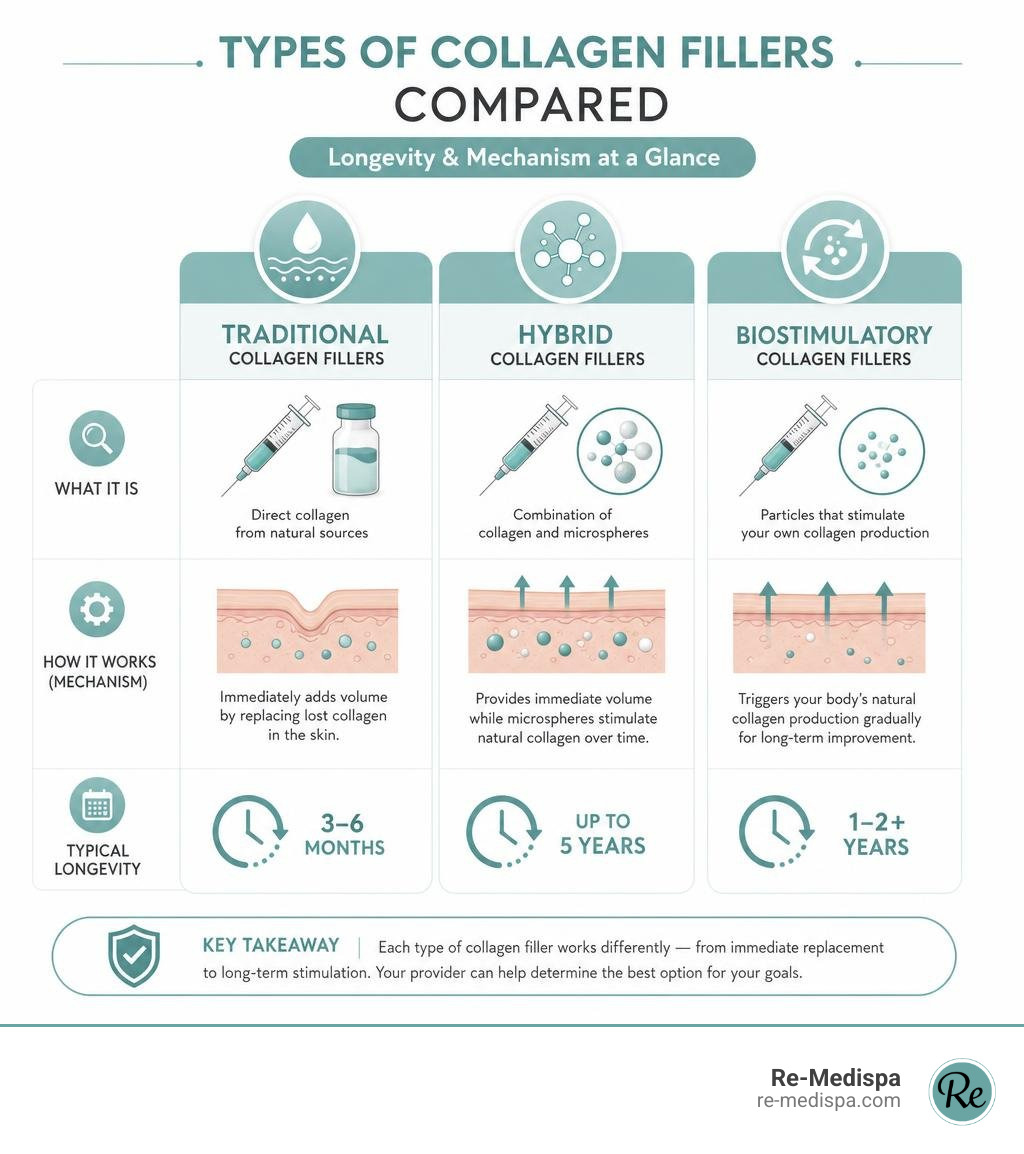
A collagen filler is an injectable treatment designed to restore lost volume, smooth wrinkles, and rebuild the skin’s structural support — but not all collagen fillers work the same way. Here’s a quick overview before we dive in:
- Traditional collagen fillers (bovine, porcine, human-derived) directly replace lost collagen in the dermis for immediate smoothing
- Hybrid fillers like Bellafill (PMMA + bovine collagen) provide instant volume and stimulate your body’s own collagen long-term
- Biostimulatory fillers like Sculptra (PLLA) and Radiesse (CaHA) don’t contain collagen — they trigger your body to produce it gradually
- Results vary by type: from 3–6 months for traditional collagen to up to 5 years for PMMA-based fillers
- Not everyone is a candidate — certain health conditions, allergies, and skin concerns affect which option is appropriate for you
Your skin loses roughly 1% of its collagen every year after age 20. By your 30s and 40s, that adds up — and it shows. You might notice your cheeks looking a little flatter, your smile lines sitting deeper, or your skin just feeling less supported than it used to. That’s collagen loss at work, and it’s completely normal.
The good news? There are more options than ever to address it. The challenge is figuring out what the terms actually mean — because “collagen filler” is used loosely to describe everything from a simple bovine collagen injection to a sophisticated microsphere treatment that lasts half a decade. This guide breaks it all down in plain language, so you can walk into a consultation knowing exactly what questions to ask.
The Role of Collagen in Skin Aging
To understand how a collagen filler works, it helps to look at the anatomy of your skin. Your skin is made of three distinct layers: the epidermis (the outer water barrier), the dermis (the middle support layer), and the subcutaneous tissue (the deep fat and connective tissue).
The dermis is the absolute foundation of your skin’s youthfulness. It is primarily made of a protein called collagen, which is produced by specialized cells called fibroblasts. This protein forms a dense network of fibers that acts as a structural framework for your skin, supporting blood vessels and helping your skin bounce back.
There are two main types of collagen that dictate how your skin ages:
- Type I Collagen: This is the most abundant type in the human body, accounting for about 70% to 80% of the dermis. It provides structural strength, firmness, and tension.
- Type III Collagen: Known as the “youth collagen,” Type III is highly elastic and abundant in young skin. In fact, it makes up about 50% of the collagen in neonatal skin but drops to a mere 5% as we age. It plays a massive role in skin elasticity and wound healing.
As we reach our mid-20s, our natural collagen synthesis slows down by roughly 1% each year. Over time, the existing collagen fibers become fragmented and weakened. This structural decline leads directly to the formation of static wrinkles — the lines that remain visible on your face even when your muscles are completely relaxed.
This is very different from dynamic wrinkles, which only appear when you make facial expressions like smiling or frowning. While dynamic lines are best addressed with muscle-relaxing neuromodulators like Botox, static wrinkles and hollow areas require structural support to rebuild the dermal matrix from within.
If you want to dive deeper into the science of how these proteins interact with your skin, you can read An Update on the Clinical Efficacy and Safety of Collagen Injectables for Aesthetic and Regenerative Medicine Applications.
What Is a Collagen Filler and How Does It Work?
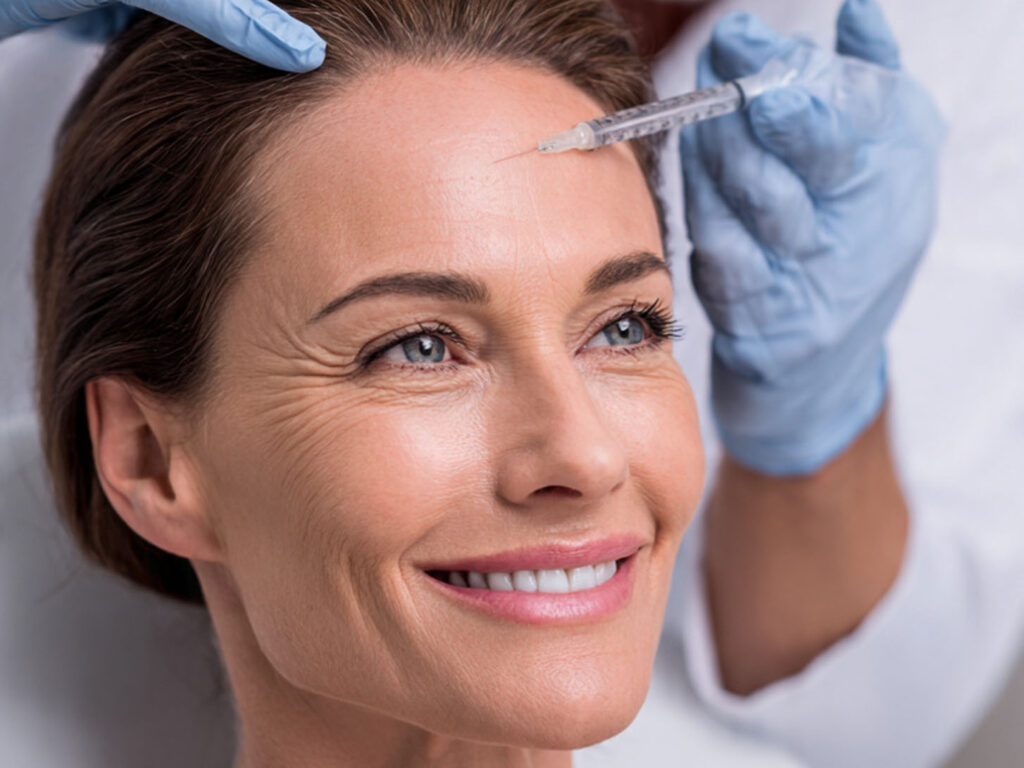
A collagen filler is an injectable gel designed to replenish this lost dermal matrix. When injected into the mid-to-deep dermis, it physically lifts the skin to smooth out deep lines and restore youthful contours.
However, because collagen is a natural protein, your body’s enzymes (specifically collagenase) will naturally begin to break it down over time. This process is called enzymatic degradation. To prevent the filler from vanishing in just a few weeks, manufacturers use advanced cross-linking technologies to bind the collagen fibers together, making them highly resistant to these enzymes.
Understanding the difference between the main categories of “collagen” injectables is key to choosing the right plan for your goals. The table below outlines how these treatments compare:
| Filler Category | Key Active Ingredients | Primary Mechanism | Average Longevity | Skin Allergy Test Required? |
|---|---|---|---|---|
| Traditional Collagen | Bovine, Porcine, or Human-Derived Collagen | Directly replaces lost dermal volume | 3 to 12 months | Yes (for Bovine/Porcine) |
| Hybrid Collagen | PMMA Microspheres + Bovine Collagen | Immediate physical volume + long-term natural collagen growth | Up to 5 years | Yes (mandatory 2–4 weeks prior) |
| Biostimulators | Poly-L-lactic Acid (PLLA) or Calcium Hydroxylapatite (CaHA) | Gradually triggers your body to produce its own collagen | 12 months to 2+ years | No |
If you are noticing a loss of volume specifically in your midface, you might also want to explore How to Restore Volume Loss with Cheek Fillers to see how different filler types can lift the entire face.
Traditional Collagen Filler Types: Bovine, Porcine, and Human-Derived
The dermal filler industry actually began with traditional collagen injections back in the 1980s. Over the decades, these fillers have been sourced in several ways:
- Bovine Collagen: Sourced from cows, bovine collagen was the first type to hit the market. Because it is an animal protein, it carries about a 3% risk of allergic reactions. This requires a mandatory skin test 2 to 4 weeks before your actual treatment.
- Porcine Collagen: Sourced from pigs, porcine collagen is highly biocompatible with human tissue. Modern, advanced cross-linked porcine fillers have shown incredible stability, lasting up to 52 weeks in clinical trials. They are highly valued because they do not cause the “Tyndall effect” (a bluish tint under the skin often seen with thin hyaluronic acid fillers) or late-onset nodules.
- Human-Derived Collagen: These fillers are grown from human donor cells in laboratories. Because they match your body’s natural proteins, they carry no risk of allergic reaction and do not require pre-treatment skin testing.
To learn more about how modern cross-linked collagen performs in clinical trials, you can read the peer-reviewed study Evaluation of Collagen Dermal Filler with Lidocaine for the Correction of Nasolabial Folds.
Modern Hybrid Collagen Filler: PMMA and Bovine Collagen
If you are looking for a solution that offers both immediate satisfaction and multi-year longevity, a hybrid filler like Bellafill is a major milestone in aesthetic medicine.
Approved by the FDA in 2006 to treat deep nasolabial folds (smile lines), this hybrid filler consists of 20% polymethylmethacrylate (PMMA) microspheres suspended in an 80% purified bovine collagen gel carrier. It is also the only FDA-approved injectable filler on the market specifically indicated for treating moderate to severe, atrophic, distensible acne scars on the cheeks.
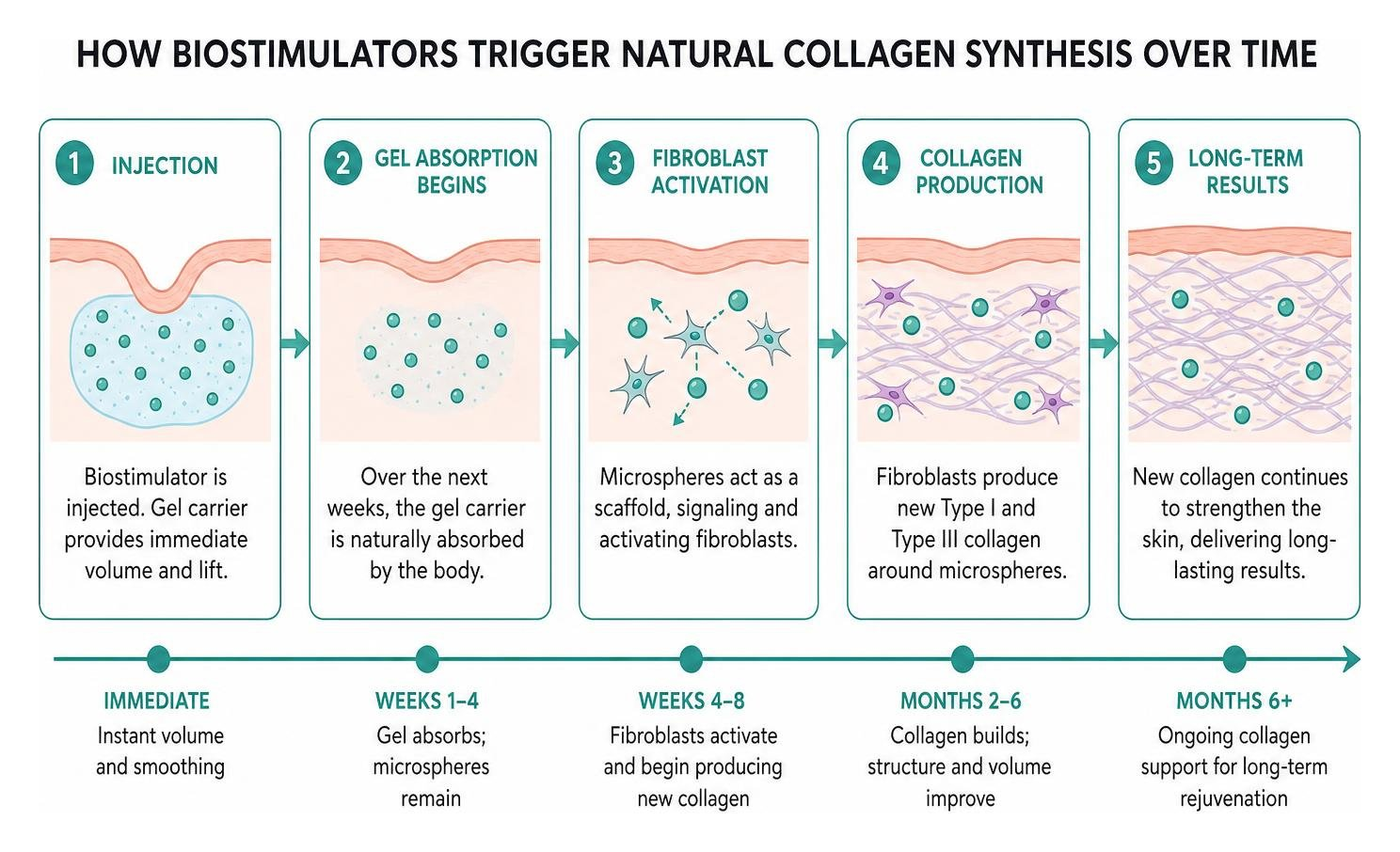
Here is how the dual-action mechanism works:
- Immediate Results: The bovine collagen carrier instantly fills the wrinkle or acne scar, smoothing the skin right away.
- Long-Term Support: Over the next several weeks, your body naturally absorbs the bovine collagen. As this happens, the microscopic PMMA beads remain in place. They act as a permanent scaffold, stimulating your fibroblasts to produce your own natural Type I and Type III collagen.
Because of this ongoing biostimulation, the results of PMMA-bovine hybrid fillers can last up to 5 years.
However, because this filler is semi-permanent, it must be placed with extreme precision. It should never be injected into the lips, close to the eyes, or into very fine lines around the mouth, as these highly mobile areas are prone to forming visible lumps.
Biostimulatory Fillers vs. Traditional Collagen Fillers

Many modern clients who ask for a “collagen filler” are actually looking for biostimulators. Unlike traditional fillers that physically “space-fill” a wrinkle with imported collagen, biostimulators act as a wake-up call for your skin, prompting it to rebuild its own structural foundation.
The two most popular biostimulators are:
- Poly-L-lactic Acid (PLLA), known as Sculptra: PLLA is a biodegradable synthetic polymer that has been used safely in medical devices like dissolvable stitches for decades. When injected, it works gradually over 6 to 12 weeks to restore deep facial volume. In clinical trials, 95% of patients reported an improved skin glow two years after treatment, and 86% showed a visibly improved jawline contour when injected in the cheek area.
- Calcium Hydroxylapatite (CaHA), known as Radiesse: CaHA consists of microscopic mineral-like particles suspended in a carboxymethylcellulose (CMC) gel. It offers a unique dual benefit: the gel carrier provides immediate structural lift, while the CaHA microspheres stimulate natural collagen production over the next year. You can learn more about this firm, structured option by reading Radiesse: The Collagen Stimulating Dermal Filler Explained.
Biostimulators are ideal for full-face rejuvenation, correcting hollow temples, and defining the jawline. For a deeper look at how to get a chiseled look, check out Chiseled and Defined: Your Guide to Collagen Stimulating Jawline Fillers.
Scientists are also developing advanced hybrid technologies to combine the immediate volume of collagen with the long-term power of PLLA. You can read about this exciting research in the journal article Engineered collagen/PLLA composite fillers to induce rapid and long-term collagen regeneration – Journal of Materials Chemistry B (RSC Publishing).
Safety, Side Effects, and Preparing for Your Treatment
Your safety and comfort are always the top priority. While modern injectables are highly refined, they are still medical procedures that require proper preparation and realistic expectations.
Who Is NOT a Candidate?
You should postpone or avoid collagen-based or biostimulatory injections if you:
- Are pregnant or breastfeeding
- Have an active skin infection, cold sore, or acne breakout in the target area
- Have a history of severe allergies or anaphylaxis
- Have an active autoimmune disease or connective tissue disorder
- Have a known allergy to lidocaine (which is often premixed in the syringe for comfort)
How to Prepare
To minimize your risk of bruising and swelling, we recommend taking these steps before your appointment:
- Two Weeks Prior: Stop taking blood-thinning medications and supplements, including aspirin, ibuprofen, fish oil, and vitamin E (always consult with your prescribing physician before stopping any medical prescriptions).
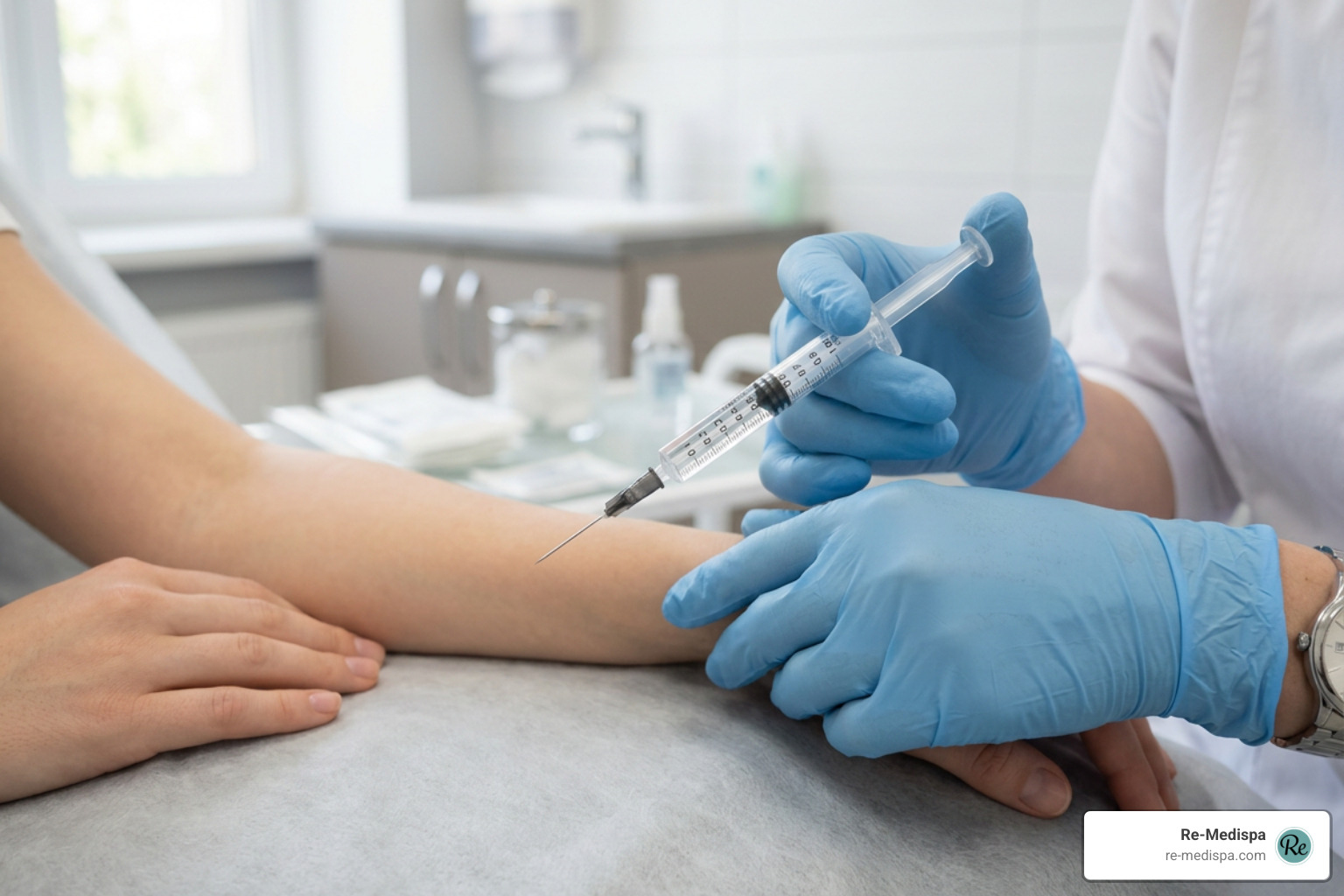
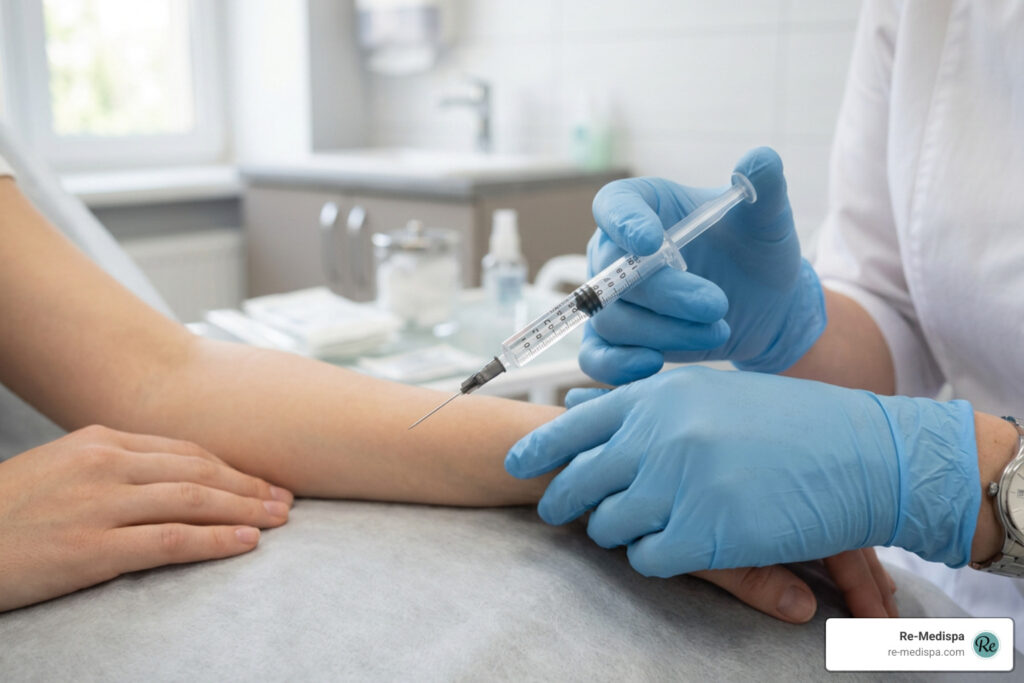
- Two to Four Weeks Prior: If you are receiving a filler containing bovine collagen, you must undergo a skin allergy test. A tiny amount of the collagen is injected into your forearm, and we will monitor the site for any redness, itching, or swelling.
- On the Day of Treatment: Arrive with a clean face free of makeup or heavy creams.
What to Expect: Side Effects and Risks
Like any injection, you may experience mild, temporary side effects. These typically resolve within 2 to 7 days and include:
- Mild redness and swelling
- Tenderness or soreness at the injection site
- Minor bruising
Uncommon but more serious risks include the formation of small lumps or nodules under the skin, infection, or extremely rarely, vascular occlusion (where filler accidentally enters a blood vessel). Choosing an experienced, licensed professional who understands facial anatomy is the best way to minimize these risks.
Experience Personalized Facial Rejuvenation at Re-Medispa
At Re-Medispa, we don’t believe in one-size-fits-all beauty. Led by our founder and medical director, Renata Ciszek, we pride ourselves on providing honest, personalized care designed to highlight your natural features.
Whether you are looking to smooth deep smile lines, restore volume to your cheeks, or soften old acne scars, we will help you navigate your options. We will help you choose between traditional fillers, hybrid injectables, and biostimulators to find the perfect match for your skin.
To make your decision completely stress-free, we use an advanced AI preview tool during your consultation. This allows you to visualize your potential results before we even begin.
We are proud to serve clients across the Chicagoland area, including nearby suburbs like Palatine, Schaumburg, Des Plaines, Mount Prospect, Buffalo Grove, Park Ridge, Northbrook, and Glenview.
Ready to take the next step toward refreshed, radiant skin? Schedule your consultation at one of our two convenient locations:
- Arlington Heights: 37 S Evergreen Ave, Arlington Heights, IL
- Harwood Heights: 5128 N Harlem Ave, Harwood Heights, IL
To book your appointment, visit our page on Dermal Fillers Arlington Heights IL Harwood Heights and let us help you bring out your natural, youthful glow.