
Botox units per area: a quick guide
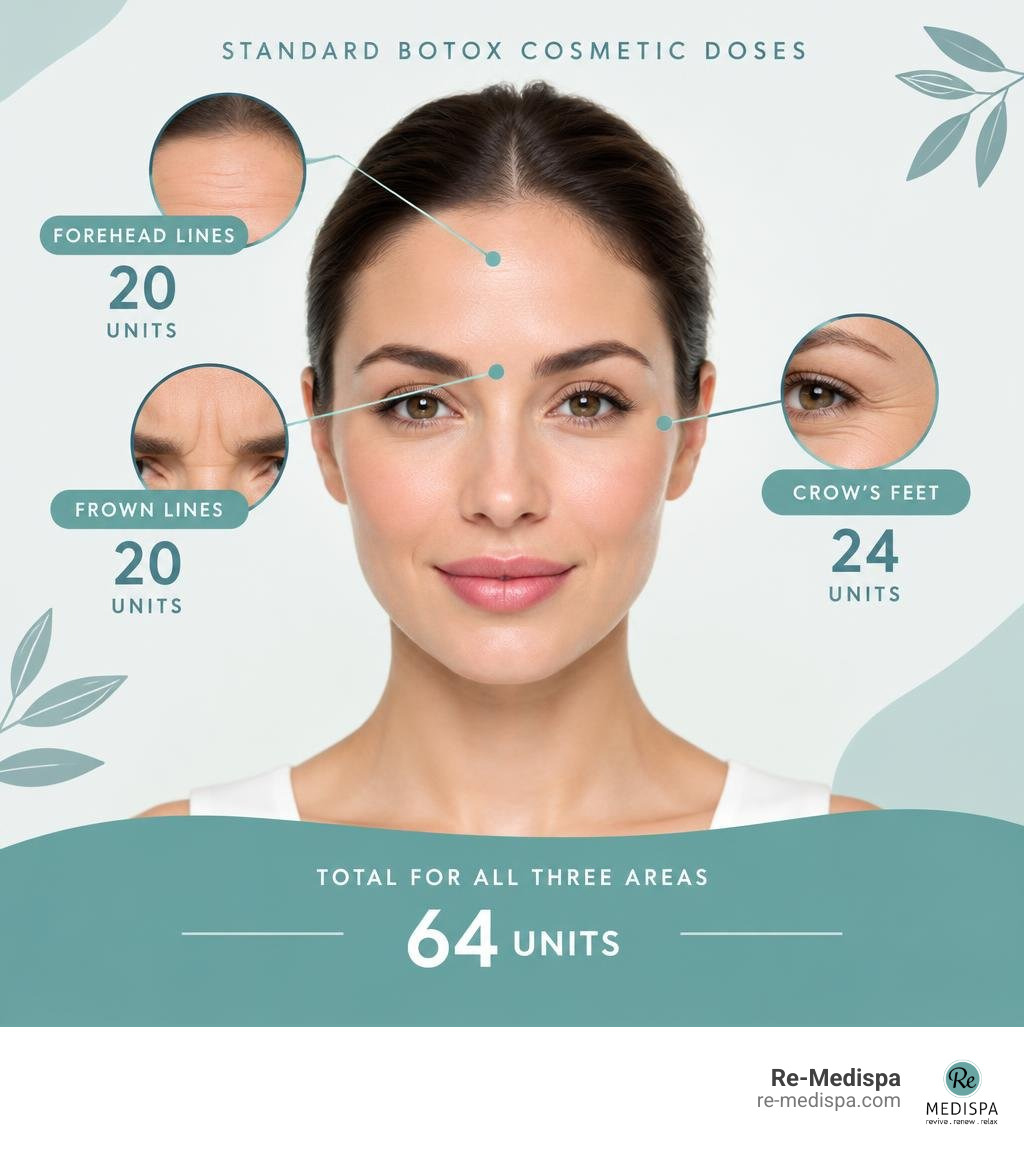
Have you started noticing subtle creases on your brow or around your eyes that linger even when your face is completely at rest? Many people want to soften dynamic lines and look refreshed without losing their natural, authentic facial expressions. When evaluating FDA-approved BOTOX Cosmetic treatments, the standard botox units per area typically start at 20 units for forehead lines, 20 units for frown lines, and 24 units for crow’s feet.
Treating all three primary upper-facial zones in a single session generally uses 64 units total, ensuring that forehead lines are balanced harmoniously alongside the frown lines between your brows.
These standard clinical metrics serve as educational starting benchmarks rather than a rigid prescription chosen from a generic chart. At Re-Medispa in Arlington Heights, a licensed professional carefully evaluates your unique muscle tone, facial symmetry, and aesthetic goals before determining an individualized treatment plan during your private consultation.
Explore our detailed clinical resources to understand treatment specifics:
- Review our botox forehead units average guide
- Learn about targeted botox for crow’s feet
- Discover advanced approaches to botox for forehead wrinkles
FDA-Approved Standards and Reconstitution Protocols
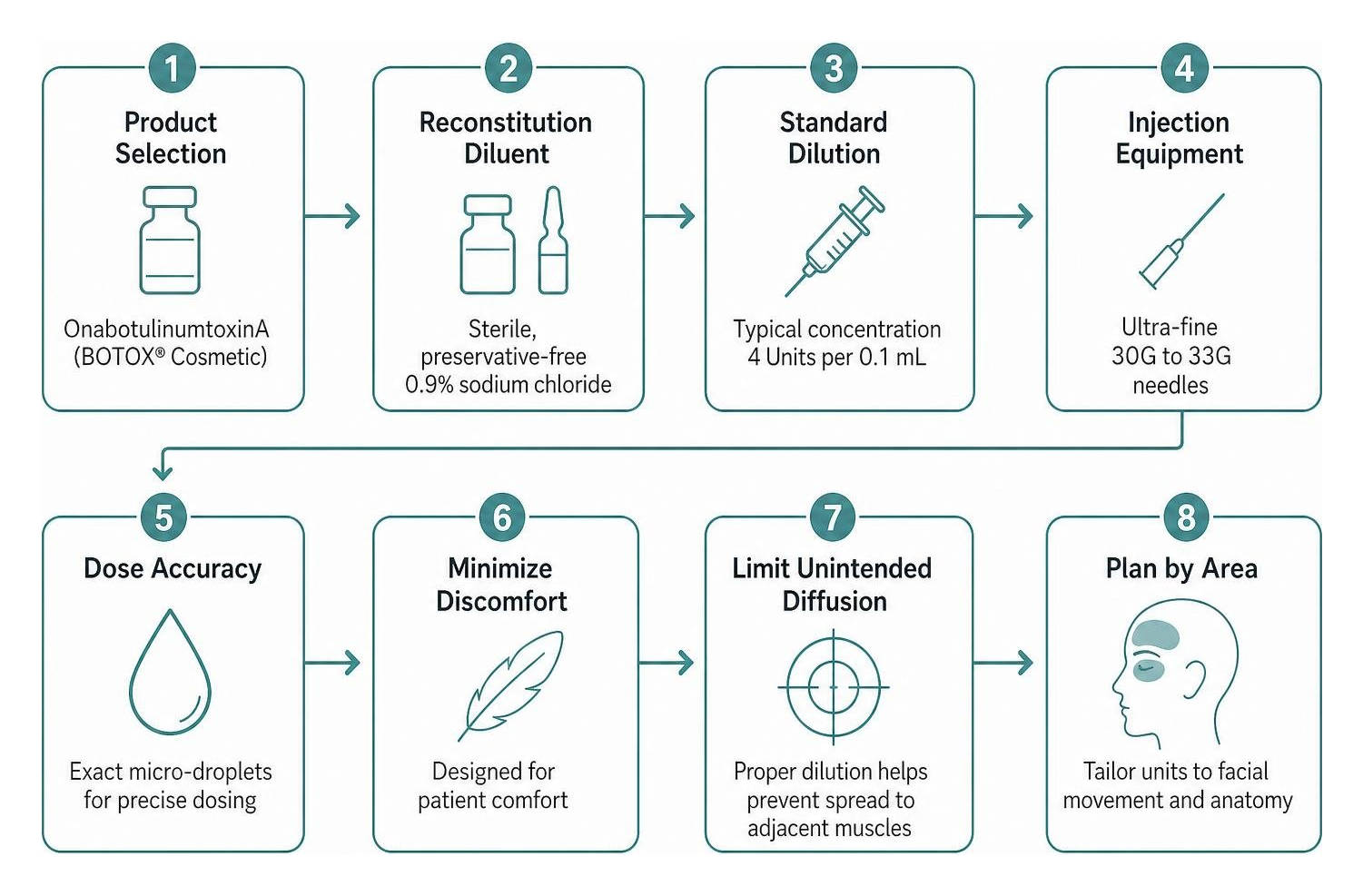
Clinical safety and procedural precision begin well before any product is administered into the skin. OnabotulinumtoxinA (BOTOX® Cosmetic) is a specialized, FDA-approved neuromodulator formulated to temporarily relax hyperactive muscles responsible for creating repetitive dynamic wrinkles.
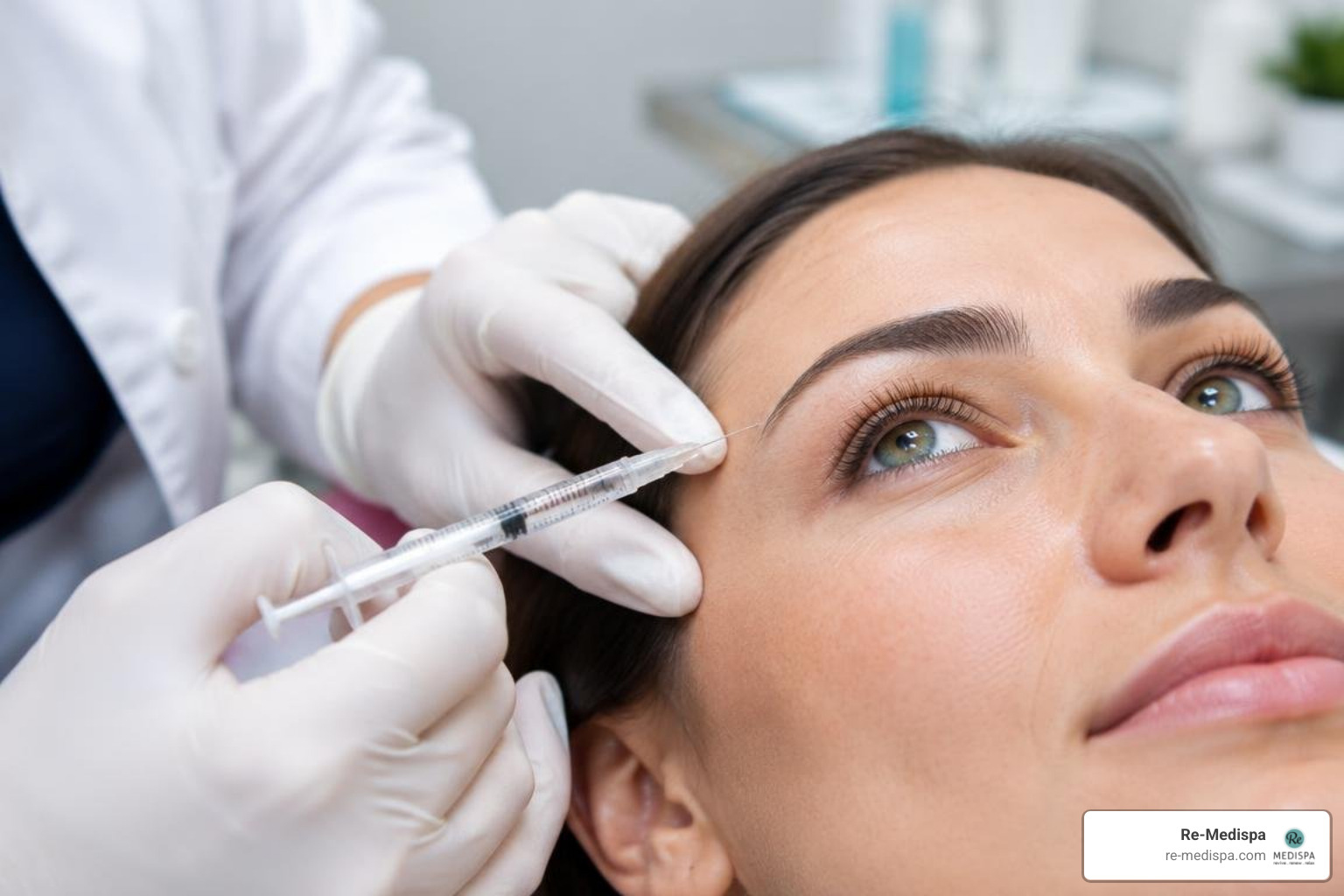
To ensure exact dosing and predictable results, rigorous clinical standards require reconstitution with sterile, preservative-free 0.9% sodium chloride. In professional aesthetic medicine, standard reconstitution protocols typically produce a concentration of 4 Units per 0.1 mL of liquid solution. Injectors utilize ultra-fine 30-gauge to 33-gauge needles, allowing the practitioner to administer precise micro-droplets directly into targeted muscle fibers while keeping patient discomfort to an absolute minimum.
A thorough clinical review of facial neuromodulator techniques emphasizes that calculating proper reconstitution volume prevents unwanted product diffusion into surrounding muscle groups. When addressing dynamic creases and smoothing out forehead lines, adhering strictly to these established reconstitution parameters ensures consistent, long-lasting, and reliable aesthetic outcomes.
Complete Breakdown of Botox Units per Area Across the Face and Neck
Every face reflects a unique pattern of movement, structural asymmetry, and muscle strength. While established FDA benchmarks provide a reliable clinical baseline, personalized aesthetic medicine customizes unit counts across different facial and cervical anatomical zones.
The comprehensive reference table below outlines typical dosing ranges, target musculature, standard injection points, and recommended depths across common facial regions:
| Treatment Area | Target Muscle | Typical Unit Range | Standard Injection Sites | Injection Depth |
|---|---|---|---|---|
| Forehead Lines | Frontalis | 10 – 30 Units (FDA: 20 U) | 4 – 5 sites | Intramuscular / Deep |
| Glabellar Lines (“11s”) | Procerus & Corrugators | 13 – 26 Units (FDA: 20 U) | 5 sites | Deep (near periosteum) |
| Crow’s Feet | Lateral Orbicularis Oculi | 10 – 30 Units (FDA: 24 U) | 3 sites per side (6 total) | Superficial intradermal/subcutaneous |
| Bunny Lines | Nasalis | 5 – 10 Units | 2 – 3 sites | Superficial |
| Lip Lines (Smoker’s Lines) | Orbicularis Oris | 4 – 6 Units | 2 – 4 micro-sites | Superficial |
| Dimpled Chin | Mentalis | 2 – 8 Units | 1 – 2 sites | Deep (near bone) |
| Downturned Mouth Corners | Depressor Anguli Oris (DAO) | 2 – 4 Units | 1 site per side | Superficial to mid-depth |
| Neck Bands | Platysma | 25 – 50 Units | 2 – 4 points per band | Superficial intramuscular |
Upper Face Botox Units per Area: Forehead, Glabella, and Crow’s Feet
The upper face represents the most frequently treated area for dynamic expression lines. Repeated contractions from everyday expressions like smiling, squinting, and raising your brows gradually etch persistent creases into the overlying skin.
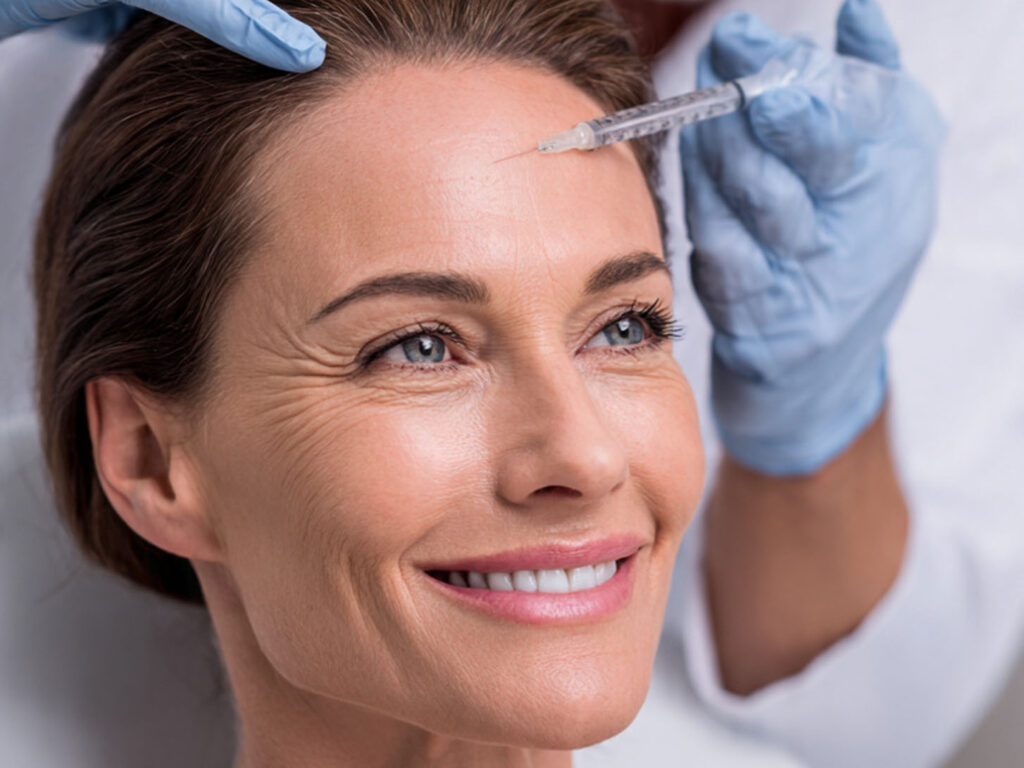
Horizontal forehead wrinkles develop directly from ongoing contractions of the frontalis muscle, which acts as the primary brow elevator. The standard FDA-approved protocol uses 20 Units distributed across four to five injection sites. Experienced injectors deliberately place these points at least two centimeters above the orbital rim to avoid unwanted brow heaviness or eyelid descent.
Between the eyebrows, the glabellar complex—consisting of the central procerus and paired corrugator supercilii muscles—generates vertical frown lines often referred to as “11s.” The standard protocol administers 20 Units across five specific anatomical sites placed deeply near the bone.
Clinical evaluations regarding Botox effectiveness for crow’s feet demonstrate that lateral canthal lines respond optimally to 24 Units, divided into 12 Units per side across three superficial injection sites. When addressing all three upper facial regions simultaneously, a unified 64-Unit protocol preserves natural balance between elevator and depressor muscles for an open, refreshed look.
Mid and Lower Face Botox Units per Area: Bunny Lines, Lips, Chin, and Neck
Treatments within the mid and lower face require conservative dosing, refined technique, and deep anatomical knowledge to preserve normal facial mobility during eating and speaking.
Diagonal bunny lines forming along the bridge of the nose are gently softened by administering 5 to 10 Units directly into the nasalis muscle. For delicate vertical lip lines, superficial micro-doses totaling 4 to 6 Units in the orbicularis oris muscle reduce pursing tension without interfering with speech articulation or drinking.
The mentalis muscle on the chin often produces an uneven “orange peel” or pebbled texture during contraction. Placing 2 to 8 Units deeply near the bone smooths the chin contour and relaxes excessive upward tension.
In the neck region, prominent vertical platysmal bands typically respond to 25 to 50 Units distributed in micro-droplets along active muscle cords. Patients seeking enhanced lower facial harmony often pair platysmal smoothing with Botox for jawline slimming to reduce masseter muscle bulk and refine their overall jawline definition.
Key Factors That Influence Your Customized Dosage and Safety Protocols
No two individuals share identical facial musculature, which is why unit requirements fluctuate considerably from patient to patient.
Several clinical and lifestyle factors guide your injector during dose planning:
- Muscle mass and dynamic strength: Thicker or more hyperactive muscle groups require higher unit volumes to achieve effective relaxation.
- Gender-specific anatomical traits: Male patients frequently possess greater muscle volume in their frontalis and glabellar complexes, often necessitating increased unit counts.
- Baseline brow positioning: Individuals with naturally low-set brows require very conservative forehead dosing to prevent feeling heavy above the eyes.
- Metabolic rate and daily physical activity: High-intensity athletic routines can slightly shorten the duration of muscle relaxation.
Patient safety depends upon strict respect for anatomical danger zones. Administering injections near the glabellar complex requires precise needle angles to avoid the levator palpebrae superioris muscle, preventing temporary eyelid ptosis. In clinical trials, temporary eyelid ptosis occurred in approximately 2% of glabellar treatments, while mild, transient headaches were noted in roughly 9% of upper-face cases.
Normal, temporary side effects include localized redness, mild swelling, or small pinprick bruising at injection sites. Injections are contraindicated for individuals who are pregnant, nursing, or diagnosed with neuromuscular conditions such as myasthenia gravis or ALS.
A common myth is that neuromodulators inevitably freeze your facial expressions, but conservative dosing preserves natural movement. Reviewing our resource on how much is too much Botox helps establish realistic expectations. Maintaining subtle, refreshed movement remains our highest priority, as outlined in our guide to natural Botox results. Treatments should be scheduled at minimum intervals of 90 days to maintain safety and prevent neutralizing antibody formation.
How Botox Units Vary by Cosmetic Treatment Area
Every cosmetic facial region features distinct muscle thickness, contraction strength, and tissue depth. Because onabotulinumtoxinA works locally at the neuromuscular junction, units cannot be distributed arbitrarily or evenly across the face.
Delicate regions such as the lateral orbicularis oculi around the eyes require superficial subcutaneous placement with fewer units per point to prevent orbital diffusion or unwanted bruising. In contrast, robust and fibrous muscles like the procerus require deeper, concentrated intramuscular placement to interrupt dynamic movement effectively.
During your aesthetic consultation at Re-Medispa, a licensed professional carefully maps your muscle activity, ensuring each unit delivers precise relaxation while maintaining your natural expressions.
Frequently Asked Questions About Botox Dosing
How many total units of Botox are typically needed for full upper-face rejuvenation?
A full upper-face rejuvenation targeting horizontal forehead lines, glabellar frown lines, and lateral crow’s feet typically uses 64 Units under standard FDA-approved clinical protocols. This standard allocation provides 20 Units for the frontalis muscle, 20 Units for the glabellar complex, and 24 Units distributed evenly across both sides for crow’s feet. Individual treatment requirements may vary between 45 and 70 Units depending on muscle strength, movement intensity, and personal aesthetic goals determined during your consultation.
Why do unit requirements differ between male and female patients?
Male patients generally possess greater overall facial muscle mass, stronger contraction dynamics, and thicker dermal tissue, especially within the brow elevator and glabellar depressor complexes. Consequently, male expression lines often require higher unit doses per injection site to achieve visible improvement while maintaining masculine facial contours.
How often should Botox treatments be scheduled to maintain results safely?
Neuromodulator treatments should always be scheduled at least 90 days apart. Administering injections too frequently can increase the likelihood of developing neutralizing antibodies, which may diminish product effectiveness over time. Most clients experience visible smoothing and muscle relaxation lasting approximately three to four months before retreatment is appropriate.
Personalized Aesthetic Care at Re-Medispa
Creating a refreshed, balanced, and youthful appearance requires both artistic insight and thorough anatomical training. At Re-Medispa, founder Renata Ciszek and our medical team prioritize natural-looking facial harmony, ensuring your results look subtle, smooth, and never overdone.
We offer advanced, personalized consultations featuring our interactive AI preview tool, allowing you to visualize expected aesthetic enhancements before treatment begins. Whether you visit our welcoming clinic in Arlington Heights (37 S Evergreen Ave) or our convenient Harwood Heights location (5128 N Harlem Ave), we design customized treatment plans tailored specifically to your facial structure.
We proudly welcome clients from throughout Chicagoland and neighboring communities such as Mount Prospect, Des Plaines, Palatine, and Schaumburg. Explore our comprehensive selection of aesthetic injectable treatments and connect with our licensed providers today to schedule your private consultation.