
By Re-Medispa Team · Updated
How Botox for Eye Area Wrinkles Can Help
Do fine lines appear at the corners of your eyes when you smile? Botox for eye area wrinkles can soften these crow’s feet by temporarily relaxing the muscles that form them. At Re-Medispa in Arlington Heights, a licensed professional can assess your lines and help you decide whether Botox fits your goals, especially if the lines are visible even when your face is at rest.
Botox for eye area glossary:
Understanding Periorbital Wrinkles and What Causes Crow’s Feet
The delicate periorbital region around your eyes is often the first part of your face to show the passage of time. A mix of natural, intrinsic aging and external lifestyle factors drives these structural shifts.
As the years progress, our bodies gradually produce less collagen and elastin. Without this structural support, the skin loses its resilience and bounce. According to clinical overviews on crow’s feet causes and prevention, ultraviolet (UV) sun exposure accelerates this breakdown significantly by degrading healthy dermal proteins.
Dynamic vs. Static Lines Around the Eyes
To understand how wrinkle treatments work, it helps to distinguish between dynamic and static lines. Dynamic wrinkles appear exclusively when you make facial expressions, such as laughing, squinting in bright sunlight, or smiling broadly. Over time, repeated muscle contractions etch these folds deeper into the dermis.
Eventually, dynamic wrinkles transition into static creases that remain visible even when your facial expressions are resting. Learning how neuromodulators work gives valuable insight into interrupting this progression. Many adults choose preventative Botox strategies in their late twenties or thirties to keep dynamic movement from turning into deeply etched static lines.
The Role of Orbicularis Oculi and Delicate Eyelid Skin
The primary culprit behind lateral eye lines is the orbicularis oculi, a circular muscle that envelops each eye socket. This muscle works like a camera aperture, contracting to close your eyelids, blink, or squint.
Because eyelid skin is among the thinnest on the entire human body—measuring roughly 0.3 to 0.5 millimeters—it crinkles easily under repetitive movement. In addition, natural fat pads beneath the skin thin out over time. A detailed clinical study on periocular rejuvenation underscores how thin skin and active underlying muscle fibers combine to accelerate visible periorbital lines.
How Botox for Eye Area Lines Restores a Refreshed Look
Botox is an FDA-approved injectable formulated with botulinum toxin type A. When administered by a trained medical professional, it gently relaxes targeted muscle fibers without altering the character of your natural smile.
Our clinical philosophy emphasizes preserving natural facial expression so your face looks well-rested rather than stiff or unnatural.
Mechanism of Action for Periorbital Rejuvenation
At the microscopic level, Botox binds to presynaptic nerve endings at the neuromuscular junction. It temporarily blocks the release of acetylcholine, the neurotransmitter responsible for telling your muscle fibers to contract.
Once acetylcholine release is reduced, the overlying skin remains flat and smooth during everyday facial expressions. Dynamic lines soften noticeably as the skin gets a much-needed break from constant repetitive creasing.
Subtle Brow Elevation and Lateral Canthal Smoothing
Beyond smoothing lateral canthal lines, periorbital Botox offers a subtle contouring bonus. The outer edge of the orbicularis oculi acts as a brow depressor, pulling the tail of your eyebrow downward when it contracts.
By selectively relaxing these downward-pulling muscle fibers, the upward-pulling forehead muscles can gently elevate the lateral brow by 1 to 2 millimeters. This subtle lift opens up the eye area, creating a brighter, refreshed appearance.
Recommended Dosing and Clinical Injection Techniques
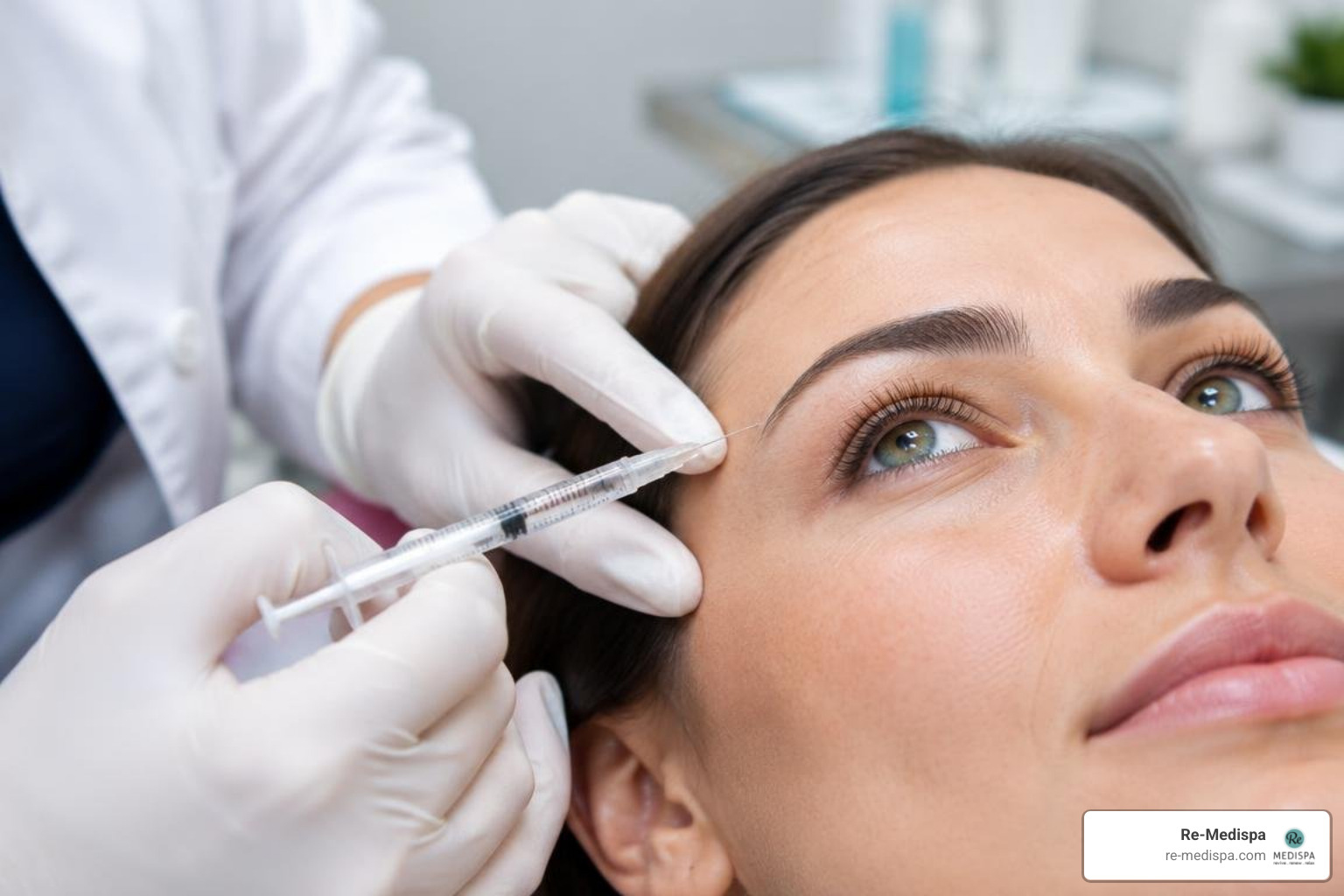
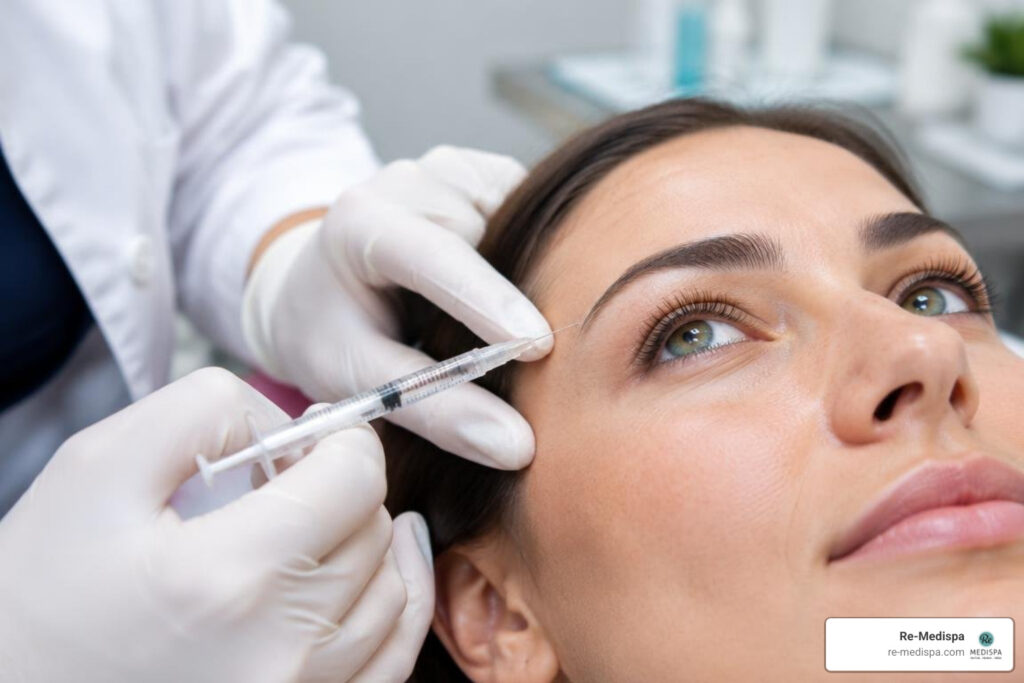
Achieving smooth, natural periorbital results requires medical precision and deep anatomical knowledge. The skin around the eyes is exceptionally delicate, meaning injection depth and placement make all the difference. Professional guidelines, such as this medical guide on periorbital botulinum toxin injection, emphasize superficial dermal placement using ultra-fine 30-gauge or 31-gauge needles to maximize comfort and reduce product spread.
Every treatment plan begins with customized Botox unit dosing established during an in-person consultation with your medical provider.
Standard Dosage and Injection Safety Margins
A common clinical approach for crow’s feet involves a three-point superficial injection pattern along the lateral orbicularis oculi. While dosing is always tailored to individual anatomy during a private consultation, standard clinical protocols often utilize approximately 12 units per side divided evenly across three precise points.
Injectors maintain a strict safety margin of at least 1 centimeter outside the bony orbital rim. Respecting this boundary prevents the neuromodulator from diffusing inward toward the delicate extraocular muscles that manage normal eye movements.
Customizing Botox for Eye Area Anatomy and Male Patients
Every face features unique muscle dynamics, symmetry, and tissue density. Men, for example, typically present with stronger muscle contractions and greater facial muscle mass than women.
When developing a treatment plan, your injector accounts for these differences. You can explore our guide to tailoring crow’s feet Botox for men to see how dosing and mapping are adjusted for stronger muscle patterns and distinct aesthetic goals.
Preventing Complications and Minimizing Bruising in the Eye Region
The periorbital region contains a dense network of tiny superficial blood vessels. Skilled injectors perform careful visual and tactile mapping to spot visible veins before placing any product, minimizing the risk of small bruises.
Applying light pressure and cold compresses immediately following your session helps soothe the area and supports a swift recovery.
Protecting Eyelid Function and Avoiding Ptosis
Safety in aesthetic medicine relies heavily on structural awareness. Injecting too close to the upper eyelid can allow the product to migrate toward the levator palpebrae superioris—the muscle responsible for lifting the upper lid—which can cause temporary eyelid drooping (ptosis).
Likewise, placing injections too low on the cheek can affect the zygomaticus major muscle and temporarily alter the symmetry of your smile. Licensed injectors follow conservative safety margins to safeguard your natural eyelid mechanics and keep your smile fully expressive.
Managing Side Effects and Post-Treatment Care for Botox for Eye Area
Most side effects following periorbital Botox are mild and temporary. You might notice slight localized redness, small raised bumps that resemble mosquito bites, or minor swelling at the injection sites. These normal responses generally resolve within 20 to 60 minutes.
To support optimal results, follow straightforward post-treatment habits:
- Stay upright for at least 4 hours after your treatment.
- Avoid rubbing, pressing, or massaging the periorbital skin for 24 hours.
- Hold off on strenuous workouts, saunas, and hot tubs for the first day.
- Pair your treatment with proven tips to make results last longer, like diligent daily sun protection.
Comparing Botox with Alternative Periocular Treatments
Botox is the premier solution for dynamic expression lines, but other modalities excel at restoring lost volume or renewing sun-damaged skin texture.
| Treatment Modality | Primary Target Concern | Mechanism of Action | Typical Longevity | Best Suited For |
|---|---|---|---|---|
| Botox (Neuromodulator) | Dynamic crow’s feet & expression lines | Relaxes underlying muscle contractions | 3 to 4 months | Active movement lines around eyes |
| Dermal Fillers (HA) | Under-eye hollowing & tear troughs | Restores lost volume using hyaluronic acid | 6 to 12 months | Static shadows, deep under-eye hollows |
| Laser Skin Resurfacing | Fine surface crinkling & photoaging | Stimulates collagen via controlled heat energy | Long-lasting with skincare maintenance | Poor skin tone, crepey texture, sun damage |
Reviewing our guide on comparing anti-aging treatments can help clarify which approach best aligns with your goals.
Combining Neurotoxins with Dermal Fillers and Skin Resurfacing
Many clients experience the most comprehensive, natural-looking results through combination therapies. While Botox addresses movement-driven lines on the outer corners of the eyes, gentle hyaluronic acid fillers can address deep under-eye hollows.
Clinical research shows that relaxing local muscle movement with Botox can even help prolong the longevity of adjacent filler treatments. Discover how combining Botox and dermal fillers can provide balanced, full-face rejuvenation.
Frequently Asked Questions About Botox Around the Eyes
How long does Botox around the eyes typically last?
For most clients, Botox results in the eye area last approximately 3 to 4 months. Because the orbicularis oculi moves continuously throughout the day when you blink, talk, and smile, neurotoxins break down slightly faster here than in less active facial zones. Consistent maintenance appointments help preserve your smooth skin texture.
When will I start seeing results from my eye area injections?
Initial muscle relaxation often becomes noticeable within 1 to 3 days after treatment. The full, refined smoothing effect matures over 7 to 14 days as the neuromodulator completely binds with the targeted receptors.
Can Botox lift drooping eyelids or sagging eyebrows?
Botox can provide a subtle 1 to 2 millimeter elevation of the lateral brow by relaxing the downward pull of the outer eye muscle. However, it does not replace surgical blepharoplasty for moderate to severe excess eyelid skin. Your medical provider will review what non-surgical injectables can realistically achieve during your evaluation.
Discover Personalized Eye Rejuvenation at Re-Medispa
Softening periorbital lines restores a bright, energized appearance while preserving the authentic expressions that make you who you are. Under the clinical guidance of Renata Ciszek, Founder & Medical Director, our team focuses on transparent, individualized care backed by state-of-the-art diagnostic technology.
During your visit, you can explore potential outcomes with our advanced AI preview tool, giving you a clear, personalized look at how aesthetic treatments can enhance your features. Whether you visit us at our Arlington Heights clinic (37 S Evergreen Ave) or our Harwood Heights location (5128 N Harlem Ave), we welcome clients from across Chicagoland, including Mount Prospect, Des Plaines, and Schaumburg.
Ready to smooth periorbital lines and brighten your gaze? Schedule a consultation with our experienced team to explore our advanced injectables and design a plan tailored specifically to you.
Book your visit
Ready for your consultation?
Talk with our team about your goals. Arlington Heights & Harwood Heights.